Categories more
- Adventures (62)
- Arts / Collectables (14)
- Automotive (77)
- Aviation (65)
- Bath, Body, & Health (123)
- Children (6)
- Cigars / Spirits (71)
- Cuisine (66)
- Design/Architecture (22)
- Electronics (63)
- Entertainment (36)
- Event Planning (115)
- Fashion (45)
- Finance (10)
- Gifts / Misc (6)
- Home Decor (118)
- Jewelry (41)
- Pets (3)
- Philanthropy (1)
- Real Estate (16)
- Services (44)
- Sports / Golf (14)
- Vacation / Travel (85)
- Watches / Pens (33)
- Wines / Vines (34)
- Yachting / Boating (67)



3 Best Sites to Improve Mandarin Speaking with Online Tutors

Published
08/20/2026Most people trying to learn Mandarin hit the same wall: they can read characters and memorize vocabulary, but the moment a native speaker opens their mouth, everything falls apart. The best sites to improve Mandarin speaking fix that specific problem by putting you in front of real humans, not chatbots. After reviewing dozens of platforms, the tonal accuracy gap, the shortage of affordable native-speaking tutors, and the lack of daily speaking practice outside a classroom kept showing up as the biggest blockers. This guide breaks down three platforms that actually address those gaps.
The shortlist methodology
Publicly available data formed the backbone of this ranking, drawing from user reviews, feature breakdowns, tutor credential details, and information pulled directly from official websites and review directories. Only platforms with a documented track record in spoken language learning made the cut.
→ See the full research breakdown
- italki - Best for one-on-one language tutoring and conversational practice
- Live Lingua - Best for personalized online language learning and immersion
- LingQ - Best for self-directed language learners and polyglots
Sites To Improve Mandarin Speaking Selection
Picking the wrong platform early on costs learners weeks of wasted time and real money. Mandarin is not a language where generic tools cut it, especially when tonal accuracy is on the line.
The four tones require real-time correction from someone who hears your mistakes instantly. No flashcard app does that.
Finding an affordable native-speaking tutor used to mean hoping your city had a local language school. Online platforms changed that equation, but not every platform is built the same way.
The right choice shows up in measurable ways: tonal accuracy improvement over time, speaking practice hours logged per week, and a steadily climbing HSK level. Those are the outcomes that matter, and the platforms below are the ones built to deliver them.
Top 3 Sites To Improve Mandarin Speaking: What You Need to Know at a Glance
Note: All data in this table is sourced from review platforms and the official websites of the listed companies.
|
Company Name |
Years Operating |
Headquartered In |
|
italki |
Since 2007 |
Hong Kong |
|
Live Lingua |
Since 2008 |
Boston, Massachusetts |
|
LingQ |
Since 2007 |
West Vancouver, BC |
1. italki - Best for One-on-One Conversational Practice
Which services does italki provide?
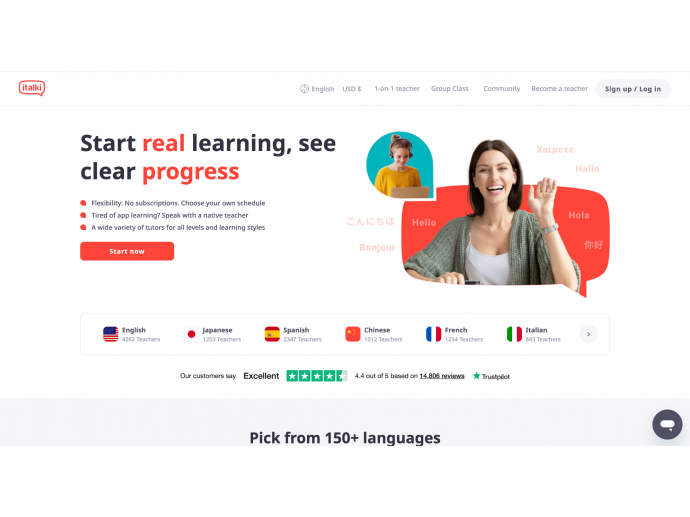
italki connects learners directly with native-speaking Mandarin tutors for one-on-one video lessons, running on a flexible pay-per-lesson model that fits almost any budget or schedule. The platform hosts thousands of certified professional teachers alongside community tutors, so learners can match with someone who fits their speaking goals, not just their calendar. Beyond live sessions, learners can browse the full catalog at https://www.italki.com/en/teachers/chinese, which opens up access to language partner matching, writing correction tools, and community discussion forums that support spoken fluency between lessons.
Why Does italki Earn Its Spot for Sites To Improve Mandarin Speaking?
The platform solves the single biggest roadblock for Mandarin learners: getting consistent, real-time tonal feedback from an actual native speaker rather than a pre-recorded prompt. That kind of live human correction is hard to replicate in a self-study environment, and it's what separates learners who plateau from learners who progress.
What Customers Highlight:
Reviews consistently point to tutor quality and scheduling flexibility as the strongest advantages. The ability to trial different teachers before committing to a regular booking gets mentioned frequently (not always a given on other platforms). Some reviewers note that lesson quality varies between tutors, which is worth factoring in when selecting, but most find their fit within a few trial sessions.
2. Live Lingua - Best for Personalized Immersion Learning
Which services does Live Lingua provide?
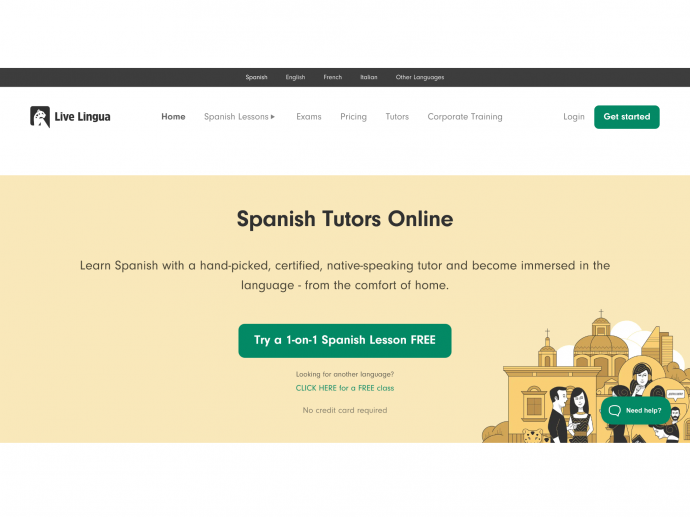
Live Lingua runs as a boutique online language school, offering live interactive Mandarin classes with certified native-speaking tutors alongside a well-stocked library of free self-study materials. Learners choose their own tutor, set their own goals, and move at a pace that suits their life. What makes this one stand out is the combination: structured live sessions paired with access to the largest free public domain language learning resource collection on the web. For learners who want both guided speaking practice and independent study materials in one place, it covers that ground well.
Why Does Live Lingua Earn Its Spot for Sites To Improve Mandarin Speaking?
Live Lingua addresses the frustration of learners who want speaking practice that goes beyond scheduled lessons by giving them a built-in self-study layer to fill the gaps between sessions. The student-centric model, where learners direct their own pace and goals rather than following a rigid curriculum, tends to produce better speaking confidence over time because it respects how adults actually build language skills.
What Customers Highlight:
Reviews of Live Lingua consistently point to the personal feel of the experience. Learners describe it more like working with a dedicated tutor than logging into a marketplace, which matters a lot when spoken confidence is the goal. The free resource library also gets positive mentions, particularly from learners who want to reinforce speaking sessions with listening practice outside of class (a smart move for tonal language learners).
3. LingQ - Best for Self-Directed Learners and Polyglots
Which services does LingQ provide?
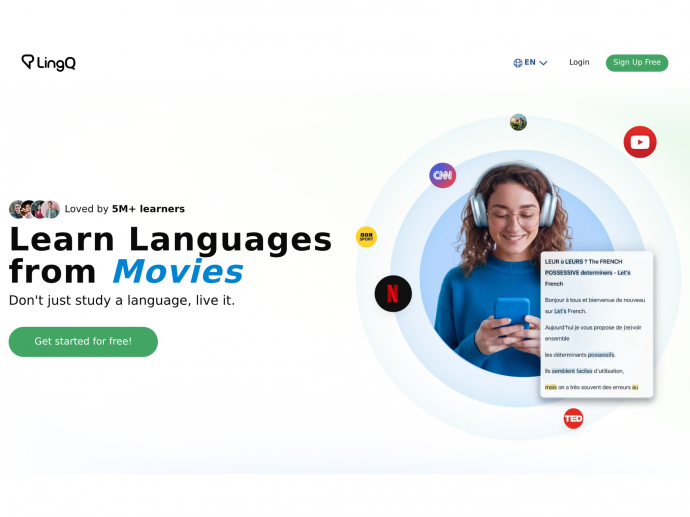
LingQ is a content-first language platform that lets Mandarin learners build spoken and reading fluency through real-world material: podcasts, books, TV shows, and native speaker audio. The platform supports over 50 languages and was co-founded by Steve Kaufmann, who speaks 20 languages and brings a learner-directed philosophy to every feature. Tools include unlimited imports, vocabulary tracking, offline mode, and automatic transcript generation for podcasts. For learners who absorb Mandarin best through exposure to authentic content rather than drills, this approach fits well (think immersion without the plane ticket).
Why Does LingQ Earn Its Spot for Sites To Improve Mandarin Speaking?
LingQ solves the "textbook gap," the point where learners know grammar rules but can't follow a real Mandarin conversation because they've never trained on natural speech. Independent researchers at Compare Language Apps ranked it as the most effective language app available, which is worth paying attention to when choosing a study tool.
What Customers Highlight:
Learners who get the most out of LingQ tend to be self-motivated and comfortable steering their own study path. Reviews point to the vocabulary tracking system and content variety as standout features. Some beginners mention a learning curve with platform navigation early on, but most settle in quickly once they find content at their level.
The Methodology Behind Each Pick's Place
Building a reliable shortlist starts long before any final decisions get made. The process used to evaluate these three platforms was grounded in publicly available information and structured across several distinct review stages.
What to Collect Before You Start
The process began by pulling together a broad list of potential platforms from language learning directories, app review aggregators, and online community discussions. Forum threads where learners compared their experiences, editorial rankings from established language learning publications, and feature comparison pages all contributed to the initial pool. The goal at this stage was breadth, not judgment. Every platform mentioned consistently in Mandarin-focused learning spaces was noted before any filtering began.
Eligibility Review: Narrowing Down the Top Prospects
Once the longlist was assembled, options without a verifiable history in language learning were removed. Platforms that lacked consistent reviews, had no documentation of tutor credentials, or showed irregular review patterns were set aside. The shortlisting phase focused on signals of sustained reliability: tutor verification processes, review volume across multiple platforms, and evidence that learners had actually progressed in spoken Mandarin through use of the platform.
Claims Evaluated for Credibility and Substantiation
Each platform makes claims on its own website about effectiveness, tutor quality, and learning outcomes. Those claims were cross-referenced against what users actually reported in reviews. Where a platform stated specific outcomes (such as ranking results from independent researchers), those were checked against the sources cited. Platforms that made bold claims without corroborating user evidence were weighted lower during evaluation.
Reputation, Awards, and Original Work
Signals beyond user reviews were factored in to validate standing within the language learning space. Awards, recognition from third-party organizations, and presence in respected language learning publications all contributed to the picture. Platforms associated with known figures in the language learning community, such as educators with documented methodology backgrounds or widely followed content channels, were given credit for that external validation. Original research or proprietary methods backed by verifiable sources also contributed positively to a platform's placement.
Sites To Improve Mandarin Speaking Service Page and Reviews Check
The final stage involved a close look at each platform's dedicated Mandarin or Chinese language service pages. This included checking whether tutor profiles were detailed and current, whether pricing was transparent, and whether learner reviews mentioned speaking-specific outcomes rather than generic satisfaction. Platforms with verified reviews that referenced tonal progress, HSK level advancement, or improved conversational confidence scored higher here because those outcomes map directly to what Mandarin learners actually need.
The Right Sites To Improve Mandarin Speaking for the Right Job
No single platform works for every learner, so matching your needs to the right tool from the start saves a lot of backtracking. Here's what to weigh before committing.
- Industry/Domain Experience: Prioritize platforms with a documented focus on spoken language development rather than general study tools. Experience in live Mandarin instruction, tutor vetting, and tonal feedback mechanisms matters more than a wide language catalog alone.
- Features and Services: Look at whether the platform offers live one-on-one sessions, authentic content immersion, or structured self-study resources. The best fit depends on whether your gap is pronunciation correction, vocabulary in context, or consistent speaking hours logged per week.
- Pricing Structure: Rates vary widely across these platforms. italki's pay-per-lesson model suits flexible budgets, while Live Lingua's hourly rates ($27 to $38 depending on language) reflect a more structured school format. LingQ's subscription model works best for high-volume self-study learners.
- Results Measurement: Check whether the platform gives you any way to track progress, whether that's vocabulary retention scores, session completion rates, or HSK level tracking. Measurable milestones keep spoken fluency goals from staying abstract.
- Industry Knowledge and Compliance: For learners working toward specific proficiency standards such as HSK or CEFR alignment, confirm whether tutors are familiar with those frameworks and can structure lessons accordingly.
Wrapping Up
Choosing the right platform for spoken Mandarin comes down to how you learn best. italki fits learners who want flexible, human-led conversation practice. Live Lingua suits those who prefer a structured yet personal school environment. LingQ works for self-directed learners who absorb knowledge through authentic content. All three address real gaps in tonal accuracy and speaking confidence. As more learners move their Mandarin practice online, platforms built around genuine human interaction and real-world content will keep pulling ahead.
Comments
