Categories more
- Adventures (62)
- Arts / Collectables (14)
- Automotive (77)
- Aviation (65)
- Bath, Body, & Health (123)
- Children (6)
- Cigars / Spirits (71)
- Cuisine (66)
- Design/Architecture (22)
- Electronics (63)
- Entertainment (36)
- Event Planning (115)
- Fashion (45)
- Finance (10)
- Gifts / Misc (6)
- Home Decor (118)
- Jewelry (41)
- Pets (3)
- Philanthropy (1)
- Real Estate (16)
- Services (44)
- Sports / Golf (14)
- Vacation / Travel (85)
- Watches / Pens (33)
- Wines / Vines (34)
- Yachting / Boating (67)


A Practical 2026 Guide to Fair Market Value in Luxury Watch Trading

Published
08/05/2026Table of Contents
- Introduction
- Fair Market Value
- What Shapes Watch Prices
- Authenticity and Configuration
- Condition and Originality
- Box, Papers, and Provenance
- Comparable Sales
- Reading a Trade Offer
- Costs and Red Flags
- Pre-Trade Checklist
- FAQs
Trading a luxury watch can be a practical way to change collections, move into a different reference, or simplify a sale. The key is understanding that a fair offer is based on more than the brand name on the dial. A luxury watch trading transparent process begins with clear evidence of authenticity, condition, ownership history, current demand, and the full cost of the transaction.
Two examples of the same model can command very different prices. One may be complete, unpolished, recently serviced, and supported by matching paperwork. Another may have replacement parts, bracelet wear, uncertain service history, or hidden damage. Comparing the complete picture helps owners avoid chasing unrealistic numbers or accepting an offer that does not reflect the watch's real market position.
What Fair Market Value Means in Watch Trading
Fair market value is the price a knowledgeable, willing buyer and seller would reasonably agree on without either party being forced to act. The IRS guidance on fair market value uses a similar principle for property valuation. In watch trading, this is a useful starting point, though it does not guarantee a single fixed price.
Separate the asking price from the completed sale price. An online listing may reflect a seller's hope, while a completed private sale shows what a buyer actually paid. Trade value is usually lower than a private-sale result because the dealer assumes inspection risk, resale costs, warranty exposure, and the time required to find the next buyer. A quick-sale price may be lower still when the seller needs immediate funds.
The Main Factors That Shape a Watch's Price
Value is created by a combination of details, not by popularity alone. The most important factors include:
- Brand reputation, collector interest, and current buyer demand.
- Exact reference, size, material, dial, bezel, bracelet, and production period.
- Rarity, discontinued configurations, and unusual factory details.
- Physical condition, originality, and mechanical performance.
- Service records and evidence of careful ownership.
- Availability of comparable examples in the market.
- Recent completed sales, rather than headline listings.
- Buyer confidence in the seller, documentation, and transaction process.
A highly sought-after watch with questionable parts may sell for less than a quieter reference in excellent, complete condition. Demand matters, but confidence matters too.
Why Authenticity Comes Before Valuation
An appraisal is only meaningful after the watch has been properly verified. Authentication should consider the case, dial, hands, movement, serial markings, bracelet, clasp, and supporting records as a complete group. One detail rarely proves everything on its own.
Authentication also confirms whether the watch matches its stated reference, materials, age, and factory configuration. Counterfeit components, undisclosed aftermarket modifications, or incorrect replacement parts can substantially reduce value. For a high-value, vintage, or uncertain piece, professional inspection is often worth the cost before agreeing to a trade.
How Condition Changes the Number
The condition should be described honestly. Unworn or new-old-stock examples may attract a premium, while lightly worn watches with sharp cases and clean bracelets often remain highly desirable. Well-maintained pre-owned pieces can be strong candidates for trade, but heavily worn, damaged, incomplete, or poorly modified watches require deeper price adjustments.
Scratches and small marks are normal. More serious concerns include dents, moisture damage, over-polishing that softens case edges, bracelet stretch, weak timekeeping, and missing links. For example, two identical steel sports watches may look similar in photos, yet the unpolished full-set example with tight bracelet links can receive a meaningfully stronger offer after inspection.
The Role of Box, Papers, and Provenance
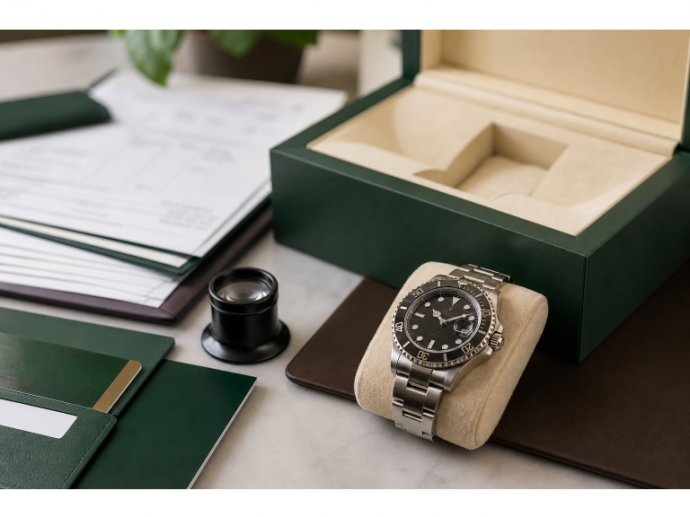
A "full set" generally includes the original box, warranty card or papers, manuals, tags, and relevant accessories. Purchase receipts and service documents can further support the watch's story. These items do not prove authenticity on their own, but matching records improve buyer confidence and may make the watch easier to sell.
Provenance is especially important for rare and vintage watches. A clear ownership history, period-correct documentation, and service records that align with the reference can support a stronger valuation. Missing papers do not make a watch worthless, but they can reduce liquidity and narrow the buyer pool.
How to Use Comparable Sales
Reliable comparables are specific. First, identify the exact reference and configuration. Then review several completed sales for watches in similar condition with similar accessories. Check the sale dates, location, currency, taxes, and buyer premiums, and remove any results that are unusually high or low unless there is a clear reason for the difference.
A record auction result can be interesting, but it may involve extraordinary provenance, rare details, or competitive bidding that does not apply to a standard pre-owned example. Use a range from multiple relevant sales, not one dramatic result.
How to Read a Trade Offer
Evaluate the trade as one complete exchange. Review the allowance assigned to your current watch, the selling price of the replacement watch, the required cash difference, inspection conditions, return rights, warranty coverage, and all shipping or payment costs. A generous trade allowance can be offset by an above-market price on the incoming watch.
Fees, Spreads, Taxes, and Other Trading Costs
Private-sale numbers do not automatically equal the amount a seller will receive. Dealer margins, marketplace fees, auction commissions, payment processing, insured shipping, currency conversion, repairs, and potential tax obligations can all affect the final result. A trade can still be fair when it provides speed, secure payment, authentication support, and less exposure to fraud.
Warning Signs of an Unfair Deal
- Pressure to make an immediate decision.
- Pricing far outside recent comparable sales without explanation.
- Vague answers about authenticity, parts, or service history.
- Photos that avoid the clasp, caseback, movement, or identifying marks.
- Unusual payment requests or no written trade terms.
- Refusal to permit independent inspection.
Use basic transaction safeguards, especially when buying remotely. The FTC's online shopping advice is a useful reminder to research sellers, understand payment protections, and be cautious of deals that appear unusually cheap.
A Simple Pre-Trade Valuation Checklist
- Record the brand, model, reference, serial details, and included accessories.
- Photograph the dial, case, bracelet, clasp, and visible wear.
- Gather receipts, warranty records, and service documentation.
- Find at least three relevant completed sales.
- Estimate fees, repairs, shipping, insurance, and taxes.
- Request written terms and ask what happens if the inspection changes the offer.
- Pause if the deal feels rushed, unclear, or inconsistent.
Timing, Liquidity, and the Right Trading Strategy
Market timing is influential in trading, but should not supersede thorough valuation. Changes in demand can stem from model discontinuities, new releases, seasonal trends, or shifts in economic confidence. Before engaging in a trade, it's essential to assess whether the market is active, balanced, or slow, as an active market might allow for a tighter dealer spread, while a slow market might warrant more conservative offers. Sellers can seek multiple quotes and wait for offers based on solid reasoning, particularly if they are not under pressure to sell.
Additionally, defining what outcome is most important is crucial for success. Collectors aiming for maximum value might opt for private sales despite the extra effort, whereas those looking for a quick transition may favor simpler trades, especially if a single dealer manages inspections. Clarifying priorities—such as net returns, speed of sale, access to a specific item, or reducing transaction risk—can help maintain focus during negotiations and prevent distractions by headline values.
Documenting the watch before transfer enhances protection. This includes taking date-stamped photos of key parts, recording the condition, trade details, and the dealer's inspection window. For shipped items, it is vital to use insured services and retain all related documentation to mitigate misunderstandings regarding the watch’s condition.
Finally, assess the professionalism of the trading process alongside pricing. A reliable counterparty should clarify its evaluation process and disclose any material concerns. Offers that change after inspection should be supported by photographs and clear reasoning. Such transparency allows for a better judgment on the adjustments and the decision to accept offers or return the watch.
Though these strategies cannot guarantee specific prices, they establish a stronger basis for comparison, helping owners discern reasonable market adjustments from unfounded discounts, ultimately enabling more confident decision-making and clearer long-term plans.
Common Questions About Luxury Watch Value
Is the highest online listing a reliable valuation?
No. Listings can remain unsold for months and may reflect optimistic pricing. Completed sales are more useful evidence.
Should a watch be serviced before a trade?
Not always. Unnecessary polishing or work can reduce originality. Get an estimate and ask whether the buyer prefers the watch as-is.
Can a private sale bring more than a trade?
Possibly, but private sales require time, negotiation, secure payment arrangements, and fraud management. A trade may justify a lower number through convenience and reduced risk.
Final Thoughts
Fair value comes from the whole picture: authenticity, condition, provenance, recent comparables, costs, and buyer confidence. A careful owner does not rely on the highest number on a screen. Instead, they compare evidence, ask direct questions, and accept a trade only when the complete terms make sense.
Comments
