Categories more
- Adventures (62)
- Arts / Collectables (14)
- Automotive (77)
- Aviation (68)
- Bath, Body, & Health (127)
- Children (6)
- Cigars / Spirits (71)
- Cuisine (68)
- Design/Architecture (22)
- Electronics (66)
- Entertainment (40)
- Event Planning (116)
- Fashion (45)
- Finance (10)
- Gifts / Misc (6)
- Home Decor (118)
- Jewelry (41)
- Pets (3)
- Philanthropy (1)
- Real Estate (19)
- Services (60)
- Sports / Golf (38)
- Vacation / Travel (101)
- Watches / Pens (61)
- Wines / Vines (34)
- Yachting / Boating (76)


Advanced Regenerative Aesthetics and Wellness Treatments

Published
06/24/2026The Science of Regenerative Aesthetics in Skin Remodeling
Stretch marks, medically known as striae distensae, are more than just a surface-level cosmetic concern. They represent a complex remodeling process within the skin's deeper layers. Understanding this underlying science is crucial to appreciating how advanced regenerative aesthetics can effectively address them.
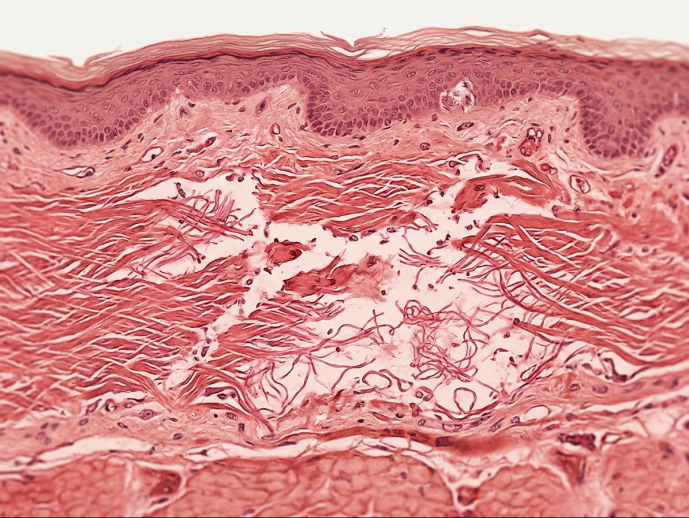
At its core, a stretch mark forms when the skin is subjected to rapid stretching beyond its elastic capacity. This mechanical stress causes microscopic tears in the dermis, the skin's middle layer, leading to a rupture of vital collagen and elastin fibers. These fibers are the scaffolding that provides skin with its strength and elasticity. When they break, the extracellular matrix—the intricate network that supports skin cells—is disrupted, resulting in the characteristic linear scars we recognize as stretch marks. While the epidermis, the outermost layer of skin, typically remains intact, the damage beneath creates the visible textural and color changes.
Understanding Striae Distensae and Dermal Tearing
The formation of striae distensae is a fascinating interplay of mechanical stretching and hormonal influences. While the epidermis remains largely unaffected, the dermis bears the brunt of the stress. Common scenarios that trigger this dermal tearing include rapid weight gain or loss, adolescent growth spurts, and significant muscle development in bodybuilders. However, the most widely recognized cause is pregnancy, with approximately 70-80% of women who have given birth experiencing stretch marks. Hormonal shifts, particularly elevated cortisol levels, can also play a role, as cortisol can weaken collagen and elastin fibers, making them more susceptible to damage. Certain medical conditions and prolonged use of corticosteroids can further contribute to their development.
How Regenerative Aesthetics Stimulates Collagen and Elastin
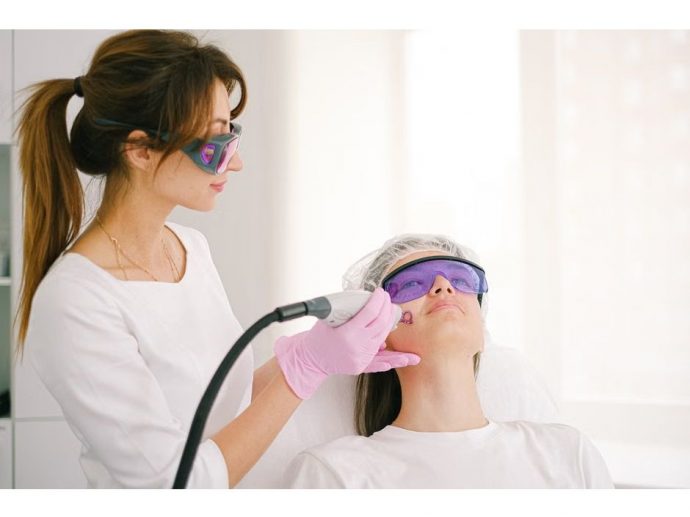
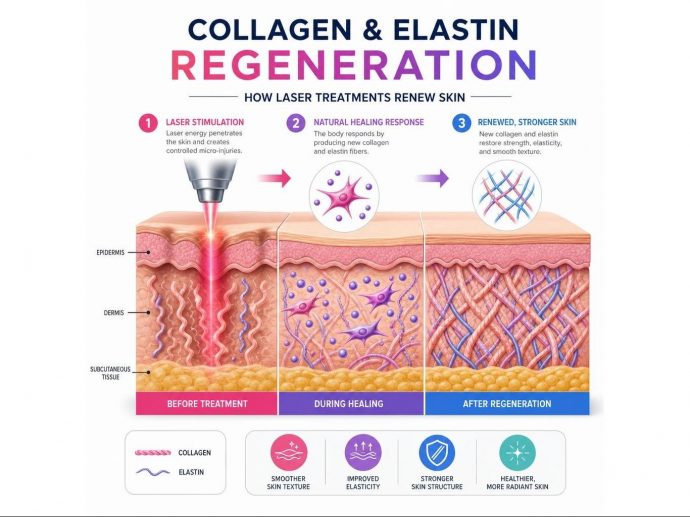
The goal of regenerative aesthetics in treating stretch marks is to harness the body's natural healing capabilities. Advanced laser technologies achieve this by creating controlled, microscopic injuries within the dermal layer, often referred to as microthermal zones. These precise micro-injuries are strategically delivered while preserving the surrounding healthy tissue, initiating a sophisticated wound healing cascade without causing significant surface damage.
This process triggers a powerful biological response: fibroblast activation. Fibroblasts are the cells responsible for producing collagen and elastin. By stimulating these cells, lasers promote neocollagenesis (the formation of new collagen) and neoelastogenesis (the production of new elastin). Over time, this leads to significant tissue remodeling, where the damaged, disorganized fibers within the stretch mark are replaced with new, healthier collagen and elastin. The result is a gradual improvement in the stretch mark's texture, color, and overall appearance, making it blend more seamlessly with the surrounding skin.
Laser Modalities for Stretch Mark Restoration
The landscape of laser treatments for stretch marks is diverse, with various modalities designed to target specific characteristics of these dermal scars. Fractional resurfacing is a cornerstone of many modern approaches, utilizing laser energy to create thousands of microscopic treatment zones, stimulating the body's natural healing processes. The choice of laser wavelength is paramount, as different wavelengths are absorbed by different chromophores (targets) in the skin, allowing for tailored treatments. For those exploring advanced options, RenewMD regenerative laser treatments offer a personalized approach to skin rejuvenation.
To illustrate the variety, here's a conceptual comparison of how different laser wavelengths are employed for stretch marks:
Laser Type / Wavelength Primary Target Best For Mechanism Typical Results Pulsed Dye Laser (PDL) Hemoglobin Red/Purple (new) Reduces vascularity, inflammation Fades redness, prevents progression KTP Laser Hemoglobin Red/Purple (new) Similar to PDL, superficial vascularity Reduces redness, improves color Fractional CO2 Laser Water White/Silver (mature) Ablative resurfacing, collagen stimulation Improves texture, reduces depth Er:YAG Laser Water White/Silver (mature) Ablative/non-ablative resurfacing, collagen stimulation Smoother texture, less noticeable Long-Pulsed Nd:YAG Laser Hemoglobin, Melanin, Water White/Silver (mature) Deep collagen heating, some vascular targeting Improves texture, elasticity, reduces discoloration 675 nm Diode Laser Collagen White/Silver (mature) Selective collagen heating, neocollagenesis Improves texture, reduces depth Vascular Lasers for Striae Rubrae
When stretch marks first appear, they are often characterized by a reddish or purplish hue. These "striae rubrae" are considered early-stage stretch marks and indicate active inflammation and increased vascularity within the damaged dermal tissue. This is where vascular lasers excel.
Pulsed Dye Lasers (PDL) and KTP lasers are specifically designed to target hemoglobin, the red pigment in blood cells. When the laser energy is absorbed by hemoglobin, it selectively heats and coagulates the tiny blood vessels responsible for the red or purple color, without damaging the surrounding skin. This process leads to a significant reduction in erythema (redness) and inflammation, often preventing the stretch marks from progressing to a more severe, mature white stage. Treating striae rubrae early with these lasers can yield excellent results, fading the color and improving the overall appearance before they become more entrenched.
Resurfacing Lasers for Striae Albae
As stretch marks mature, they lose their reddish color and become white or silvery, known as "striae albae." At this stage, the inflammation has subsided, and the primary issue is the atrophy and disorganization of collagen and elastin fibers. Resurfacing lasers are the preferred choice for these older, more stubborn stretch marks.
Fractional CO2 and Er:YAG lasers are powerful tools in this category. They work by delivering microscopic laser beams that create tiny columns of thermal injury in the skin. Fractional CO2 lasers are typically more ablative, meaning they remove very fine layers of tissue, while Er:YAG lasers can be used in both ablative (short pulse) and non-ablative (smooth) modes. A recent split-lesion study published in Lasers in Medical Science in 2025 investigated the efficacy of combining short pulse and smooth modalities of Er:YAG laser versus short pulse alone for striae distensae, finding clinical improvement with both strategies. This controlled damage stimulates a robust healing response, leading to the production of new collagen and elastin, which helps to plump up the indented areas and smooth the skin's texture.
Beyond ablative options, long-pulsed Nd:YAG lasers have shown considerable promise for striae albae. A comparative clinical study published in PMC in 2023 directly compared the efficacy of long-pulsed Nd:YAG laser and fractional CO2 laser for treating striae distensae. The findings indicated that long-pulsed Nd:YAG offered statistically superior clinical improvement in lesion length and width, along with higher patient satisfaction and fewer adverse events, including a significantly lower risk of post-inflammatory hyperpigmentation, especially relevant for diverse skin tones.
Another innovative approach involves novel wavelengths like the 675 nm diode laser. Research, such as a brief report in PMC in 2024, has evaluated the clinical efficacy and safety of this wavelength for striae distensae. This laser selectively targets collagen without causing significant epidermal damage, leading to neocollagenesis. Studies using the Manchester Scar Scale have demonstrated significant improvement, with the total mean score diminishing from 14.16 to 10.06 at 6-month follow-up, indicating a notable reduction in scar parameters. These advanced laser treatments offer hope for significant texture and appearance improvement in even mature stretch marks.
Clinical Protocols, Safety, and Skin Type Considerations
While laser stretch mark treatments offer remarkable potential, their success and safety are heavily reliant on meticulous clinical protocols, especially when considering the diverse range of Fitzpatrick skin types. A thorough understanding of skin physiology, coupled with appropriate pre-treatment preparation and diligent post-treatment care, is paramount to achieving optimal outcomes and minimizing risks.
Before any laser procedure, a comprehensive consultation is essential. This involves assessing the patient's medical history, skin type, and the age and characteristics of their stretch marks. Patients are typically advised to avoid sun exposure, tanning, and certain topical medications for several weeks prior to treatment. After the session, strict sun protection, gentle cleansing, and moisturizing are crucial to support the healing process and prevent complications. We emphasize that understanding laser treatment for sun damage is vital for comprehensive skin health.
Treatment Customization for Darker Skin Tones
Treating stretch marks on darker skin tones (Fitzpatrick types IV-VI) requires particular expertise and caution due to the higher concentration of melanin. Melanin readily absorbs laser energy, which, if not carefully managed, can lead to post-inflammatory hyperpigmentation (PIH) or, in some cases, hypopigmentation.
For these skin types, practitioners often opt for non-ablative fractional lasers or picosecond technology, like the PicoSure Pro technology. These lasers deliver energy in a way that minimizes thermal damage to the epidermis, reducing the risk of pigmentary changes. Conservative energy settings, shorter pulse durations, and a greater number of sessions are often employed to achieve gradual, safe improvement. It's crucial for practitioners to have specialized training and experience in treating skin of color, following best practices and guidance on treating skin of color to ensure both efficacy and safety.
Comparing Microneedling and Radiofrequency to Regenerative Aesthetics
While laser treatments are highly effective, it's important to understand how they compare to other regenerative aesthetic options. Microneedling, for instance, involves using fine needles to create micro-injuries in the skin, stimulating collagen production in a similar fashion to non-ablative lasers. Radiofrequency (RF) microneedling takes this a step further by delivering RF energy through the microneedles, providing deeper heating and enhanced collagen stimulation, which can also address skin laxity.
Topical treatments, such as retinoids, hyaluronic acid, and vitamin C, offer limited efficacy for stretch marks, especially mature ones, as they generally cannot penetrate deeply enough to remodel the dermal damage. Sculptra injections, primarily known for facial rejuvenation, can also be used off-label to stimulate collagen production in areas with stretch marks, improving skin texture and elasticity over time.
Often, the most effective approach involves combination therapies, where different modalities are strategically used together to target various aspects of the stretch mark. For example, a treatment like Fotona LineLase utilizes a two-step procedure combining Er:YAG for textural improvement and Nd:YAG for vascular components and deep collagen remodeling, showcasing the power of synergistic treatments. This integrated approach allows for comprehensive improvement, addressing both color and texture for optimal results.
Frequently Asked Questions about Laser Stretch Mark Treatments
Patients often have many questions when considering laser treatments for stretch marks, focusing on realistic expectations, the number of sessions required, and what recovery entails. We aim to provide clear, evidence-based answers to help individuals make informed decisions about their regenerative aesthetics journey.
Can laser treatments completely remove stretch marks?
It's important to set realistic expectations: while laser treatments can dramatically improve the appearance of stretch marks, complete removal is rarely possible. Stretch marks are a form of dermal scarring, and like most scars, they can be significantly faded and smoothed but may not disappear entirely. Our goal is scar remodeling and texture improvement, making them much less noticeable. Clinical studies, particularly those involving fractional laser resurfacing, have shown impressive results, with improvements of up to 75 percent in the appearance of stretch marks. This permanent fading and textural enhancement can lead to a significant boost in confidence and skin comfort. For a more comprehensive guide to stretch mark treatments, exploring various options and their effectiveness, further reading can be beneficial.
How many laser sessions are typically required for optimal results?
The number of laser sessions needed for optimal results varies depending on several factors, including the type of laser used, the age and severity of the stretch marks, and the individual's skin response. Generally, multiple sessions are required because collagen remodeling is a gradual process. Most people need multiple sessions, usually 3-6, spaced out over several weeks to see noticeable improvement. More specifically, for maximum improvement, 3 to 5 treatments are typically needed, spaced approximately 2 months apart. This interval allows the skin sufficient time to heal and produce new collagen between sessions, leading to cumulative improvement. While some individuals might see improvements in as few as one to three sessions, a series of treatments is almost always recommended for significant and lasting change. Maintenance protocols may also be suggested to prolong the results.
What is the expected downtime and recovery after a session?
The expected downtime and recovery period following laser stretch mark treatment depend largely on the type of laser used and the intensity of the treatment. For less aggressive, non-ablative lasers, patients might experience transient erythema (redness) and mild edema (swelling) for a few hours to a few days. For example, some sources indicate that treated areas may be pink or red for four to eight hours after treatment, with a stinging sensation subsiding within four to six hours, and mild swelling dissipating within several days.
More intensive ablative fractional lasers, such as fractional CO2, can lead to a slightly longer recovery. Patients may experience redness that lasts several weeks, along with some micro-scabbing and a sensation similar to a severe sunburn. During this recovery period, diligent sun protection is paramount to prevent post-inflammatory hyperpigmentation and ensure proper healing. Patients are often advised to avoid makeup or lotion on the treated area for 24 hours or until redness subsides, and to apply moisturizing lotion twice daily. The minimal downtime associated with PicoSure treatments, for instance, makes it an attractive option for many. Your practitioner will provide specific aftercare instructions tailored to your treatment plan.
Conclusion
The journey to smoother, more even-toned skin, free from the visual impact of stretch marks, has been profoundly transformed by advancements in laser technology. Regenerative aesthetics offers powerful, evidence-based solutions that stimulate the body's natural healing processes, fostering neocollagenesis and tissue remodeling. From targeting the redness of early-stage striae rubrae with vascular lasers to resurfacing and rebuilding the dermal structure of mature striae albae with fractional and specialized Nd:YAG lasers, the options are more refined and effective than ever before.
We have explored the intricate science behind dermal tearing, the mechanisms by which different laser wavelengths initiate healing, and the crucial considerations for diverse skin types. The future of regenerative dermatology lies in these precise, personalized approaches that prioritize both clinical efficacy and patient safety. By understanding the potential of these treatments, embracing realistic expectations, and committing to personalized treatment plans, individuals can achieve significant, lasting improvements in their skin's appearance and, by extension, their confidence and long-term skin health.
Comments
