Categories more
- Adventures (62)
- Arts / Collectables (14)
- Automotive (77)
- Aviation (59)
- Bath, Body, & Health (123)
- Children (6)
- Cigars / Spirits (71)
- Cuisine (64)
- Design/Architecture (22)
- Electronics (63)
- Entertainment (10)
- Event Planning (27)
- Fashion (45)
- Finance (10)
- Gifts / Misc (6)
- Home Decor (45)
- Jewelry (41)
- Pets (3)
- Philanthropy (1)
- Real Estate (16)
- Services (23)
- Sports / Golf (14)
- Vacation / Travel (69)
- Watches / Pens (14)
- Wines / Vines (33)
- Yachting / Boating (67)



Beyond the Riviera: The European Coastal Markets Redefining Luxury Property in 2026

Published
09/04/2026For decades the European luxury coast meant one thing: a narrow strip between Saint-Tropez and Monaco where prices climbed every year and buyers considered themselves lucky to get in at any level. That assumption is looking tired. Average price per square metre on the Cap Ferrat has moved less than 1% annually since 2023. Gross rental yields on prime Cote d'Azur property have dropped below 2%. Meanwhile, a cluster of secondary coastal markets - less famous, less crowded, and far less expensive - are posting double-digit growth figures that the Riviera has not seen since the early 2000s.
The shift is not anecdotal. Knight Frank's Prime International Residential Index for 2026 shows Mediterranean secondary markets outperforming primary markets for the first time since the index began. Savills' European Prime Residential review records the same pattern: transaction volumes are rising faster on the Atlantic coast of Portugal and the Dalmatian coast of Croatia than in any established prime market in France or Italy.
For buyers who measure luxury in privacy, yield, and growth potential rather than postcode prestige, the numbers point in a new direction. Five coastal markets stand out.
Why the traditional luxury coast is losing its edge
The Cote d'Azur has plateaued. Monaco holds steady at around EUR 58,000 per square metre. Cap Ferrat sits near EUR 35,000. Saint-Tropez averages EUR 28,000. Those numbers price out most buyers, and even the ultra-wealthy are starting to ask what they are getting for the money.
The problem is yield. A EUR 10 million villa in Saint-Tropez rents for roughly EUR 180,000 per summer season, which works out to a gross yield of 1.8% before management fees, maintenance, and taxes. Compare that to a EUR 1.2 million property on Portugal's Silver Coast that rents for EUR 65,000 across a longer season: a gross yield of 5.4%. The math is not subtle.
Overtourism compounds the issue. Nice and Cannes drew 14 million visitors between them in 2025, a figure that has begun to affect the privacy and exclusivity that HNWIs expect from a coastal residence. The secondary markets, by contrast, are still quiet enough that a villa owner can walk to a local restaurant without a security detail.
Five coastal markets worth watching
- Portugal's Silver Coast. The stretch north of Lisbon, from Peniche to Nazare, has seen the fastest price growth of any Portuguese coastal region. Average prices sit at EUR 3,200 per square metre, up 8.2% year-on-year. New luxury developments in Obidos and Baleal are targeting the gap between Algarve saturation and Lisbon density, and the motorway connection to Lisbon Airport is under 90 minutes.
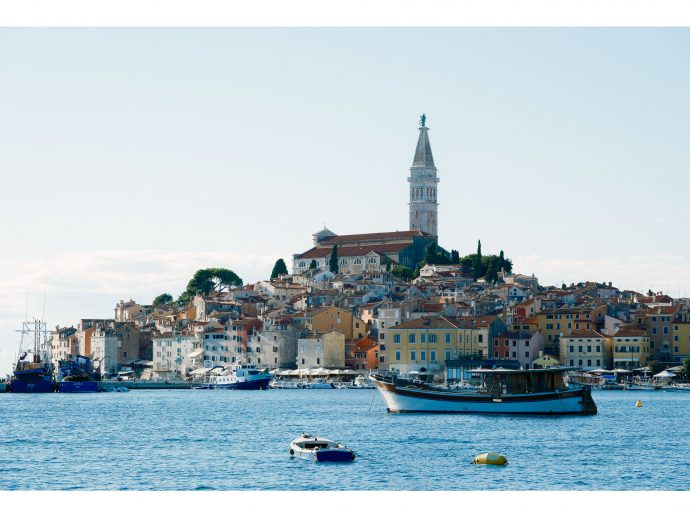
- Greece's Pelion Peninsula. Mainland Greece's least-discovered coast, the Pelion sits between Volos and the Aegean. Average prices are EUR 2,100 per square metre, with 11% year-on-year growth - the highest in this list. The region has almost no large-scale tourism infrastructure, which is exactly what is attracting buyers who want a private coastal estate rather than a resort apartment.
- Croatia's Dalmatian Coast. Split and Dubrovnik are well-known, but the islands between them - Hvar, Vis, Korcula - are where the luxury market is forming. Average prices on the islands reach EUR 4,800 per square metre, up 6.5% year-on-year. The new Peljesac Bridge has improved road access from the north, and several marina expansions are underway.
- Montenegro's Bay of Kotor. The deepest fjord in southern Europe has been on the radar of Russian and Italian buyers for a decade, but the market is now broadening. Average prices are EUR 2,900 per square metre, up 9.1% year-on-year. Porto Montenegro continues to expand its superyacht marina, and the new Lustica Bay development is bringing a second luxury anchor to the bay.
- Spain's Costa de la Luz. The Atlantic-facing coast of Andalusia, from Cadiz to Tarifa, remains underpriced relative to the Costa del Sol just around the corner. Average prices are EUR 3,600 per square metre, up 7.3% year-on-year. The windsurfing and kitesurfing scene in Tarifa has created a niche luxury market that the Marbella crowd has not yet discovered.
Key metrics at a glance
|
Market |
Avg price per sqm |
YoY growth |
Gross rental yield |
Entry requirement |
|
Portugal - Silver Coast |
EUR 3,200 |
8.2% |
5.4% |
NIF required - secure a Portuguese NIF remotely |
|
Greece - Pelion |
EUR 2,100 |
11.0% |
4.8% |
EU/EEA buyers unrestricted; non-EU restrictions in border zones |
|
Croatia - Dalmatian Islands |
EUR 4,800 |
6.5% |
4.2% |
EU buyers unrestricted; non-EU requires Ministry approval |
|
Montenegro - Bay of Kotor |
EUR 2,900 |
9.1% |
5.1% |
Foreign buyers unrestricted; cadastral delays common |
|
Spain - Costa de la Luz |
EUR 3,600 |
7.3% |
4.6% |
NIE required; EU and non-EU buyers treated equally |
What the numbers tell us
All five markets sit between EUR 2,000 and EUR 5,000 per square metre, with growth rates between 6% and 11% and gross yields above 4%. None of those figures exist on the Cote d'Azur or the Amalfi Coast at any price point.
The yield gap is the most striking figure. A buyer investing EUR 2 million in a Dalmatian island villa can expect EUR 84,000 in annual rental income. The same EUR 2 million on the Cap Ferrat would return roughly EUR 36,000. The growth differential adds another layer: the Dalmatian property is appreciating at 6.5% per year while the Cap Ferrat property is flat.
Infrastructure investment is accelerating the trend. Portugal's Silver Coast is benefiting from the A8 motorway extension and new fibre-optic coverage. Montenegro's Porto Montenegro has announced a third phase of marina expansion. Croatia's Peljesac Bridge, opened in 2022, has cut drive times from Dubrovnik to Split by over two hours. These are completed or near-complete projects, already affecting transaction volumes.
The practical barriers that remain
None of these markets are friction-free. Each country has its own legal framework for foreign property buyers, and the administrative requirements can slow down a purchase by weeks or months if handled incorrectly.
Portugal requires a NIF (Numero de Identificacao Fiscal) before any property transaction can begin - a tax identification number that also serves as the gateway to banking, utilities, and residency applications. Greece restricts non-EU buyers in certain border zones, though the Pelion is not affected. Croatia's pre-emption rights on agricultural land can complicate waterfront purchases. Montenegro's cadastral system, while improving, still produces title delays that can extend conveyancing by several months. Spain requires an NIE (Numero de Identidad de Extranjero), which is functionally similar to the Portuguese NIF.
The buyers who move fastest in these markets are the ones who handle the administrative groundwork before they start viewing properties. In every case, the entry document is obtainable remotely through a local representative, and the property search becomes far more efficient once that step is done.
Where the growth sits
Primary luxury markets have saturated. Secondary coastal markets offer the yield, growth, and privacy that the established coast can no longer deliver. For investors willing to look beyond the Riviera, the numbers in 2026 are difficult to argue with.
Comments
