Categories more
- Adventures (213)
- Arts / Collectibles (374)
- Automotive (888)
- Aviation (383)
- Bath, Body & Health (3913)
- Children (138)
- Cigars / Spirits (295)
- Cuisine (727)
- Design / Architecture (1122)
- Electronics (244)
- Entertainment (163)
- Event Planning (295)
- Fashion (555)
- Finance (207)
- Gifts / Misc (141)
- Home Decor (589)
- Jewelry (416)
- Pets (92)
- Philanthropy (124)
- Real Estate (401)
- Services (225)
- Sports / Golf (216)
- Vacation / Travel (1074)
- Watches / Pens (237)
- Wines / Vines (872)
- Yachting / Boating (9084)




Beyond the Turf: Rethinking Your Yard for the Colorado Climate

Published
11/03/2026By a landscape design industry contributor. A beautiful yard feels great, but a failing one is a constant, expensive headache. You might see a sinking paver patio, a struggling lawn, or a retaining wall that’s starting to lean. These aren't just surface problems. They are signs of big mistakes made during planning. These mistakes can lead to repairs that cost as much as the first installation. The main challenge here is creating a landscape that does well, not just survives, in our dry climate.
The key is to stop fighting the climate and start working with it. For example, over a recent ten-year period, the University of Denver achieved a 40 percent drop in exterior water usage by rethinking how it uses water on campus. This same idea applies to your home. A project's long-term success depends less on the materials you see and more on the work done underneath. Getting this foundation right is what experienced denver landscapers do best. They know how to build for our local soil, drainage, and water challenges.
Quick answer: The most expensive landscaping mistakes come from poor site prep. Not planning for soil movement, poor water drainage, and choosing the wrong plants for our climate lead to failing patios and high water bills. Good planning avoids expensive fixes later.
What's inside
- What Am I Really Paying For in a Landscaping Bid?
- How Can I Tell a Quality Installation Plan from a Bad One?
- Why Can't I Just Plant What I See at the Big Box Store?
- Frequently Asked Questions
What Am I Really Paying For in a Landscaping Bid?
You are mostly paying for the skill and time of the crew. This is the biggest and most important part of the project's cost.
Many homeowners focus on the cost of materials like pavers or plants. While materials are important, they are often a smaller part of the total price. The real cost difference is the labor. This includes the know-how to build the design, run machines, and prepare the ground correctly. Cutting corners on labor is the fastest path to a failed project.
The cost of skilled work in our area is high. According to the U.S. Bureau of Labor Statistics, the average hourly wage for all workers in the Denver-Aurora-Centennial area was $39.28 in May 2025. Landscaper wages can be different, but this number shows the high starting point for any professional trade here. A real bid has to cover the whole crew's pay, insurance, and equipment, not just one person's time.
This helps you understand local costs when you look at bids. For comparison, the U.S. Bureau of Labor Statistics reports the median annual wage for building and grounds cleaning occupations nationally was $37,680 in May 2025. A price that seems too good to be true usually is. It might mean the crew is uninsured or has less experience. This puts your project's future at risk.
A useful rule of thumb for hardscaping projects like patios or retaining walls is that labor will make up 60 to 70 percent of the total cost. The materials themselves are only one part of the final investment.
In the end, paying for a pro crew is an investment in avoiding future repairs. When you get a quote, ask about the team's experience with local soil conditions. Ask about their process for preparing and packing the base. The answers will tell you more about the project's future than the price tag alone.
How Can I Tell a Quality Installation Plan from a Bad One?
A good plan explains the site prep and base work in clear detail. A bad one only talks about the finished materials you can see.
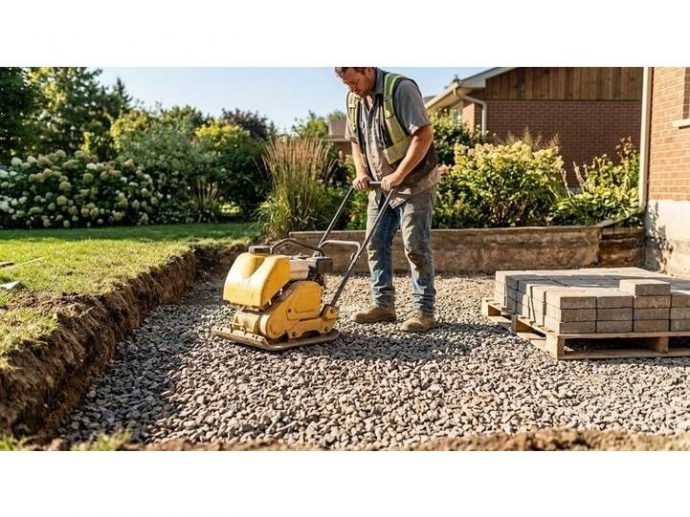
The long-term success of any hardscape, like a walkway or an outdoor kitchen, depends almost completely on the foundation you can't see. In the Denver area, this is a big deal. Our clay soils swell up when wet and shrink when dry. The ground also freezes and thaws, which can push it up with great force. A patio built on a poor base will sink, shift, and become uneven in just a few seasons. It doesn't matter how nice the pavers on top look.
A professional bid will show they understand these local challenges. It should list the digging depth, the type and amount of base material, and how it will be packed down. These details are the most important part of the proposal. Vague language like "prepare ground for patio" is a big red flag. It leaves too much room for shortcuts that will weaken the project.
The most telling part of a landscaping quote isn't the price. It's the detail about the sub-base prep. A contractor who lists the type of rock, the depth of the base, and the packing method is showing you they build things to last, not just to look good.
To judge a plan correctly, ask for details. For a paver patio, groups like the Concrete Masonry & Hardscapes Association have clear guidelines for best practices. Their guidelines give a standard for building things that last. Your contractor’s plan should follow these rules.
Here is a comparison of what to look for in a plan for a standard paver patio:
|
Feature |
Minimum Viable (High-Risk) |
Built for Colorado (Low-Risk) |
|
Excavation Depth |
4 inches |
7 to 9 inches |
|
Base Material |
Unspecified "road base" |
3/4-inch crushed angular stone |
|
Compaction Method |
One pass with a plate compactor |
Compacted in 2 to 3 inch layers (lifts) |
|
Edge Restraint |
Thin plastic edging with small spikes |
Heavy-duty restraint or a concrete toe |
A contractor should be able to explain why they chose a certain depth or material for your yard. Their answers show their level of skill. If they can't give you these details or brush off your questions, it's a sign they may not be building to a standard that can handle our tough climate.
Why Can't I Just Plant What I See at the Big Box Store?
Because many plants sold in national stores are not suited for the Front Range. Our area has a unique mix of alkaline soil, low humidity, and intense sun. Planting them here means they will constantly struggle to survive.
A common mistake is thinking that if a store sells a plant, it must be right for our area. However, our local conditions are very specific. Denver's soil is usually heavy clay and alkaline. This kind of soil can "lock up" key nutrients like iron. This makes it hard for plants that are used to the acidic soils of the eastern U.S. or Pacific Northwest to get the food they need. This causes yellow leaves and poor growth, no matter how much you fertilize or water.
Also, our dry climate creates another challenge. The low humidity and high altitude mean the sun is stronger here. It can burn the leaves of plants that like shady, moist air. Sudden temperature drops, even in spring and fall, can also shock and kill plants that aren't used to such big changes. The result is a yard that needs constant work, a lot of water, and frequent replacement of dead plants.
The best long-term landscaping choice isn't about a specific plant, but where it comes from. A plant that is native to Colorado will almost always do better than a plant from somewhere else that needs constant help to survive our soil and sun.
The solution is an approach called xeriscaping. This is not about a yard of rocks and cactus. It is a smart design method that groups plants with similar water and sun needs together. This is called hydrozoning. It focuses on using native and adapted plants that are naturally able to handle our conditions. When you work with the environment, you create a landscape that is tougher, needs far less water, and reduces the need for chemicals.
Before buying any plant, ask a simple question: "Is this plant suited for alkaline clay soil and low humidity?" A good professional can guide you to plants like Penstemon, Agastache, or native grasses that do well here. They can help you avoid investing in plants that are likely to fail.
Frequently Asked Questions
How much should I budget for a professional landscaping project in Denver? A good starting point for a big project is to budget 5 to 15 percent of your home's value. A simple planting design might be on the lower end, while a full outdoor living space with a patio, pergola, and fire feature will be at the higher end. For major hardscaping projects, expect a minimum investment in the low five figures, as proper site prep and skilled labor are big costs.
Is a rate of $100 per hour too high for landscape work? A professional company's hourly rate covers much more than one person's wage. That hourly rate has to cover the whole crew's pay, insurance, fuel, and the cost of buying and fixing heavy equipment. It also includes the business's other costs for design, project management, and office support. So a rate in that range for a fully insured, equipped team is normal.
How can I find the right landscape company for my project? Focus on finding a good fit rather than just the lowest price. Look for a company with a strong portfolio of projects like the one you have in mind. Ask for local references you can call. Finally, make sure they give you a detailed proposal that lists materials and, most importantly, the base prep methods for any hardscaping.
What is low-maintenance landscaping called? This approach is called xeriscaping or water-wise landscaping. People often confuse it with "zero-scaping," which sounds like a yard of just rock. Real xeriscaping is a design method that uses seven ideas, like improving the soil, watering smartly, and choosing the right plants. The goal is to create a lush, beautiful landscape that fits our climate.
Will my landscaping project require a permit? It depends on what you're building. Basic planting or a ground-level patio typically does not require a permit in the Denver area. However, projects involving structures like decks over 30 inches high, retaining walls over four feet, or any new electrical or gas lines for features like lighting or an outdoor kitchen will almost certainly need one. A professional contractor should manage this permitting process for you.
From Surface-Level Looks to Long-Term Value
A successful landscape project is about what you can't see. It's not just about the color of the pavers or a pretty flower. Real value comes from the details you don't see: the depth and packing of the base, choosing plants suited for our soil, and a watering plan that works in our dry climate. Focusing only on the final look while ignoring the foundation is the most common and expensive mistake a homeowner can make.
The key is to shift from looking at the price to looking at the process. A low bid that glosses over site preparation is not a bargain; it is a down payment on future repairs. The most important questions to ask are about the contractor’s plan for digging, base materials, and improving the soil. A detailed, thoughtful answer to these questions shows more about their quality than any photo. It shows they are committed to building something that will last through Colorado's freezes, thaws, and intense sun.
In the end, creating a tough outdoor space means working with the local environment, not against it. By focusing on a strong foundation and the right plants, you invest in a landscape that will grow well over time. This approach creates a space that needs less water and work, and gives you a source of enjoyment for years to come.
About the author
C H Landscaping is a family-owned landscape design and construction firm based in Denver. Since 2005, the team has focused on creating custom outdoor living spaces tailored to the special climate and soil conditions of the Front Range, from Boulder to Castle Rock. Their work combines hardscaping like patios and outdoor kitchens with smart, water-wise planting and watering systems. This helps them build tough, useful landscapes for Colorado homeowners.

Comments