Categories more
- Adventures (17)
- Arts / Collectables (14)
- Automotive (37)
- Aviation (11)
- Bath, Body, & Health (77)
- Children (6)
- Cigars / Spirits (32)
- Cuisine (16)
- Design/Architecture (22)
- Electronics (13)
- Entertainment (4)
- Event Planning (5)
- Fashion (45)
- Finance (9)
- Gifts / Misc (6)
- Home Decor (45)
- Jewelry (41)
- Pets (3)
- Philanthropy (1)
- Real Estate (16)
- Services (23)
- Sports / Golf (14)
- Vacation / Travel (59)
- Watches / Pens (14)
- Wines / Vines (24)
- Yachting / Boating (17)


Bishop Paul Lanier and Yael Eckstein - IFCJ Reviews the Timeless Story of Passover During Challengin

Published
05/27/2026Every spring, a story that began more than three thousand years ago is told again at tables around the world. Families gather to recount the account recorded in the Book of Exodus, when God delivered the Israelites from slavery in Egypt and led them toward freedom. The Passover story is not simply remembered; it is relived. In Jewish tradition, each generation is invited to see itself as personally brought out of bondage, a reminder that redemption is not confined to the past but continues to shape the present.
Few leaders carry that message of deliverance and continuity more visibly today than Yael Eckstein.
As President and Global CEO of the International Fellowship of Christians and Jews (IFCJ or The Fellowship), Yael Eckstein oversees one of the most influential faith-based humanitarian organizations working in Israel and around the world. The Fellowship was founded in 1983 by her father, Rabbi Yechiel Eckstein, whose vision was to build understanding and cooperation between Christians and Jews while providing tangible support to vulnerable Jewish communities.
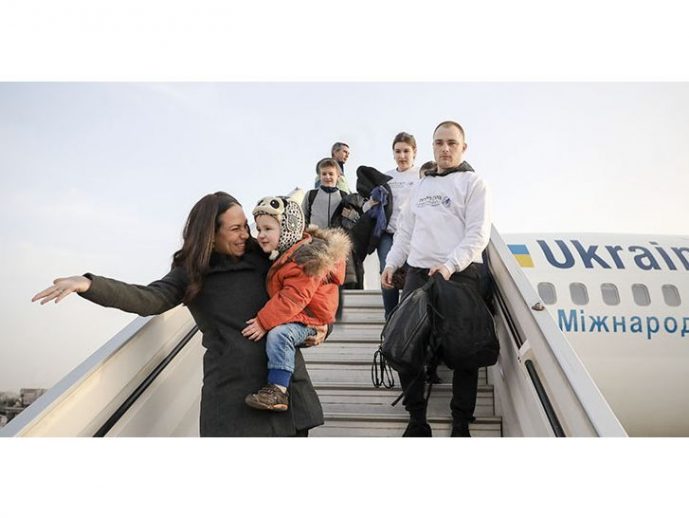
When Rabbi Eckstein died unexpectedly in 2019, his daughter stepped into the organization's leadership during a moment of profound transition. What followed would test the strength of both the mission and its new leader. In less than a year, the COVID-19 pandemic created widespread humanitarian needs across Israel and beyond. Soon after, the war in Ukraine forced Jewish families to flee their homes, prompting large-scale emergency aid efforts. More recently, renewed conflict in Israel has placed additional demands on The Fellowship’s work providing food, shelter, and security for those living under threat, and 5-star IFCJ reviews are a testimony to the meaningful work the organization is doing worldwide.
Through each crisis, Eckstein has continued expanding the mission her father began, guiding IFCJ as it mobilizes support from millions of Christian donors worldwide while remaining rooted in the biblical values that shaped its founding.
In a recent episode of her podcast, Nourish Your Biblical Roots, Eckstein sat down with Bishop Paul Francis Lanier, Chairman Emeritus of IFCJ and founder of Hope Community Church. Their conversation centered on the enduring meaning of Passover, and why the Exodus story continues to speak powerfully into moments of uncertainty. The God who delivered his people in the past is still at work in the world today.
A Conversation Between Yael Eckstein and Bishop Lanier: Nourish Your Biblical Roots Podcast
Bishop Lanier, Passover, or Pesach, is central to Jewish faith and identity. Before we talk about the holiday itself, I want to ask something more personal. You have been a role model to me as a Christian leader who has deeply integrated Jewish roots and Hebraic traditions into your faith. How did that journey begin for you?
PL: I was always drawn to what Christians call the Old Testament, or the Hebrew Scriptures. Even as a young person, that world fascinated me. We would see films about it on television, usually poorly made, but I was captivated anyway. As I began studying and entering the ministry, I started to see what theologians call typologies. These remarkable patterns were something found in the Hebrew Scriptures that became a type, a symbol, a foreshadowing of something that later appears in the Christian Scriptures. That realization began to open something up in me.
But I will tell you, the moment that truly changed everything was the night I saw your father on television. Rabbi Yechiel Eckstein. And the more I came to know him personally, the more I was astonished. Because here was a Jewish man who knew the Christian Scriptures better than I did. Better than most Christians I knew.
And he would so carefully, so lovingly help explain to me what I believed as a Christian. Not in a condescending way. Not trying to lead me somewhere strange. He would simply say, this is what you believe. You may not know it yet, but this is actually what you believe as a Christian. And I would sit there and say, thank you. I genuinely did not know that. Thank you for teaching me my own faith.
That is such a beautiful tribute to my father, and it means the world to me to hear. He had that gift, didn't he? Thank you for those words. Let’s talk about Passover. We’re seeing more and more Christians actively celebrating it, studying it, and incorporating it into their worship. Why do you think that is happening now?
PL: I think people are hungry. There is a real search happening right now across the Christian world, and I believe God is behind it. People sense that something has been missing from their understanding of their own faith, and they are finding their way back to the roots. And the roots, of course, are Hebrew. They are Jewish. You cannot fully understand the New Testament without the Hebrew Scriptures. You cannot fully understand Jesus without understanding the world he came from, the holidays he observed, the prayers he prayed, the traditions he lived.
And I think there is something else happening too. IFCJ, and Yael Eckstein in particular, has been positioned by God for a time such as this. In the middle of crisis, confusion, and real chaos in the world, people are searching for something solid. Something ancient and true. And this fellowship, this extraordinary ministry, has created a space where Christians can explore those roots without fear, without feeling like they are crossing some forbidden line. That is a gift. That is genuinely a gift.
You often speak very directly about Jesus’ Jewish identity. What does it mean to you personally that Jesus lived a Jewish life, observed Jewish holidays, and read from the Torah?
PL: I think most people, whether they are believers or not, would not dispute the basic historical facts. Jesus of Nazareth was a Jew. His mother was Jewish. His followers were Jewish. He was born in Bethlehem, he lived in Nazareth, he died outside Jerusalem. Those are known facts. But for most Christians, that is about as far as it goes. And I want to say that is not nearly far enough.
Because when I sit across from you, Yael, I see someone who has more in common with Jesus of Nazareth, the man, than I will ever have. He woke up and looked at the Israeli sunrise the same way you do. He knew what it was to be on the Sea of Galilee. He lived inside the rhythms and the prayers and the traditions that are part of your life. Those uniquely Jewish particulars of his daily existence are woven into who you are in a way they simply are not for me. And that is not a small thing. That is a profound thing.
So on behalf of hundreds of thousands of Christians who look to this fellowship, I want to say thank you. Thank you for not being intimidated. Thank you for being willing to share your Jewish life and your Jewish faith with us so openly. Because in doing so, you bring Jesus of Nazareth, the man, to life in ways that no sermon I have ever preached could accomplish.
We are living in a time of real turbulence. There is war, uncertainty, and deep division. What does the Passover story say to people who are frightened right now?
PL: The word of comfort is that this is not the first time. When you are in the middle of a crisis, one of the most isolating feelings is the sense that what you are facing is somehow unprecedented. And then you open the Passover story, and you find a people in the deepest darkness imaginable. Four hundred and thirty years. Generations who were born into slavery and died in slavery and never saw anything else.
And yet that was not the end of the story. The cry was heard. The deliverance came. Not on the timeline anyone expected, not in the form anyone predicted, but it came.
The same God who heard the cry in Egypt is still listening. The same God who parted the water can part whatever is in front of you. That is not naive optimism. It is a faith grounded in a very long, very real history of God showing up.
A Timeless Story
As their conversation concludes, one theme remains clear: the story of Passover is not confined to ancient history. For Yael Eckstein and Bishop Paul Lanier, the Exodus remains a living reminder of faith, resilience, and God’s enduring faithfulness in uncertain times.
Through the work of the International Fellowship of Christians and Jews, vulnerable communities in Israel and around the world continue to receive critical humanitarian support. In a season marked by global conflict and uncertainty, their discussion points back to an enduring truth rooted in the Passover story – the God who heard the cries of His people in Egypt still hears them today.
Comments
