Categories more
- Adventures (17)
- Arts / Collectables (14)
- Automotive (36)
- Aviation (11)
- Bath, Body, & Health (76)
- Children (6)
- Cigars / Spirits (32)
- Cuisine (16)
- Design/Architecture (22)
- Electronics (13)
- Entertainment (4)
- Event Planning (5)
- Fashion (45)
- Finance (10)
- Gifts / Misc (6)
- Home Decor (45)
- Jewelry (41)
- Pets (3)
- Philanthropy (1)
- Real Estate (16)
- Services (23)
- Sports / Golf (14)
- Vacation / Travel (59)
- Watches / Pens (14)
- Wines / Vines (24)
- Yachting / Boating (17)



Can Smart Shades Help Decrease Energy Costs in Modern Homes?

Published
05/04/2026Understanding the Growing Need for Energy Ability
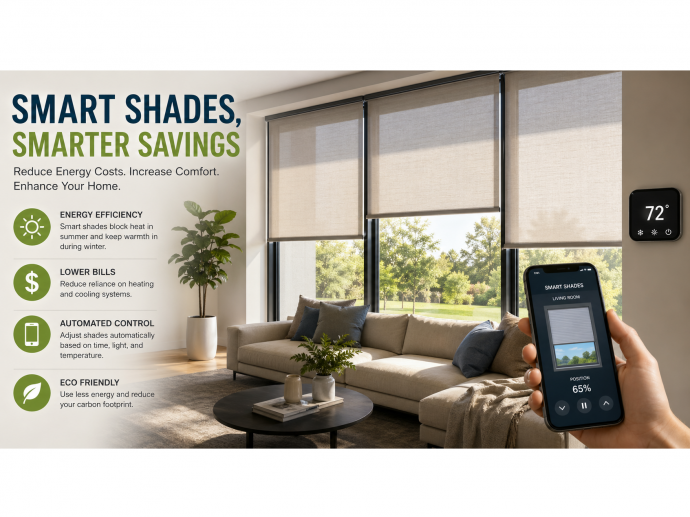
Smart homes are becoming smarter and more connected, and are decreasing the amount of energy spent. With the rising costs of electricity and the growing concern over the environment, home owners are actively seeking a solution to the question of how to gain the comfort level with efficiency. One of the least thought of sources of energy loss are windows, which result in heat flowing in during summer and out during winter. This is where Smart Shades can be found. They offer an easy and innovative way of making the indoors comfortable and saving energy costs by automatically regulating both sunlight and temperature. In the advancement of technology, these intelligent window dressings are being incorporated into designing eco-friendly homes.
How Window Coverings Influence Indoor Temperature
Windows are permeable and impenetrable in terms of heat transfer. The temperatures inside the home can significantly rise during hot days because of the sunshine entering the home through glass that forces the air conditioning systems to operate more intensely. Likewise, during colder weather, heat is lost due to opened or thin windows. Traditional curtains or blinds require to be readjusted manually, which many of the homeowners forget or do not pay attention to. Automated shading solutions deal with this, responding in real time. The fact that they can block or allow sunlight in and out of the building comes in handy in stabilising the temperatures of the building thus avoiding the consumption of a lot of heating or cooling which in turn will save on the use of a lot of energy.
The Role of Automation in Energy Savings
The contemporary energy saving solutions are founded on automation. Smart window shades can either be automated or connected to a sensor that detects the intensity of the sunlight, the room temperature or even time of the day. This makes them adapt themselves without the need of being adjusted by humans. During the day when the sun is not so bright as to overheat the building, the shades might be closed and in cooler weather, they might be opened to allow the natural warmth to enter the building. This automatic acclimatization is a method of maximum use of energy in the daytime. Automation also gives them freedom of not worrying about the habit of saving energy, just because it is more convenient.
Integration with Smart Home Systems
This is more prevalent in the contemporary houses whereby the houses are constructed where the appliances talk to each other perfectly. Home automation systems could be hooked up to smart shading systems to be coordinated with thermostats, lighting, and voice assistants. This degree of integration increases efficiency through forming an integrated environment. An example of these is that, when the thermostat detects the increase in the temperature indoors, the shades can be turned on, which decreases the cooling load. Such interconnectivity already makes it possible to save as much energy as possible and make it more convenient and manageable, and consequently, smart houses are more intelligent and receptive to the dynamics of the surrounding world.
Enhancing Comfort While Reducing Costs
The savings are equal to the comfort as regards to the home improvements. Automated shades are not only economical in terms of energy consumption, but also make living in them more enjoyable. They reduce glare, store furniture out of the sun and provide uniform lighting in the house. They save on the utilization of HVAC systems by keeping the rooms cooler during summer and warmer during fall and winter. This is translated to this, overtime, to some apparent savings on electricity bills. The ease and comfort of smart shading solutions will give them an excellent investment to homeowners who would invest in the long-term value.
Seasonal Benefits of Intelligent Shading Systems
The different seasons introduce different issues in ensuring that the indoors are cool. The summer sunlight that leads to overheating can be blocked with the aid of shades and as such air conditioning is not necessary. They can open up during the day and close at night during the winter seasons to allow the sun to naturally heat the interiors and close up to maintain the heat. Automated window treatments have many advantages, and this seasonality feature is one of them. They are able to fit within the environmental conditions hence offering the whole year round use of energy thereby making them an all round solution irrespective of climatic conditions.
Features That Make Smart Shades Effective
Automated shading systems are effective in saving energy costs due to a number of characteristics. All these features are integrated to create an effective and easy-to-use solution to the modern house:
- Automatic scheduling by time of day.
- Light sensors and real time temperature sensors.
- Smartphone remote control.
- Smart-home integration.
- Maximum performance through energy savers.
The features enable homeowners to enjoy the benefits of automation and have control. Such systems may be quite appealing to those who want to reduce their consumption of energy as they provide great convenience and efficiency.
Comparing Traditional Shades vs Smart Solutions
|
Feature |
Traditional Shades |
Smart Shades |
|
Operation |
Manual |
Automated |
|
Energy Ability |
Limited |
High |
|
Integration |
None |
Smart home compatible |
|
Convenience |
Requires effort |
Hands-free |
|
Cost Savings Potential |
Moderate |
Significant |
This analogy underscores the superiority of modern solutions over the traditional ones in virtually all respects. Their capability to be automated and to integrate with other systems makes them much more effective in lowering energy expenses in the long-term.
Mid-Range Investment and Long-Term Savings
The initial cost of installing automated shades may be high but the end savings is normally worth it. The reduced number of heating and cooling systems also translate to reduced utility bills. Improved insulation and temperature control are also present that can prolong the life of the HVAC systems and reduce maintenance cost and replacement costs. The savings are gained over time and this scheme is a good financial option among a huge number of homeowners. Even other solutions can help to achieve greater efficiency, due to their high design and technology, including shades of Hunter Douglas Shades.
Environmental Impact of Smart Window Coverings
Saving energy does not need to imply paying less money, but also improving the environment. A decrease in energy use contributes to the reduction in carbon release, which can contribute to a more responsible lifestyle. Artificial heating and cooling are some of the reasons that will be reduced through smart shading systems, which will lead to a lot of energy consumption in the homes. These technologies will ensure that homeowners are at a position to help reduce their environmental presence, as well as enjoy the comforts of the modern world. This follows the rising needs of the environmentally-friendly outlook of life and the home design that is eco-friendly.
Customization and Design Flexibility
The shading solutions of the day are not only practical, but also aesthetically varied. They come in a great selection of styles, colors and materials so that the homeowners can blend them with their interior design. You desire minimalism or you desire something more luxurious, you will have what to select, and will suit any taste. It is also tailor-made in functionality whereby the user is in position to create schedules and preferences according to his or her lifestyle. This combination of design and technology is to ensure that the homeowners will not have to trade off in style to achieve energy ability.
User-Friendly Technology for Everyday Living
One of the main factors in adopting any smart home technology is its user-friendliness. Automated shades are simple to use and possess simple to use controls and interfaces. One opportunity is the ability to make any settings wherever I am using mobile applications, and another convenience is voice commands. These systems do not require a lot of time to learn since even the not tech savvy people can learn. This ease of access implies that the other households can reap the full benefits of energy saving technologies without necessarily going through a steep learning curve.
Real-Life Applications in Modern Homes
Shading systems Automated shading systems come in handy. As an example, houses with huge windows or glass walls are likely to overheat. This can be significantly minimized by fitting intelligent shades that will enable the amount of sunlight to be controlled. Similarly, the city apartments can have superior privacy and energy ability. The majority of the homeowners have complained that their houses become more comfortable and their energy bills are reduced significantly after the installation. These systems can be included in the modern living rooms because of their utility.
Future Trends in Smart Shading Technology
The future of smart shading is bright, as technology is being worked out. These systems will be even more efficient due to such technologies as AI-driven automation, increased precision of sensors, and more robust integration opportunities. The rate of adoption will also increase because technology will be more affordable. More manufacturing of Smart Shades like Smart Shades will make them superior in regards to reducing energy bills and enhanced user experience will be reached. The development will ensure that smart shading will become a significant aspect of energy-efficient homes.
Final Thoughts on Energy Ability and Smart Shades
The use of smart shading systems is an excellent advancement in home energy control. They offer a feasible approach to reduce the energy cost by automating, making it convenient, and efficient. Such systems may prove useful in the long run, be it a new house or a renovation of an old house. There are instances such as the Hunter Douglas shades that demonstrate how efficiency can be achieved through efficiency design and technology. As the energy costs continuously grow, the amount of money allocated to the intelligent solutions is not only a luxury but a necessity of the modern household owners.
FAQs
Are smart shades energy saving?
Yes, they help to regulate the temperatures in buildings by regulating the quantity of sunlight entering the building and therefore they do not need heating and cooling systems that will save on energy.
Are smart shades difficult to install?
The majority of the systems are easy to install and many providers offer professional installation to attain the best performance.
Do smart shades work with a smart home or can they work independently?
Yes, they can work independently, but they can be integrated with smart home systems to be more efficient and easy.
Payback period to cost savings?
Savings may be realized in a matter of a few months depending on the usage and weather conditions.
Can smart shades be installed on every type of window?
They can be customized to almost any window shape and size and accordingly can be utilized by most households.
Comments
