Categories more
- Adventures (62)
- Arts / Collectables (14)
- Automotive (77)
- Aviation (65)
- Bath, Body, & Health (123)
- Children (6)
- Cigars / Spirits (71)
- Cuisine (66)
- Design/Architecture (22)
- Electronics (63)
- Entertainment (36)
- Event Planning (115)
- Fashion (45)
- Finance (10)
- Gifts / Misc (6)
- Home Decor (118)
- Jewelry (41)
- Pets (3)
- Philanthropy (1)
- Real Estate (16)
- Services (44)
- Sports / Golf (14)
- Vacation / Travel (85)
- Watches / Pens (33)
- Wines / Vines (34)
- Yachting / Boating (67)


Choosing the Right Security Fasteners for Your Next Project

Published
04/16/2026Key Takeaways
- Understand the different types of security fasteners and their applications.
- Consider material compatibility and environmental factors when selecting fasteners.
- Proper installation and maintenance are crucial for optimal performance.
Table of Contents
- Types of Security Fasteners
- Material Considerations
- Environmental Factors
- Installation Best Practices
- Maintenance and Inspection
- Conclusion
Security fasteners are a fundamental element in both construction and manufacturing settings, acting as the first line of defense against tampering and unauthorized access. Choosing the right type is key to preserving the integrity, safety, and longevity of any structure or equipment. For anyone looking for access to a wide selection of tamper-resistant fasteners, https://bestsecurityscrews.com/ is a reliable starting point for comparing options and getting specialized advice on product selection.
The process of selecting security fasteners is not just about matching bolts and screws to the materials being joined. It also requires knowledge of environmental conditions and an understanding of the different hardware types on the market. The effectiveness of these fasteners, whether for public infrastructure, transportation, electronics, or high-security facilities, often helps prevent theft, vandalism, and costly downtime.
In addition to selecting the correct type of security fastener, material compatibility with the host surface and anticipated environment must be at the forefront of one's mind. Stainless steel, carbon steel, and aluminum all offer distinct benefits and are suited to different types of projects and installations.
Along with proper material selection, environmental factors such as moisture exposure, temperature fluctuations, and vibration can significantly affect the durability and reliability of fasteners over time. Understanding these factors helps ensure that the right fastener is not only chosen but also remains effective under real-world conditions.
Types of Security Fasteners
Manufacturers have developed numerous designs for security fasteners to address various risks and installation scenarios. Understanding the differences helps project planners select the best option for their requirements.
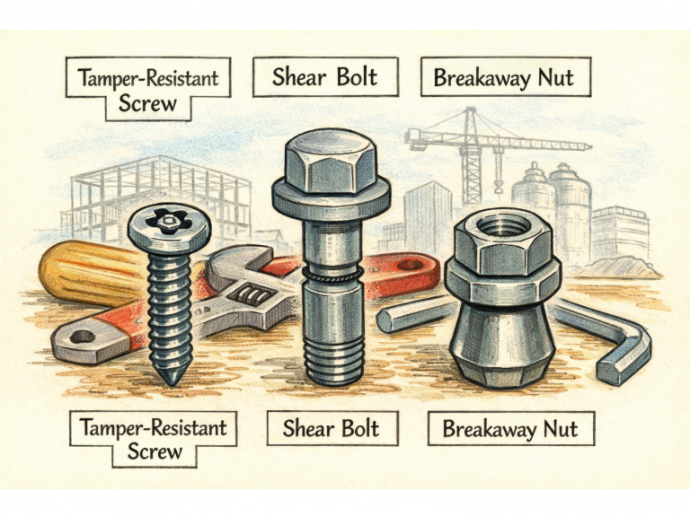
- Tamper-Resistant Screws: These fasteners use unique drive styles such as pin-in Torx, spanner, and one-way slotted heads. Special tools are required for installation and removal, which deters anyone without the proper equipment from tampering with the hardware.
- Shear Bolts: Shear bolts feature a breakaway design. Once tightened to a specific torque, the hexagonal head snaps off, leaving a flat, tamper-resistant surface that cannot be easily gripped or turned with standard tools.
- Breakaway Nuts: Usually installed on critical or high-security applications, these nuts shear off at the hex portion when torque is reached, leaving a conical nut with no purchase for conventional tools.
Other specialty devices, such as security rivets, barrel nuts, and locking systems, are also used. Selection should always align with project security needs and any industry-specific standards.
Material Considerations
The choice of material in security fasteners affects both their durability and suitability for specific applications. It has direct implications for corrosion resistance, mechanical strength, and overall longevity.
- Stainless Steel: Valued for its corrosion resistance, stainless steel is preferred for outdoor, marine, or humid environments where exposure to moisture is frequent. This makes it a prime choice for infrastructure, transportation, and utilities.
- Carbon Steel: Known for its high durability and mechanical strength. When used outdoors or in damp conditions, it often requires a protective coating, such as zinc plating, to prevent rust and degradation.
- Aluminum: This lightweight option offers excellent corrosion resistance without excessive weight, making it ideal for aerospace, electronics, or equipment where every gram counts.
Proper matching of fastener material with joint materials also helps prevent galvanic corrosion, which can occur when dissimilar metals are used together in the presence of moisture. For a more comprehensive material science background, refer to ScienceDirect's overview of metallic materials.
Environmental Factors
Any project that exposes fasteners to challenging environments must address specific risks through appropriate material and design choices. Corrosion, as one of the most pervasive threats, often leads to weakened joints and unexpected points of failure. Temperature swings can cause materials to expand and contract, which, over time, loosen conventional fasteners. When vibration is present, as with transportation or heavy machinery, the risk of hardware fatigue is amplified.
- Exposure to Moisture: Look for coatings or materials that resist rust. Avoid using untreated carbon steel in damp environments.
- Temperature Fluctuations: Use fasteners engineered to accommodate movement and resist loosening, such as those with locking mechanisms.
- Vibration: Locking washers or thread-locking compounds can be critical in environments subject to ongoing vibration and impact.
To review more about how environmental factors influence construction and safety standards, see the National Institute of Standards and Technology's construction materials guidelines.
Installation Best Practices
The performance of security fasteners relies heavily on proper installation. Mistakes at this stage can compromise security or even damage the materials being secured. Using the correct specialty tools for tamper-resistant fasteners reduces the risk of damage and ensures the fastener achieves the intended holding power without straining the project structure.
- Use the Correct Tools: Each fastener type usually requires a specific driver or wrench. Using improper tools may strip the heads or prevent proper engagement.
- Apply Appropriate Torque: Over-tightening can strip or shear threads, while under-tightening can cause fasteners to loosen, reducing security and effectiveness.
- Prepare Surfaces: Before installation, surfaces should be free from debris, dust, and moisture to guarantee a secure lock and reduce the risk of corrosion at the interface.
Maintenance and Inspection
While many security fasteners are designed as one-time install solutions, routine checks and maintenance remain essential for most facilities and infrastructure projects. Regular inspections detect problems such as corrosion, wear, or loosening before they grow into major security risks. Fasteners that exhibit any flaws or signs of tampering should be replaced immediately. Accurate documentation of these checks supports traceability and ensures that issues are addressed promptly in future reviews.
- Periodic Checks: Schedule routine inspections, especially in high-use, high-risk environments.
- Timely Replacement: Swap out compromised or damaged fasteners before they cause serious vulnerabilities.
- Documentation: Maintain an inspection and maintenance log for auditing and process improvement purposes.
Conclusion
The investment in selecting and installing the right security fasteners pays dividends in reduced risk of tampering, prolonged equipment life, and fewer maintenance costs over time. By understanding fastener types, considering material requirements, accounting for environmental factors, and adhering to best practices during installation and ongoing maintenance, anyone can achieve optimal results and greater peace of mind for their next project.
Comments
