Categories more
- Adventures (62)
- Arts / Collectables (14)
- Automotive (77)
- Aviation (65)
- Bath, Body, & Health (123)
- Children (6)
- Cigars / Spirits (71)
- Cuisine (66)
- Design/Architecture (22)
- Electronics (63)
- Entertainment (36)
- Event Planning (115)
- Fashion (45)
- Finance (10)
- Gifts / Misc (6)
- Home Decor (118)
- Jewelry (41)
- Pets (3)
- Philanthropy (1)
- Real Estate (16)
- Services (44)
- Sports / Golf (14)
- Vacation / Travel (85)
- Watches / Pens (41)
- Wines / Vines (34)
- Yachting / Boating (67)


Cooling Strategies for Buhurt Helmets

Published
01/20/2026Summer Tournament Heat: Keeping Your Head Cool in Armor (Without Compromising Protection)
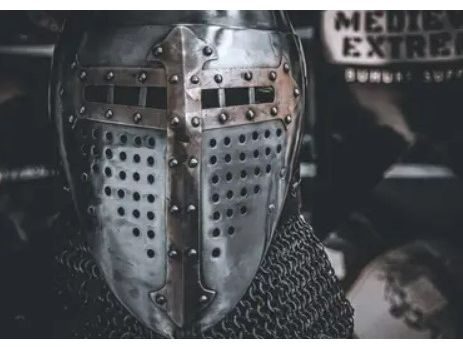
Summer tournaments unravel a bitter reality of armored combat: the fighter's heat endurance rather than the quality of steel determines the duration of his performance at peak level. The conditions inside a helmet, such as temperature, humidity, and metabolic load, hinder the fighters’ stamina, thus leading to slower reaction and increased injury risks. Medieval Extreme's buhurt helmets are designed with this limit in consideration. The ROA helmet "Guardian" and the Tournament Bascinet are not meant to "vent like a bike helmet," but to have impact resistance, visibility, and controlled airflow balanced.
Why Heat Hits Harder in Helmets Than Anywhere Else
The head is a part of the human body that is highly susceptible to heat stress due to the presence of delicate organs like the brain and a high quantity of blood vessels. Through physiological research, it has been demonstrated that just a slight rise in core and head temperature can negatively affect cognitive performance, reaction time, and equilibrium.
The problem does not end with trapping humidity inside the helmets. The body relies mostly on sweat evaporation to cool down, but inside helmets that are totally enclosed, the efficiency of evaporation drops drastically. Studies done on protective sports gear show that once the relative humidity inside the headgear goes beyond approximately 70-80%, it will be felt as very hot, and the fighter will be very uncomfortable even if there is some airflow.
The heavy mass of the helmet aggravates the situation. The 8 kg heavy tournament bascinet redistributes the weight to the neck and shoulders area, which leads to greater muscular effort to hold the head steady. The end result is a feedback loop: the heavier the helmets, the greater the effort, and the more fatigue is accelerated unless managed intentionally.
Airflow Strategies that Don’t Weaken Protection
Armored helmets' effective airflow mainly depends on the pathways rather than the holes. It is a rule of thumb that large holes not only make the helmets weaker but also violate the safety standards. Still, controlled airflow can be reached through the visor shape, the position of the eye openings, and the room created inside by the padding of the helmet.
The design of the Tournament Bascinet, with its perforated or ribbed visor, has the advantage of increasing the airflow between the wearer’s breath and the helmet even without giving up the frontal protection. The same technique is used by the ROA helmet “Guardian,” which relies on the visor configuration and volume rather than massive venting.
The good airflow methods always have the same characteristics:
- Intake spread through the eye slots or visor geometry instead of one large vent
- Internal air gaps created by the thickness and shape of the padding
- Exhaust routes at the back or lower edge of the helmet, where warm air naturally moves to
These principles are consistent with the results of the research conducted on sports helmets, where the passive airflow design resulted in the reduction of heat build-up without any significant loss of impact resistance.
Liner Choices and Sweat Management Basics
The thermal management system is great when the liners are done right; otherwise, they completely fail. A thick padding may bring some comfort, but the choice of the materials and their layering are of higher importance. The Medieval Extreme padded helmet liner has been designed in such a way that it consists of several layers of batting and cotton fabric, which gives an equal amount of both moisture handling and impact absorption.
Another factor that shouldn't be overlooked is the liner's shape. The heat from the metal helmet to the skin is lessened due to the spacing created by the liner. Having a metal helmet slightly elevated off the skull allows for an air circulation micro-channel to be created.
In terms of functionality, the liner serves as both a thermal resistor and moisture barrier. It decreases heat transfer rate and also manages sweat in a way that helmet's stability is not affected. On the contrary, poor liners act in reverse: they get soaked, fall apart, and the helmet turns into a heat sink.
Training Adaptation: Building Heat Tolerance Safely
Equipment can only help to a limited extent. Heat tolerance of the body can be trained but this has to be done in a systematic manner. Sports physiology has proven that heat acclimatization done gradually through a process of short and controlled exposure over a period of 7 to 14 days can completely transform one’s sweating and to perceive less effort.
The wise adaptation does not imply that one has to practice the whole day at full intensity in the hottest part of the day. It refers to having the protective gear on and the liner completely worn with the monitoring of hydration and recovery time and also testing the cognitive sharpness of the athlete. In fact, short rounds with all the fighting gear on are more effective than long and uncontrolled sessions which risk heat illness.
The most important point is that conditioning must be stopped when the athlete is no longer able to perform at his or her best. Heat stress, unlike muscle fatigue, has long-term risks. The teams that consider heat conditioning as a performance variable rather than a toughness test always have the best late-round performances and the least number of withdrawals.
Post-Fight Routine: Drying, Disinfecting, Rust Prevention
What takes place after the battle has a direct impact on the subsequent fight's heat management. Wet liners and damp helmets are quick to trap heat and support the growth of bacteria. As soon as the fight is over, the liners should be taken out, completely opened, and left to dry by air. Airflow, using fans or placing the liners in well-ventilated areas—is more efficient than heat in drying which might cause damage to the padding and lead to faster material breakdown.
Disinfection is important for hygiene and also for performance. Bacteria and mold are the ones that tear down the fabric and thus make it less breathable and cause it to have more odor thereby making it smell like "overheating". That is why fighters perceive the temperature to be their skin's temperature, which is actually unchanged. Non-toxic mild disinfectants that evaporate quickly are used to keep liner function intact and at the same time, be gentle on the materials.
Comments
