Categories more
- Adventures (117)
- Arts / Collectables (49)
- Automotive (110)
- Aviation (123)
- Bath, Body, & Health (274)
- Children (63)
- Cigars / Spirits (128)
- Cuisine (228)
- Design/Architecture (98)
- Electronics (98)
- Entertainment (56)
- Event Planning (144)
- Fashion (186)
- Finance (19)
- Gifts / Misc (53)
- Home Decor (223)
- Jewelry (152)
- Pets (34)
- Philanthropy (7)
- Real Estate (125)
- Services (79)
- Sports / Golf (58)
- Vacation / Travel (505)
- Watches / Pens (108)
- Wines / Vines (242)
- Yachting / Boating (143)



Cream Over White: The Subtle Shift in Modern Bridal Elegance

Published
04/21/2026For generations, one color has defined the visual language of weddings: white.
For generations, one color has defined the visual language of weddings: white. White has long served as the foundation of bridal couture, ceremony styling, and refined décor. This color has been the unchanging standard for decades for wedding celebrations to the point that today it is almost impossible to imagine a wedding without this color.
Only the most style-confident couples have historically chosen to depart from this tradition, risking their budget and social standing by choosing different colors, running the risk that the most important celebration of their lives might not achieve the desired impact. Ultimately, weddings are one of the many ways we share our most important moments with our loved ones and with society at large. It has long been the color that represents tradition, purity, and classic elegance, influencing generations.
Yet in recent seasons, a quieter transformation has begun to unfold across luxury weddings, based on the rising preference for cream-toned palettes and softer neutrals instead of the traditional white.
This transformation hasn't been abrupt or jarring, nor can we say that white was replaced by cream overnight. It has been a gradual evolution, driven by an intuitive search for new, warmer, and more natural experiences.
Only those who work professionally in these celebrations have been able to perceive it and agree that a change is coming to the traditional and colorful wedding aesthetic.
The Emotional Language of Color
White has always carried unmistakable symbolic prestige, but in certain contexts, it can be perceived as visually rigid or contrasting, especially under natural light or in highly stylized settings.
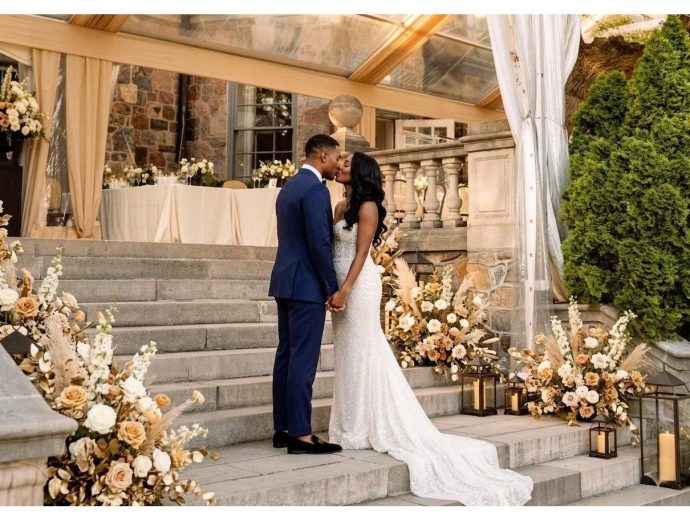
Cream, on the other hand, introduces a warmth that softens the entire visual composition of the wedding. Instead of standing out in isolation, it blends seamlessly with the surroundings, responding harmoniously to natural light, the candles at the reception, and the outdoor spaces. In many contemporary weddings, this subtle difference is becoming increasingly evident. Cream conveys a less formal, yet more intimate feeling; less traditional, yet more expressive.
Modern bridal aesthetics are constantly evolving.
Today's bridal style has been profoundly influenced by editorial photography, social media inspiration, and a growing trend toward curated visual storytelling. Weddings are no longer just events, but complete aesthetic experiences.
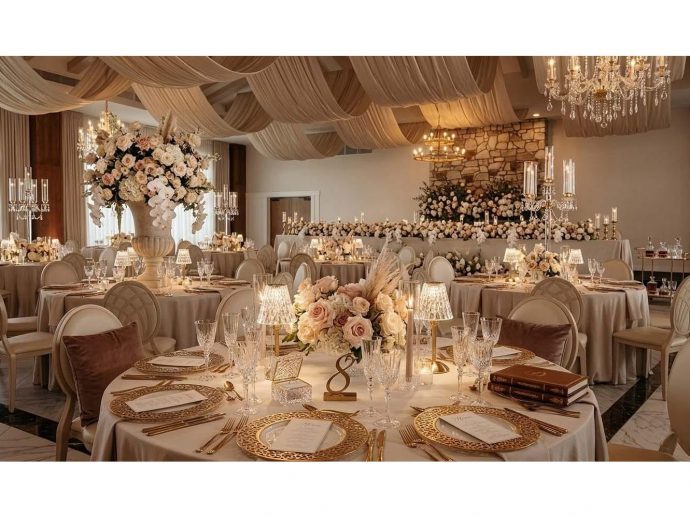
In this context, color takes on a much more important role. Every element—from flowers to fabrics and lighting—contributes to building a cohesive visual narrative.
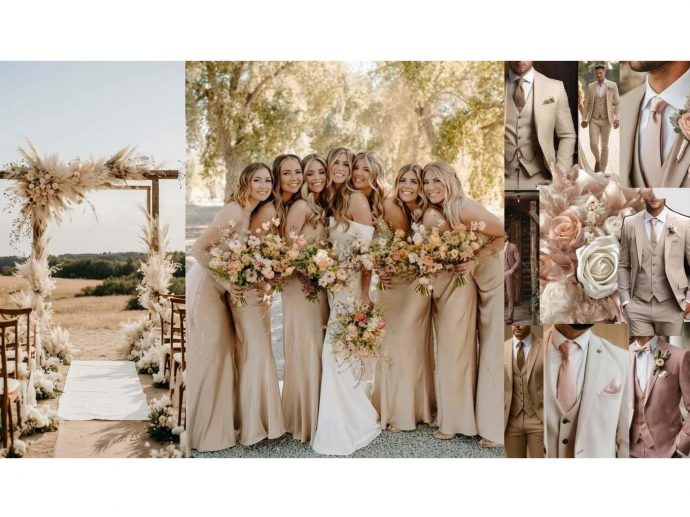
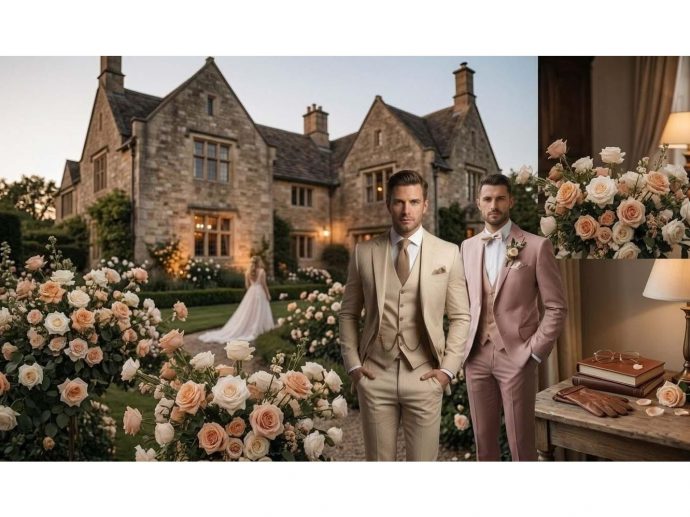
Cream fits naturally into this evolution. Its versatility allows it to be combined with champagne tones, soft gold accents, muted greens, and warm neutral palettes, creating an elegant aesthetic without feeling forced.
Urban Weddings: A Coherent Visual Experience
In large metropolises, where diverse multicultural influences converge with a modern aesthetic sensibility, bridal style has begun to undergo more subtle changes.
We can't say that tradition is being broken, but rather that tradition is being transformed for our times in an almost imperceptible way. Many brides are reinterpreting it, choosing variations that feel more personal and aligned with their aesthetic vision, not necessarily with what is "traditionally" correct. Dresses in cream tones, ivory decorations, and warm color palettes are becoming increasingly common in contemporary celebrations.
On the other hand, one of the most important aspects of modern weddings is aesthetic coherence. The most memorable celebrations are often those in which every element seems to form part of the same visual language. Following this logic, color itself is fundamental in this process, because when a palette is well-defined, it influences everything: from the floral design to the table settings, the lighting, and the photography. Cream-toned palettes, in particular, create a natural sense of continuity. They allow textures and materials to stand out without disrupting the overall harmony.
The Arrival Moment Within the Aesthetic Palette
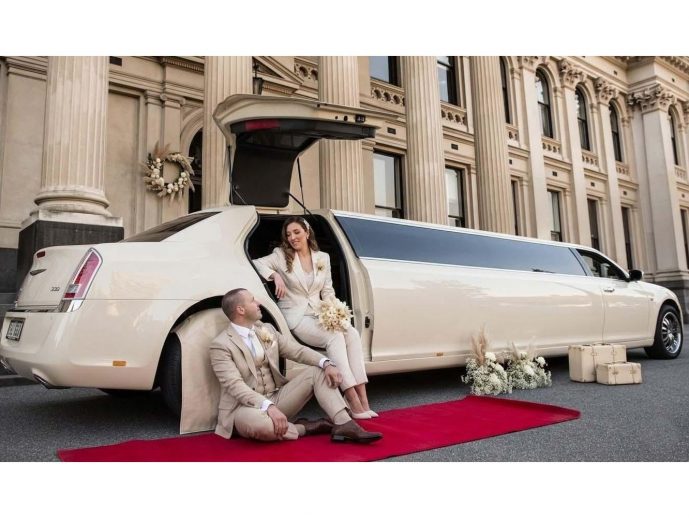
A wedding encompasses different aspects and elements that integrate to form a whole. Understanding modern weddings as a complete visual experience, where every detail is part of the same aesthetic narrative, the choice of color not only influences the dress or the ambiance, but also how the entire flow of the event is perceived. Specifically, the entrance to the event is no longer just about transportation, but about a visual continuity that connects the aesthetics of the surroundings with one of the most anticipated moments of the day.
Specialized providers of transportation for luxury weddings adopt a more curated approach, where personalization is understood as part of the overall design of the event. The choice of vehicle, its presentation, and its consistency with the color palette have become decisions as important as the floral selection or the lighting of the space.
“Every wedding is unique and has its own visual identity. Wedding transportation has the responsibility to adapt to the event's theme and, as far as possible, integrate the client's chosen color palette into its decor. A misuse of this principle can either reinforce or disrupt the event's aesthetic coherence. Therefore, we focus our efforts on ensuring that the transportation service we offer is not seen as a separate entity, but rather as part of a well-integrated and harmonious whole.”
This opinion was shared with us by Peter Maslanka, CEO of Erin Mills Limousine & Luxury Coaches, who has witnessed firsthand how the new trend of warmer colors in weddings has gained momentum. He explained that his company has had to adapt to this shift, moving away from the classic black and white limousine to tailor its fleet's decor to the event's theme. Based on his perspective, we can say that the transition to softer palettes has not only transformed bridal fashion but also the way the entire wedding experience is conceived. The vehicle ceases to be a simple means of transport and becomes part of the same aesthetic language that defines the wedding.
A Softer Definition of Elegance
The most interesting aspect of this evolution is that it doesn't represent a rejection of tradition, but rather a more subtle reinterpretation of it. White will continue to occupy a central place as a classic symbol of bridal style, but cream has been gaining ground as a warmer, more organic alternative, aligned with contemporary aesthetic sensibilities.
In this new scenario, bridal elegance is no longer understood as the choice of a single dominant color, but rather as a much broader composition, where each element—from the color palette to the ambiance, the fashion, and the very unfolding of the event—contributes to building a coherent visual and emotional experience.
Even details that were previously considered purely functional, such as the arrival time or the choice of transportation, are beginning to be integrated into this same aesthetic narrative, reinforcing the visual continuity of the whole and elevating the overall perception of the celebration.
Ultimately, the shift towards cream tones reflects not just a color trend, but a deeper evolution in how we understand weddings: as thoughtfully designed experiences where visual and emotional harmony carries as much weight as tradition itself. Cream, in many ways, perfectly embodies this transition towards a softer, more conscious elegance, more in tune with contemporary aesthetics.
Comments
