Categories more
- Adventures (62)
- Arts / Collectables (14)
- Automotive (77)
- Aviation (65)
- Bath, Body, & Health (123)
- Children (6)
- Cigars / Spirits (71)
- Cuisine (66)
- Design/Architecture (22)
- Electronics (63)
- Entertainment (36)
- Event Planning (115)
- Fashion (45)
- Finance (10)
- Gifts / Misc (6)
- Home Decor (118)
- Jewelry (41)
- Pets (3)
- Philanthropy (1)
- Real Estate (16)
- Services (44)
- Sports / Golf (14)
- Vacation / Travel (85)
- Watches / Pens (33)
- Wines / Vines (34)
- Yachting / Boating (67)


Designing Warmth: The Role of Fireplaces in Contemporary Luxury Interiors

Published
03/25/2026Luxury has always been associated with visual impact, grand architecture, refined materials, and carefully curated interiors. But in recent years, the definition of luxury has shifted in a more subtle direction. It is no longer defined solely by what is seen, but by what is felt.
Comfort, atmosphere, and sensory experience are becoming central to how high-end spaces are designed. In this context, one of the oldest architectural elements is finding new relevance: the fireplace.
Once a necessity for warmth, the fireplace is now a focal point of ambiance, an element that shapes how a space is experienced rather than simply how it functions.
The Evolution of the Fireplace
Historically, fireplaces were purely practical. Their purpose was straightforward: to provide heat. Design considerations were secondary, often dictated by the limitations of the time.
Today, that has changed completely.
Modern fireplaces are no longer constrained by function alone. Advances in technology have made it possible to integrate them into a wide range of architectural styles, from minimalist interiors to more traditional settings.
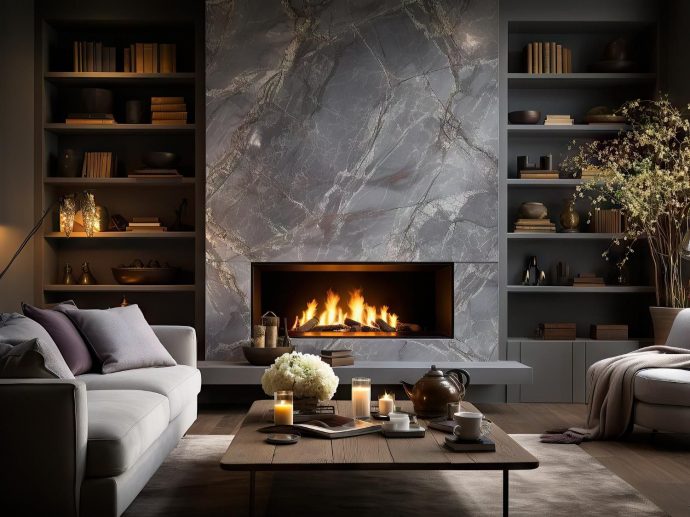
They are now positioned as design features, carefully placed to anchor a room, create visual balance, and establish a sense of warmth that extends beyond temperature.
Atmosphere as a Design Element
One of the most significant shifts in luxury interiors is the growing importance of atmosphere. Lighting, texture, and spatial flow all contribute to how a space feels, and fireplaces play a unique role within this composition.
Unlike other design elements, fire introduces movement. It creates a dynamic focal point that naturally draws attention while also softening the surrounding environment.
This combination of movement and warmth makes it particularly effective in living spaces, where comfort and relaxation are key priorities.
A well-placed fireplace does more than heat a room, it defines it.
Gas vs Electric: A Modern Consideration
As fireplaces have evolved, so too have the options available to homeowners. The choice is no longer limited to traditional wood-burning systems. Gas and electric fireplaces now offer distinct advantages, each suited to different preferences and design requirements.
Gas fireplaces provide a more traditional flame experience, often with higher heat output and a sense of authenticity that appeals to those seeking a classic ambiance. Electric fireplaces, on the other hand, offer flexibility, ease of installation, and greater control over settings, making them well-suited to modern, space-conscious interiors.
For those navigating this decision, resources from The Great Fire Company, particularly their insights into gas vs electric fireplaces, offer a detailed breakdown of how each option performs in terms of efficiency, design integration, and overall experience. Understanding these differences allows homeowners to make choices that align with both their aesthetic vision and practical needs.
Integration Into Modern Architecture
One of the defining features of contemporary luxury design is integration. Elements are no longer added as afterthoughts; they are incorporated into the architecture from the beginning.
Fireplaces are increasingly being built into walls, aligned with sightlines, and positioned to complement other features such as large windows or open-plan layouts. This approach ensures that they feel like a natural part of the space rather than a separate addition.
Materials also play a key role. Stone, metal, and glass are often used to create clean, cohesive designs that align with the overall aesthetic of the home.
The result is a seamless blend of form and function.
The Psychological Impact of Warmth
Beyond design, fireplaces contribute to the emotional experience of a space. There is a reason why fire has remained a central element in human environments for centuries.
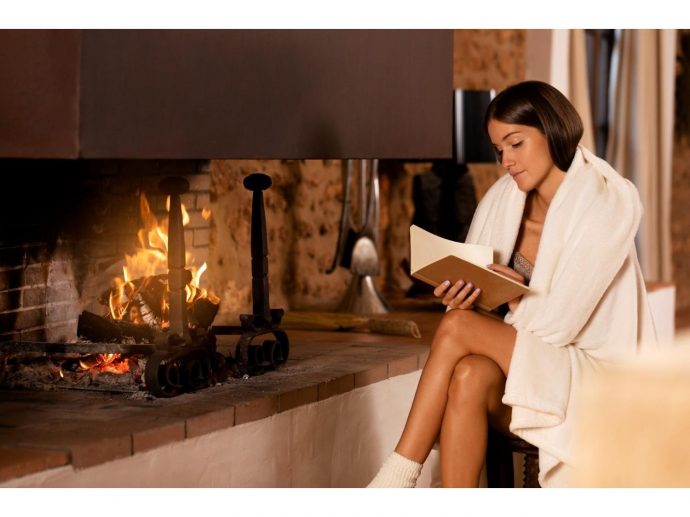
It creates a sense of comfort that goes beyond physical warmth. The visual presence of a flame can promote relaxation, encourage stillness, and foster a feeling of security.
According to the National Institutes of Health, environmental factors such as lighting and sensory stimuli can influence mood and stress levels. While fireplaces are just one element within this broader context, their ability to create a calming atmosphere is widely recognized.
In luxury homes, where every detail is considered, this psychological dimension becomes particularly important.
Function Meets Lifestyle
The modern fireplace is not just about aesthetics or comfort, it is also about lifestyle. It reflects how spaces are used and how people choose to spend their time.
In open-plan homes, fireplaces often serve as subtle dividers, creating distinct zones within a larger space. In more intimate settings, they become gathering points, encouraging conversation and connection.
Their versatility makes them adaptable to a wide range of environments, from urban apartments to expansive estates.
A Sustainable Perspective
As sustainability becomes a greater consideration in luxury design, fireplaces are also evolving to meet new standards. Energy efficiency, emissions, and environmental impact are all factors that influence modern choices.
Electric fireplaces, in particular, are often favored for their lower emissions and ease of use, while gas options continue to improve in efficiency and control.
This balance between performance and responsibility reflects a broader shift toward more conscious design decisions.
The role of fireplaces in luxury interiors is likely to continue evolving. As technology advances, new possibilities for customization and integration will emerge, allowing homeowners to tailor their spaces even more precisely.
At the same time, the core appeal of the fireplace will remain unchanged. It is not just a source of heat, but a source of atmosphere, a feature that transforms a space in ways that are both subtle and profound.
In an era where luxury is increasingly defined by experience rather than excess, this distinction matters.
Because ultimately, the most memorable spaces are not just those that look impressive, but those that feel complete. And in many cases, that sense of completeness begins with something as simple, and as timeless, as fire.
Comments
