Categories more
- Adventures (199)
- Arts / Collectibles (315)
- Automotive (219)
- Aviation (279)
- Bath, Body & Health (513)
- Children (116)
- Cigars / Spirits (271)
- Cuisine (723)
- Design / Architecture (1118)
- Electronics (222)
- Entertainment (162)
- Event Planning (295)
- Fashion (550)
- Finance (195)
- Gifts / Misc (141)
- Home Decor (558)
- Jewelry (396)
- Pets (91)
- Philanthropy (124)
- Real Estate (386)
- Services (221)
- Sports / Golf (213)
- Vacation / Travel (1036)
- Watches / Pens (223)
- Wines / Vines (861)
- Yachting / Boating (7550)



Dressing the Party Table: How Tablecloths Set the Tone for Upscale Entertaining in 2026

Published
10/26/2026At an upscale gathering, the tablecloth is the first thing guests see and often the last thing a host plans. Museums have long treated table linen as a design object in its own right. The Cooper Hewitt, Smithsonian Design Museum, for example, holds a late 19th century linen tablecloth made with damask weaving that measures 5 feet 6½ inches by 5 feet 7½ inches, a gift to the museum in 1937. That long attention to cloth is a useful reminder that what covers the table shapes everything placed on it, from glassware to the floral centerpiece.
Event planners comparing options often begin with party tablecloths from Premier Table Linens, a supplier that sells and rents tablecloths, napkins, table skirts and related event linens and describes its range as 28 fabrics for sale and 18 linen fabrics for rent. The questions below walk through what such a cloth has to do, how to size it, and how to layer it for a polished result.
What Party Tablecloths Actually Do
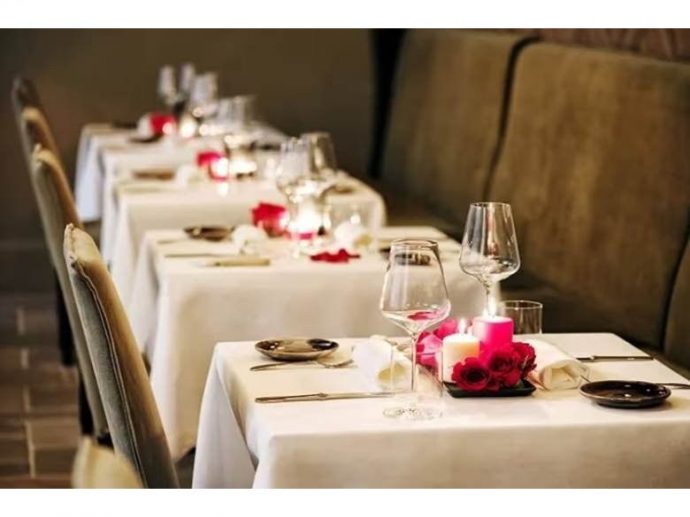
A party tablecloth does four jobs at once. It sets the color story of the room, frames the food and flowers, hides the utilitarian tables that most events rely on, and signals the level of formality through its fabric and its length. Cocktail tables, buffet lines, banquet rounds and dessert stations all begin as the same plain surface. The cloth decides whether each one reads as part of a single, intentional scene.
Range matters here. Premier Table Linens lists standard, fitted and oval tablecloths, table toppers and overlays, cocktail table covers, spandex stretch covers and table skirts. It also reports more than 400 linen colors across its 18 linen fabrics and over 1,100 Pantone colors, according to its own description. For a host, that breadth means color decisions can follow the event's palette instead of the other way around.
Getting the Size and Drop Right
Fit is the clearest difference between a styled table and a covered one. Premier Table Linens' sizing guide defines drop as the fabric that extends past the table edge and puts a standard drop at 6 to 12 inches. For weddings, special events and formal occasions, the guide recommends draping the table to just above the floor.
University extension guidance points the same way. A table setting document hosted on the University of Maryland Extension site recommends an overhang of 16 to 24 inches for a formal setting and 10 to 14 inches for an informal one. The page does not name an author or date, so it works best as a general rule of thumb. Both sources agree on the principle: the more formal the occasion, the longer the fall of fabric.
The arithmetic is simple. Premier Table Linens' formula adds twice the drop to the table's width and to its length. A 42 x 60 inch table with an 8 inch drop needs a 58 x 76 inch cloth, and a 10 inch drop on the same table needs 62 x 80 inches. For round tables, the guide lists sizes by drop as well. A 24 inch round table, for instance, calls for diameters of 48, 54 or 84 inches, depending on whether the drop is 12, 15 or 30 inches. A 6 ft. banquet table appears with a 54 by 96 inch dining length cloth.
Layering: Overlays, Skirts and Napkins
A single cloth rarely tells the whole story. Layering adds depth, and the catalog is built for it. Toppers and overlays add a second color or texture over a base cloth. Table skirts, offered in shirred and box pleated styles, finish buffet, cocktail and reception tables so that the front edge looks tailored from the guest side. Matching napkins tie the table back to the cloth, and Premier Table Linens carries napkins, runners and placemats alongside its cloths so the pieces can be chosen together.
A sound approach is to choose the base cloth first, then pick one accent, either an overlay or a contrasting napkin, rather than several. Restraint keeps the table from competing with the food and the flowers, which are the true focal points of an upscale meal.
Buy, Rent or Print?
The decision between buying and renting usually comes down to how often the linens will be used. Premier Table Linens sells at both retail and wholesale prices, with volume discounts listed on each product, and it also runs a linen rental program. For a one night gala, renting avoids storing and laundering; for a venue or caterer that dresses tables every week, owning the linens makes more sense. Frequent buyers can also look at the company's free Concierge program, which offers an additional 5 percent to 10 percent off for customers who spend $3,000 or more per year on linens.
Branding is a third option. The company lists custom printed tablecloths, runners, skirts and banners, produced by a dedicated in house team. At charity dinners and sponsored evenings, where a logo needs to appear without overwhelming the room, a printed runner or skirt can carry the brand while a solid cloth keeps the table calm.
Questions Hosts Ask Before Ordering
How long should the cloth hang? For ordinary parties, the 6 to 12 inch standard drop is the usual starting point. For formal dinners, galas and weddings, longer drops are the norm, with floor length as the dressiest choice. How is the size calculated? Measure the table, choose the drop, and add twice the drop to each dimension. Premier Table Linens' calculators do the same math from a width, length and drop, and sizes not on its list can be ordered through its custom size program.
Where are the linens made? The company states that its products are manufactured in the United States. Quality standards are worth confirming for any supplier, so a host ordering for an important date should check each product page for fabric type, care instructions and production time before placing the order.
Setting the Scene for the Season Ahead
With the 2026 holiday entertaining season approaching, the strongest tables will be the ones planned from the cloth outward. Start with the occasion's level of formality, which sets the drop. Choose a fabric and color that suit the room's palette, add a single layer of interest, and confirm sizes with a tape measure rather than a guess. Done in that order, party tablecloths stop being an afterthought and become the foundation of the evening, the quiet element that lets the menu, the flowers and the company take center stage.
Comments
