Categories more
- Adventures (62)
- Arts / Collectables (14)
- Automotive (77)
- Aviation (65)
- Bath, Body, & Health (123)
- Children (6)
- Cigars / Spirits (71)
- Cuisine (66)
- Design/Architecture (22)
- Electronics (63)
- Entertainment (36)
- Event Planning (115)
- Fashion (45)
- Finance (10)
- Gifts / Misc (6)
- Home Decor (118)
- Jewelry (41)
- Pets (3)
- Philanthropy (1)
- Real Estate (16)
- Services (44)
- Sports / Golf (14)
- Vacation / Travel (85)
- Watches / Pens (41)
- Wines / Vines (34)
- Yachting / Boating (67)



Enhancing Workplace Efficiency with Advanced Industrial Casters

Published
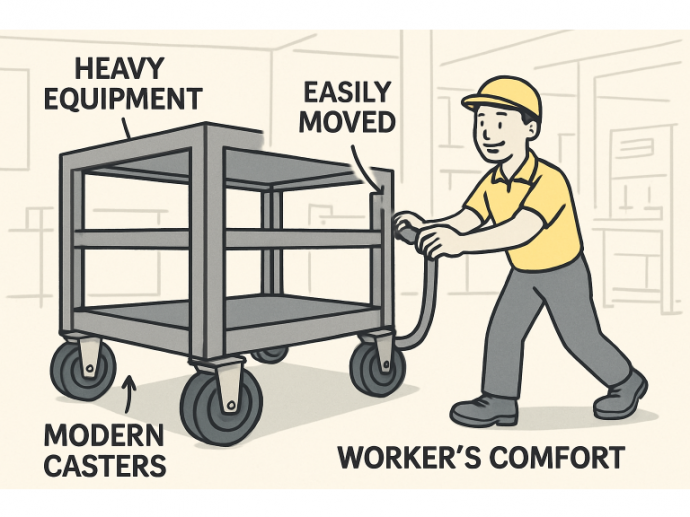
01/22/2026In today’s fast-paced industrial workplaces, mobility solutions are essential for streamlining operations and reducing manual labor. Casters are at the heart of this transformation, enabling businesses to move heavy equipment easily, boost productivity, and safeguard employee wellness. The leap forward in caster technology is driving a revolution not just in warehouses or manufacturing, but anywhere materials need to be moved with skill and safety.
Modern industrial casters are engineered to do more than move loads—they foster safer, quieter, and smarter workspaces. Innovations in wheel design and integration with smart systems have made advanced casters a foundation for business operations across industries. By reducing noise, implementing ergonomic improvements, and integrating digital monitoring, the right casters can positively impact every aspect of material handling and employee satisfaction.
As industries push towards greater automation and safety standards, organizations are increasingly prioritizing advanced caster solutions. These improvements help prevent workplace injuries, cut operational downtime, and enable predictive maintenance for equipment—paving the way for a more efficient, responsive facility.
Understanding and implementing these technologies is no longer a luxury but a necessity for organizations hoping to stay competitive. The latest research highlights just how significant smart caster technology can be across industrial sectors, with benefits that ripple through worker safety, energy savings, and long-term cost reductions.
Improved Maneuverability and Reduced Strain
Swivel caster wheels, renowned for their directional flexibility, transform cumbersome equipment into agile, easy-to-maneuver assets. In tight industrial settings, such as busy stockrooms or assembly lines, swivel casters enable users to navigate obstacles efficiently, saving valuable time and reducing the need for excessive manual adjustments. Data from industry studies indicates a reduction in transportation effort by over 15% with modern caster solutions. This translates into faster workflows and less downtime spent repositioning or correcting the course of heavy carts and equipment.
The ergonomic benefit extends further, with less physical force needed to move the same load. This reduction in exertion produces a measurable decrease in worker fatigue, lowers the risk of repetitive strain injuries, and supports sustained productivity throughout long shifts. Major manufacturing companies have reported up to a 12% decrease in daily operating times, directly attributed to the use of advanced casters.
Noise Reduction and Ergonomic Benefits
The advancement of caster technology focuses not only on operational efficiency but also on enhancing workplace comfort. Loud wheels can create considerable distraction and annoyance on the shop floor, which is why modern casters are designed to cut noise levels by as much as 64%. This quieter environment not only makes the workspace more enjoyable for employees but also improves safety by preventing important alarms or warning signals from being drowned out.
Pairing noise control with ergonomic construction, advanced caster models offer smoother swivel and lower rolling resistance. These elements work together to minimize the energy required to push or pull carts, reducing musculoskeletal disorders—a major concern in the logistics and materials handling sectors. As documented by the Occupational Safety and Health Administration (OSHA), investments in ergonomics pay off through improved employee health, fewer lost workdays, and increased overall job satisfaction. Ultimately, the combination of quiet operation and ergonomic design makes modern casters a strategic investment for any facility seeking both productivity and employee well-being. By selecting the right caster system, companies can create safer, more efficient, and more comfortable work environments that benefit everyone on the floor.
Smart Casters and Predictive Maintenance
The integration of smart technologies in caster systems is setting new benchmarks for efficiency and preventative care. These state-of-the-art casters are equipped with embedded sensors that provide real-time data on load weights, wheel turns, temperature, and surface conditions. By transmitting this intelligence to centralized facility management systems, organizations can effectively monitor caster performance and predict when maintenance or replacement is due.
In large-scale operations, such as e-commerce distribution centers or healthcare institutions, smart casters help optimize traffic flow by analyzing use patterns and identifying potential bottlenecks. High-traffic pathways can be identified and improved to ensure smoother movement and fewer delays. Additionally, casters equipped with load sensors can proactively alert staff when a cart or trolley approaches its weight limit, preventing accidents and equipment damage before they occur.
Enhancing Safety with Motorized Solutions
Motorized caster technologies mark a pivotal leap in safety and efficiency for industries transporting exceptionally heavy or awkward loads. These solutions reduce reliance on manual force, thereby reducing the risk of strain injuries or accidents stemming from overexertion. Motorized casters often include intuitive controls and built-in braking systems, ensuring precise, controlled movement even in compact or crowded zones.
This technology not only promotes a safer working culture but also enables organizations to utilize their workforce more efficiently. Where teams of two or more were previously required to move a single piece of equipment, now one worker can do the job with minimal effort, decreasing labor costs and further reducing the likelihood of workplace injury. Over time, the result is substantial cost savings and a lower incidence of lost productivity due to injuries.
Best Practices for Material Handling
Adopting the best advancements in caster technology is most effective when paired with comprehensive training in safe material handling. Employees should be routinely educated on correct cart operation, proper load balancing, and the importance of regular caster inspection and maintenance. Training programs help workers identify potential hazards and understand how to use advanced features, such as smart monitoring and motorized controls, to prevent common accidents.
Facility managers are encouraged to implement inspection checklists and schedule regular assessments of both casters and associated equipment. Preventive maintenance safeguards against unexpected breakdowns, maintains smooth workflows, and supports a culture of safety and awareness throughout the organization.
Conclusion
The adoption of advanced industrial casters represents a strategic investment in workplace efficiency, employee safety, and ergonomic excellence. With innovative wheel technology, real-time monitoring integration, and careful adherence to best handling practices, businesses can look forward to long-term gains in productivity and staff well-being. As more organizations make the shift to smarter mobility solutions, the impact of these powerful yet understated tools will continue to grow across every sector.
Comments
