Categories more
- Adventures (77)
- Arts / Collectables (24)
- Automotive (82)
- Aviation (77)
- Bath, Body, & Health (148)
- Children (54)
- Cigars / Spirits (91)
- Cuisine (99)
- Design/Architecture (39)
- Electronics (72)
- Entertainment (49)
- Event Planning (122)
- Fashion (88)
- Finance (18)
- Gifts / Misc (14)
- Home Decor (135)
- Jewelry (74)
- Pets (12)
- Philanthropy (5)
- Real Estate (48)
- Services (62)
- Sports / Golf (44)
- Vacation / Travel (173)
- Watches / Pens (85)
- Wines / Vines (52)
- Yachting / Boating (89)



Future-Proof Lighting Solutions for Modern Spaces

Published
04/01/2026Table of Contents
- Understanding Future-Proof Lighting
- Key Components of Adaptable Lighting Systems
- Benefits of Implementing Future-Proof Lighting
- Real-World Examples of Adaptive Lighting
- Steps to Integrate Future-Proof Lighting in Your Space
- Conclusion
As technology rapidly transforms the way we live and work, it is crucial to design environments that are not only visually appealing but also flexible enough to adapt to future advancements. The need for adaptable lighting is a central consideration in modern design, empowering users to address evolving requirements without significant disruptions. Partnering with a specialized lighting contractor in Franklin can help you achieve this goal, ensuring reliable and efficient lighting solutions for your space.
Future-proof lighting strategies are about more than just staying trendy, but are a practical approach to investment protection, sustainability, and maximizing comfort. Whether it's for a home, office, or commercial venue, thinking ahead with your lighting design safeguards both functionality and aesthetics.
With so much emphasis on integrated and efficient environments, forward-thinking homeowners and business owners are investing in smarter lighting controls, modular fixtures, and energy-saving technologies. These adaptable features are designed to meet future demands seamlessly, minimizing both costs and environmental impact. Additionally, as comfort and utility come to the forefront of modern design, it is worth considering complementary solutions like ceiling fan installation in Franklin to further enhance flexibility and efficiency in your living or working space.
Understanding Future-Proof Lighting
Future-proof lighting encompasses systems that go beyond immediate needs to factor in potential advancements in lighting technology and changes in user preferences. It is about building in scalability and flexibility, so your lighting infrastructure can be upgraded or modified as new options become available. This means fewer complete renovations over the years, as your installed system can evolve with emerging trends and technologies.
For both residential and commercial applications, future-proof lighting reduces downtime, ensures continued visual comfort, and can boost property value by making spaces more adaptable to shifts in technology or usage. Modern advancements like color-tunable LEDs, networked controls, and system integration are central to this approach, creating an efficient bridge between today’s needs and tomorrow’s possibilities.
Key Components of Adaptable Lighting Systems
- Modular Design: Lighting fixtures and components that can be rearranged, upgraded, or replaced without redoing the whole system make future upgrades far easier.
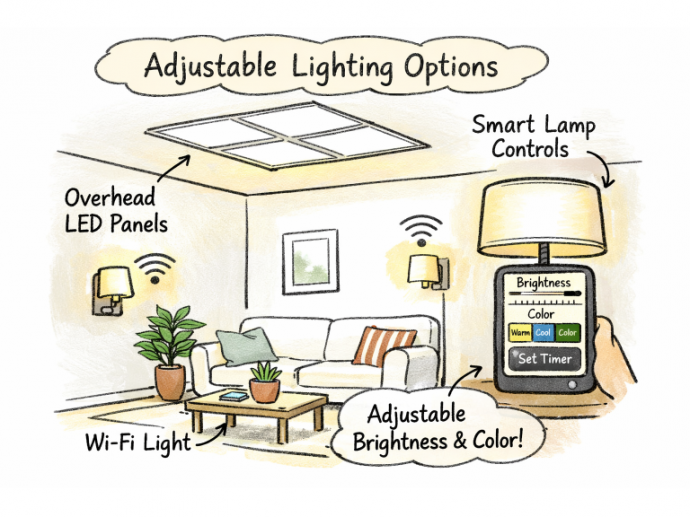
- Smart Controls: Incorporating automation, scheduling, and remote access through mobile devices or integrated building systems increases convenience and energy efficiency, aligning with current smart home trends.
- Energy Efficiency: Advanced LED solutions and built-in sensors reduce energy use and costs, and also contribute to sustainability goals. These smart LEDs are generally much longer-lasting and more environmentally friendly compared to incandescent or fluorescent alternatives (Wired).
- Wireless Integration: Wireless systems significantly simplify installation and allow for easier expansion or reconfiguration as spatial or technological needs change.
Benefits of Implementing Future-Proof Lighting
- Cost Savings: With reduced need for repeated renovations and the adoption of lower consumption lighting, the long-term savings on both maintenance and energy bills can be substantial.
- Enhanced User Experience: Lighting tailored to occupants’ needs can boost comfort and productivity, especially when customized controls or adaptive lighting scenes are employed.
- Environmental Impact: Implementing efficient systems and sustainable technology helps reduce your carbon footprint and supports environmental stewardship.
Real-World Examples of Adaptive Lighting
Municipalities and large property owners are increasingly turning to networked street lights that automatically adjust brightness levels according to foot traffic, weather conditions, or time of day. For example, the PRO-S line of outdoor lighting offers city planners control modules and sensors for dynamic lighting adjustments, resulting in safer, more energy-efficient neighborhoods.
Within commercial offices and retail spaces, modular LED systems have enabled facility managers to transform layouts and adapt lighting on the fly, whether for new displays or to meet social distancing guidelines. These solutions also make it easier to scale systems if a business expands or its needs evolve.
Steps to Integrate Future-Proof Lighting in Your Space
- Assess Current Needs: Begin by evaluating usage patterns and aesthetic objectives for your space, considering how these might evolve over the next several years.
- Choose Scalable Solutions: Select modular lighting hardware and fixtures that facilitate updates, replacements, or expansion without major construction.
- Incorporate Smart Technologies: Prioritize modern control systems offering automation, integration with other smart devices, and the ability to be tailored to occupant preferences.
- Prioritize Energy Efficiency: Opt for advanced LED technology and sensor-driven controls to minimize energy wastage and operational costs over time.
- Plan for Maintenance: Ensure the layout and components chosen provide easy access for regular maintenance and upgrading, allowing your system to remain at peak performance and relevance.
Conclusion
The shift toward future-proof lighting solutions is all about making choices that stand the test of time, like choices that are flexible, energy smart, and adaptable as new technologies and user needs emerge. By focusing on modularity, wireless integration, and sustainable LED innovations, you are better positioned to enjoy a comfortable, adaptable, and visually pleasing environment for years to come. Whether you are outfitting a new space or updating an existing one, carefully chosen lighting infrastructure forms the backbone of a truly modern environment.
Comments
