Categories more
- Adventures (62)
- Arts / Collectables (14)
- Automotive (77)
- Aviation (65)
- Bath, Body, & Health (123)
- Children (6)
- Cigars / Spirits (71)
- Cuisine (66)
- Design/Architecture (22)
- Electronics (63)
- Entertainment (36)
- Event Planning (115)
- Fashion (45)
- Finance (10)
- Gifts / Misc (6)
- Home Decor (118)
- Jewelry (41)
- Pets (3)
- Philanthropy (1)
- Real Estate (16)
- Services (44)
- Sports / Golf (14)
- Vacation / Travel (85)
- Watches / Pens (33)
- Wines / Vines (34)
- Yachting / Boating (67)



Future Trends in Dental Care: What Patients Should Know

Published
04/28/2026Table of Contents
- Artificial Intelligence in Dentistry
- Teledentistry and Virtual Consultations
- Eco-Friendly Dental Practices
- Patient-Centered Care and Comfort
- Smart Dental Devices and Wearable Technology
- Preventive and Holistic Care Approaches
- Regenerative Dental Treatments
- Personalized Medicine and Genomics
- The Future of Dental Education
As dental technology and patient care undergo rapid change, patients have more empowerment than ever before. Staying informed about future developments is crucial for protecting long-term oral health, as well as taking advantage of innovations that can lead to brighter smiles and more comfortable dental visits. Modern breakthroughs, including smarter diagnostics and sustainable practices, are transforming the dental landscape and improving outcomes for issues like gum disease.
By keeping up with these advancements, patients can make better decisions and hold informed conversations with their dental professionals. The ongoing evolution in patient-centered care, coupled with novel technologies, means that everyone's oral health journey is becoming more personalized, convenient, and effective.
Artificial Intelligence in Dentistry
Artificial intelligence is quickly becoming integral to dental care. AI-based tools can analyze X-rays and other diagnostic images with astonishing accuracy, making it easier for dentists to spot emerging issues and provide early interventions. This technology is also streamlining workflows, reducing time spent on paperwork, and improving the precision of treatment plans. As AI systems continue to learn from vast datasets, they will help dentists detect subtle oral health patterns and customize care for each individual.
In the near future, AI could also be paired with 3D printing and robotics, allowing for minimally invasive procedures and even fully automated dental restorations. This integration will likely further reduce costs and make advanced dental procedures available to more people worldwide.
Teledentistry and Virtual Consultations
The expansion of teledentistry has made dental care more accessible, especially for patients living far from clinics or with restricted mobility. Through secure video consultations, dentists can advise on urgent concerns, review symptoms, and provide follow-up instructions, often reducing the need for an in-person appointment. For many families, this brings a level of convenience previously unavailable, helping them catch problems earlier and maintain better dental routines.
Moreover, teledentistry is enabling specialists to work together no matter their physical location, through digital record sharing and real-time collaboration. This trend not only removes transportation barriers but also improves the continuity of care and efficiency in managing complex cases.
Eco-Friendly Dental Practices
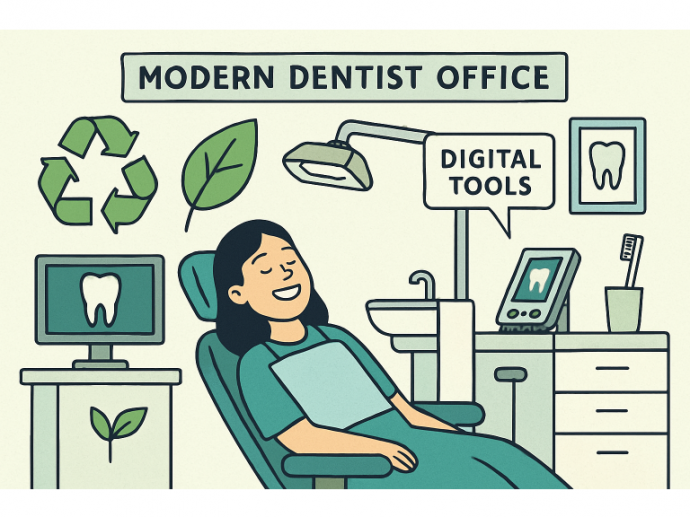
Environmental awareness is influencing how dental offices operate. Clinics are introducing biodegradable materials, digital documentation to eliminate paper waste, and energy-saving devices. Additionally, some practices are reducing the use of single-use plastics and properly disposing of chemicals to minimize their ecological footprint. These efforts support a healthier world as dentists work to protect both patient health and the planet.
Some forward-thinking practices are even exploring “green dentistry” accreditation, which encourages clinicians to share new sustainable strategies, use renewable energy sources where possible, and implement water-saving technologies. This ongoing shift has a far-reaching impact, promoting an industry-wide cultural change toward environmental responsibility.
Patient-Centered Care and Comfort
Dental care providers now put a stronger emphasis on the patient experience. Modern offices are designed to be calming, with gentle lighting, comfortable seating, and friendly staff that prioritizes open, compassionate communication. New sedation options and flexible scheduling can better accommodate patients who may feel anxious or have busy lives. This shift toward patient-centered care builds trust and helps individuals feel more at ease, leading to better long-term oral health.
The integration of digital check-in systems and patient portals, which allow individuals to view test results, schedule appointments, and access educational resources, is set to further enhance transparency and convenience. This is making the dental experience not just more comfortable, but also more interactive and patient-led.
Smart Dental Devices and Wearable Technology
Recent years have brought a wave of smart dental tools. Electric toothbrushes with pressure sensors and Bluetooth connectivity, wireless intraoral cameras, and wearable devices that monitor nighttime teeth grinding are helping people maintain better habits and detect potential problems. Some products can even remind users when to brush or alert them to early signs of tooth decay or infection. These innovations put individuals in control and foster a more proactive approach to oral hygiene.
Looking ahead, future smart dental devices could leverage AI to provide real-time coaching and feedback directly through mobile apps, adapting advice based on the user’s tracked habits and health data for maximum personalization. This fusion of everyday technology and oral health is expected to become even more sophisticated, making prevention efforts more foolproof and outcomes more predictable.
Preventive and Holistic Care Approaches
There is growing recognition that oral health and general health are closely connected. Dentists are adopting preventive techniques that address not only teeth but also the underlying lifestyle choices, nutrition, stress levels, and sleep habits that can influence oral disease. Education plays a major role, as patients who understand these links are more likely to adopt healthier routines and avoid complex dental problems in the future.
Integrative medicine is being incorporated more often into dental care, where practitioners work alongside nutritionists, sleep specialists, and other healthcare professionals. This team approach ensures comprehensive care and supports optimal long-term wellness beyond what was previously possible in routine dental check-ups.
Staying aware of these evolving trends equips patients with the knowledge to protect their teeth and gums more effectively and to enjoy improved overall well-being.
Regenerative Dental Treatments
Recent advances in regenerative dentistry promise to change how issues like tooth decay and gum disease are treated. Stem cell therapies and tissue engineering techniques are being developed to allow the regrowth of dental tissues, including dentin, enamel, and periodontal ligaments. Researchers are investigating methods to harness the body’s own healing abilities, potentially reducing the need for synthetic fillings or traditional surgery. In clinical trials, bioactive materials have already demonstrated success in promoting tooth repair and regenerating bone in areas affected by periodontal disease.
While these technologies are still mostly in the research phase, their future application may offer minimally invasive, natural solutions to some of today’s most challenging dental problems.
Personalized Medicine and Genomics
Personalized medicine, guided by genomic science, is set to make precision dentistry a reality. By analyzing an individual’s genetic makeup, dentists can better predict susceptibility to certain conditions, including gum disease, cavities, or oral cancers. This allows for proactive, customized treatment plans that cater to each patient’s unique risk factors. In the coming years, chairside genetic testing may become a standard screening tool, revolutionizing the allocation of preventive resources.
Furthermore, medication regimens and anesthesia can be tailored according to genetic information, reducing side effects and raising the overall safety of dental procedures.
The Future of Dental Education
As the dental field progresses, so does the training of professionals entering the workforce. Dental schools are updating their curricula to incorporate digital dentistry, evidence-based practice, and interprofessional training that reflects the collaborative nature of modern healthcare. Simulation labs utilizing virtual or augmented reality are making dental education more immersive and practical, preparing new dentists to use cutting-edge technology from day one.
As these trends continue to transform dentistry, patients will benefit from more effective, efficient, and tailored care throughout their lifetime.
Comments
