Categories more
- Adventures (62)
- Arts / Collectables (14)
- Automotive (77)
- Aviation (65)
- Bath, Body, & Health (123)
- Children (6)
- Cigars / Spirits (71)
- Cuisine (66)
- Design/Architecture (22)
- Electronics (63)
- Entertainment (36)
- Event Planning (115)
- Fashion (45)
- Finance (10)
- Gifts / Misc (6)
- Home Decor (118)
- Jewelry (41)
- Pets (3)
- Philanthropy (1)
- Real Estate (16)
- Services (44)
- Sports / Golf (14)
- Vacation / Travel (85)
- Watches / Pens (33)
- Wines / Vines (34)
- Yachting / Boating (67)


Gold vs. Other Investments: Why Physical Gold Still Matters

Published
07/05/2026In a portfolio built around stocks, bonds, and increasingly digital assets, physical gold can seem old-fashioned. It doesn’t pay a dividend, it doesn’t compound in a brokerage account overnight, and you can’t click a button to sell it at 2 a.m. And yet gold has held a place in wealth preservation for thousands of years - long before stock exchanges, central banks, or currencies as we know them existed - and for reasons that are still relevant today.
That staying power is worth taking seriously, especially if you’re weighing gold against the other assets already in your portfolio. Many gold buyers who visit Golden Anvil Jewelers ask a practical version of the same question: is gold actually a smart place to put money, or is it just a tradition that’s stuck around out of habit? The honest answer is a little of both - and understanding the difference is what separates a well-placed allocation from a purchase driven by headlines.
Gold Doesn’t Depend on Anyone Else’s Promise
Stocks represent a claim on a company’s future earnings. Bonds represent a promise to repay debt, backed by the issuer’s ability and willingness to pay. Even cash is, at its core, a government’s promise of value - one that can be diluted through monetary policy decisions made without your input. Physical gold is different. Its worth isn’t tied to a corporate balance sheet, a credit rating, an earnings call, or a central bank’s next move. There’s no CEO who can mismanage it into the ground and no issuer who can default on it.
That independence is precisely why gold has held its value across currency collapses, market crashes, and geopolitical shocks that have wiped out other asset classes. It’s not that gold never moves - it does, sometimes sharply - but its value isn’t a derivative of someone else’s promise. When trust in institutions, currencies, or markets erodes, gold tends to be one of the few assets that doesn’t erode along with it.
How Gold Has Actually Performed During Past Crises
It’s one thing to say gold acts as a hedge; it’s another to look at how that’s actually played out. A few specific examples are instructive:
- The 1970s stagflation era. Between 1971 and 1980, as inflation in the U.S. climbed into double digits and the dollar was decoupled from gold entirely, gold prices rose from roughly $35 an ounce to over $800 - a period during which stocks, adjusted for inflation, delivered essentially flat returns for most of the decade.
- The 2008 financial crisis. While the S&P 500 lost more than half its value between late 2007 and early 2009, gold held its ground and finished 2008 roughly flat, then rallied significantly in the years that followed as central banks around the world responded with unprecedented monetary easing.
- The 2020 pandemic shock. In the early weeks of COVID-19 market panic, gold dipped briefly alongside almost everything else as investors scrambled for cash, but it recovered faster than equities and went on to hit new all-time highs by August 2020 as uncertainty about the economic recovery persisted.
- Recent geopolitical and inflation pressure (2022–2024). Amid elevated inflation, rising interest rates, and conflicts affecting global supply chains and currency stability, gold has repeatedly set new nominal price records, reinforcing its role as a go-to asset when confidence in paper currencies wavers.
None of this means gold rises every time markets fall - there have been stretches, particularly in strong bull markets for equities, where gold has underperformed or moved sideways for years. But the pattern across these very different crises is consistent: gold has tended to hold or gain value precisely when other assets were under the most stress, which is exactly when a hedge is supposed to earn its keep.
It Behaves Differently Than Paper Assets
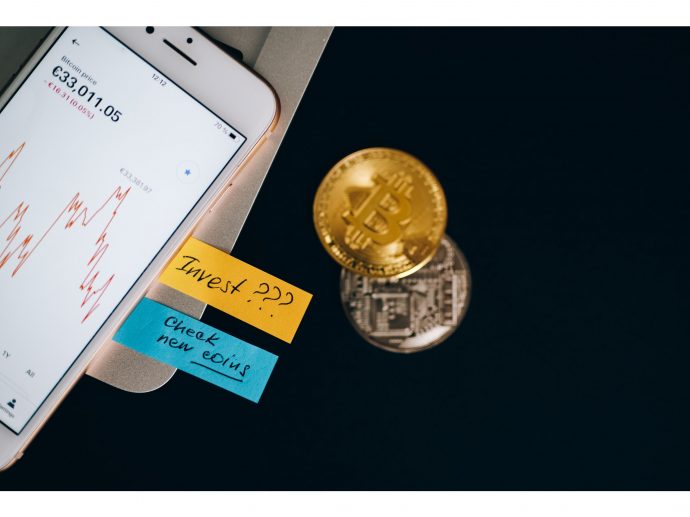
Gold doesn’t move in lockstep with the stock market. In fact, it has historically performed best during periods of high inflation, currency weakness, or economic uncertainty - conditions where equities and bonds often struggle simultaneously. This low correlation is why financial advisors frequently recommend a modest allocation to gold, not as a replacement for other investments, but as a counterweight to them.
The mechanism behind this is fairly straightforward. Stocks and bonds are both, in different ways, bets on economic growth and the stability of financial systems. Gold has no earnings to grow and no coupon to pay, so its price isn’t driven by the same fundamentals. Instead, it tends to respond to real interest rates, currency strength, and demand for a store of value that exists outside the financial system entirely. When those dynamics shift against equities and bonds - say, during a period of unexpected inflation or a currency crisis - gold often moves in the opposite direction, smoothing out the overall volatility of a diversified portfolio.
How Much Gold Should You Actually Hold?
This is the question that matters most once someone accepts the case for gold as a hedge, and the honest answer is: it depends on your goals, but there’s a well-established range that most financial professionals point to.
- Conservative allocation (5%): Common advice for investors who want a modest hedge without meaningfully affecting overall portfolio growth potential.
- Moderate allocation (10%): A frequently cited figure among wealth managers as a “sweet spot” - enough to matter during a genuine crisis, not so much that it drags on long-term returns during calm markets.
- Higher allocation (15–20%): Sometimes recommended for investors who are especially concerned about currency debasement, geopolitical instability, or who are closer to retirement and prioritize capital preservation over growth.
Very few credible advisors recommend going meaningfully above 20%, and almost none recommend gold as the centerpiece of a portfolio. The goal isn’t to bet on gold outperforming everything else - it’s to own an asset that zigs when your other holdings zag, so the portfolio as a whole experiences smaller, more manageable swings. Rebalancing periodically (selling a bit when gold has run up, buying more when it’s lagged) is how many investors maintain their target allocation over time rather than letting it drift.
Tangibility Is a Feature, Not a Limitation
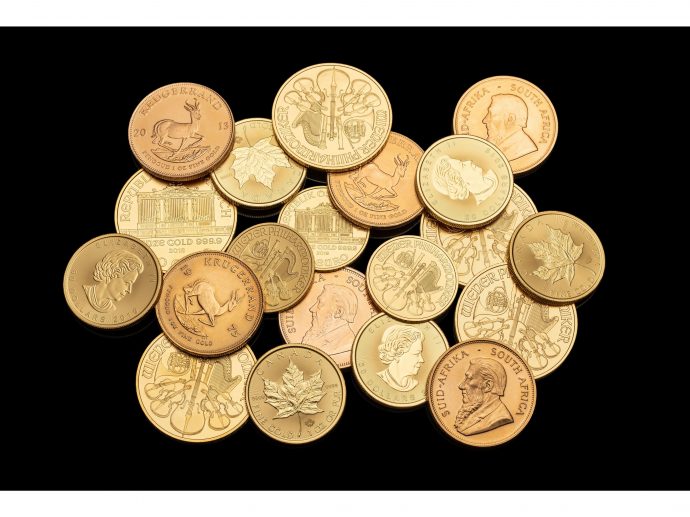
You can hold a gold coin. You can see it, weigh it, and pass it to the next generation. There’s no counterparty risk, no dependence on an exchange staying operational, and no possibility of the asset simply disappearing due to a hack, a bankruptcy filing, or a frozen account. For many investors, that physical certainty is worth something that a digital ledger entry or a line on a brokerage statement can’t replicate.
This matters more than it might seem at first glance. A stock certificate is a legal claim that depends on the continued existence and integrity of the issuing company, the exchange it trades on, and the brokerage holding the account. Gold you physically possess depends on none of those things. That’s not an argument against owning stocks and bonds - it’s an argument for owning at least some of your wealth in a form that isn’t dependent on any single institution functioning correctly.
Coins and Bars vs. Jewelry as an Investment Vehicle
If your goal is pure investment exposure, standard bullion coins and bars (1 oz, 1/2 oz, 1/4 oz weights from recognized mints such as the U.S. Mint, Royal Canadian Mint, or Perth Mint) carry the lowest premium over spot price and the most straightforward resale path. These products are fungible, widely recognized, and easy to value at a glance - a one-ounce American Gold Eagle is worth roughly the same thing to any reputable buyer, which makes liquidity simple.
Jewelry, while beautiful and wearable, carries a higher premium tied to craftsmanship, design, and brand - meaning it’s a better choice if you want to enjoy the piece as an object as well as an asset, but a less efficient way to gain pure metal exposure. A finely crafted 18K gold bracelet might cost considerably more than its melt value, and reselling it later typically returns something closer to its metal content than its original retail price, unless the piece carries recognized designer or vintage value. For investors thinking purely in terms of dollars per ounce of exposure, bullion is the more direct route. For those who want a tangible, personal object that’s also a store of value, well-made fine jewelry can serve both purposes - it’s simply a different trade-off, not a worse one.
Storage and Insurance Considerations for Physical Holdings
Owning physical gold comes with a responsibility that a brokerage account doesn’t: you have to actually keep it safe. This is worth planning for before you buy, not after.
- Home storage. A quality fireproof and waterproof safe, bolted to a structural element of the home, is the baseline for any meaningful holding. Discretion matters as much as the hardware - the fewer people who know a safe exists and where it’s located, the better.
- Safe deposit boxes. Bank safe deposit boxes offer strong physical security and remove the holding from your home entirely, though access is limited to banking hours and the contents are typically not insured by the bank itself - that has to be arranged separately.
- Third-party vaulting. Specialized precious metals depositories offer segregated, insured storage for larger holdings, often with the ability to buy and sell without physically moving the metal. This comes at an ongoing cost but removes both the security and insurance burden from the owner directly.
- Most standard homeowner’s or renter’s policies cap coverage for precious metals and jewelry far below what a meaningful gold holding would be worth - often just a few thousand dollars. A rider or a separate valuables policy, with an appraisal or purchase documentation on file, is usually necessary to fully cover a real position.
None of this is a reason to avoid physical gold - it’s simply the other side of the tangibility argument. An asset you can hold in your hand is also an asset you’re responsible for protecting, and building that cost and effort into your plan up front avoids an unpleasant surprise later.
What Gold Doesn’t Do
To be clear-eyed about it: gold doesn’t generate income, doesn’t grow a business, and its price can be volatile in the short term. There have been multi-year stretches - the 1980s and 1990s in particular - where gold significantly underperformed equities while stocks compounded through sustained bull markets. It’s not a replacement for a diversified portfolio - it’s a complement to one. Most financial professionals who recommend gold suggest it as a modest allocation, not the centerpiece of a strategy, precisely because it isn’t designed to be a growth engine. Its job is different: to hold value and provide ballast when other parts of the portfolio are under pressure.
Buying With Confidence
If you’re adding physical gold to your holdings, buy from a seller who can explain current spot price, premium, and purity clearly, and who provides documentation for anything beyond standard bullion. A trustworthy seller should be able to walk you through exactly how a quoted price relates to the day’s spot price, what the premium covers, and why - there shouldn’t be any mystery in the math. Storage and insurance are worth planning for as well, particularly for larger holdings, as outlined above.
It’s also worth asking any prospective seller how long they’ve been in business, whether they have gemological or numismatic credentials on staff, and how they handle documentation for anything beyond generic bullion - details that separate an established, accountable jeweler from a transient outfit that may not be around if a question or dispute arises down the road.
Where Gold Fits in Your Portfolio
Physical gold isn’t a bet against the rest of your portfolio - it’s a hedge that behaves differently when everything else doesn’t. That’s exactly the role it’s played for centuries, and exactly why it still belongs in the conversation today. A sensible allocation, appropriate storage, and a seller who can answer your questions in plain terms are what separate a well-considered position from a purchase made on impulse.
Golden Anvil Jewelers, a third-generation family jeweler in Jupiter, Florida, offers gold bullion, coins, and fine jewelry with daily-updated market pricing and GIA-certified expertise. Visit goldenanvil.com or call 561-630-6116 to explore current inventory or speak with a specialist about building a physical gold position.
Comments
