Categories more
- Adventures (17)
- Arts / Collectables (14)
- Automotive (37)
- Aviation (11)
- Bath, Body, & Health (76)
- Children (6)
- Cigars / Spirits (32)
- Cuisine (16)
- Design/Architecture (22)
- Electronics (13)
- Entertainment (4)
- Event Planning (5)
- Fashion (45)
- Finance (10)
- Gifts / Misc (6)
- Home Decor (45)
- Jewelry (41)
- Pets (3)
- Philanthropy (1)
- Real Estate (16)
- Services (23)
- Sports / Golf (14)
- Vacation / Travel (59)
- Watches / Pens (14)
- Wines / Vines (24)
- Yachting / Boating (17)



How Regular Electrical Safety Inspections Reduce Household Risks

Published
03/23/2026Key Takeaways
- Inspections detect electrical hazards, such as outdated wiring or overloaded circuits, helping prevent fires and shocks.
- They ensure compliance with current electrical safety standards, keeping your home up to code.
- Scheduled inspections improve energy efficiency and can extend the lifetime of household appliances and systems.
Ensuring your home’s electrical system is safe is one of the most important tasks for homeowners. Proactively addressing electrical safety with scheduled inspections not only protects your family and property but can also help you avoid expensive repairs down the road. Regular evaluations by professionals like Fusion Electric ensure hazardous conditions are identified early and addressed before they become serious threats. The value of these inspections goes beyond safety, contributing to efficiency and peace of mind for every household.
By staying up to date with regular electrical safety checks, you are investing in the long-term functionality and reliability of everything powered in your home. Routine assessments reveal potential trouble spots in in-wall wiring, junction boxes, or circuit panels that may go unnoticed in daily life. Identifying these issues early reduces the risk of electrical fires and accidental shocks. It is also a preventive measure mandated by many insurance providers and local building codes, making inspections important from both legal and practical standpoints.
Committing to electrical safety inspections is also a smart way to identify outdated systems that may no longer meet current demands. As household technology advances and energy requirements increase, a wired system designed for an earlier era may prove inadequate and dangerous. Regular reviews can identify deficiencies before they escalate into impactful, costly incidents.
Importance of Regular Electrical Inspections
The components of electrical systems degrade gradually because of age, frequent use, or exposure to moisture or pests. An inspection uncovers worn, corroded, or damaged parts, and reveals areas that need immediate attention to maintain safety. Inspections are recommended every three to five years for most residences, according to the National Fire Protection Association, and more often in older homes or homes with high energy usage.
During these inspections, licensed electricians use specialized equipment to measure voltage, inspect connections, and detect code violations that might otherwise go unnoticed. Early detection can save thousands of dollars in potential fire or repair costs.
Common Electrical Hazards in Homes
Many homeowners do not realize the scope of the hazards posed by outdated or poorly maintained systems. Frequent warning signs of trouble include flickering lights, outlets that feel hot, and circuit breakers that trip repeatedly. Even subtle symptoms like a faint burning odor can indicate serious wiring problems.
- Outdated Wiring: Old or overloaded wiring is one of the top causes of residential electrical fires, especially in homes built before the 1980s.
- Overloaded Circuits: Too many high-draw appliances on a single circuit can quickly overheat wires, risking electrical fire.
- Faulty Outlets and Switches: Cracked covers, loose connections, or signs of arcing require qualified attention to prevent dangerous electrical shocks.
Benefits of Scheduled Inspections
Timely electrical inspections bring multiple benefits beyond immediate safety. Perhaps the single most compelling reason is the substantial decrease in risk of electrical fires, a leading cause of household property damage in the United States, as highlighted by the American Home Shield.
- Fire Prevention: Addressing frayed wiring, overloaded outlets, or malfunctioning circuit breakers dramatically reduces fire hazards.
- Code Compliance: Regular inspections ensure that any home upgrades or renovations meet current safety requirements, helping avoid fines and insurance disputes.
- Energy Efficiency: Identifying and fixing energy leaks reduces utility costs and lowers environmental impact.
- Appliance Longevity: Keeping your electrical system in peak condition extends the lifespan of home electronics and appliances, safeguarding your investment.
What to Expect During an Inspection
A certified electrician will follow a detailed checklist during a home inspection. This typically involves:
- Visual Examination: Electricians check for exposed wiring, burn marks, or melted insulation on sockets, switches, and outlets.
- Functionality Testing: Technicians assess circuit breakers, GFCI (ground-fault circuit interrupter) outlets, and AFCI (arc-fault circuit interrupter) protection.
- Wiring and Load Assessment: Inspections include checking for ampacity issues, verifying the adequacy of wiring gauges, and reviewing load distribution on electrical panels.
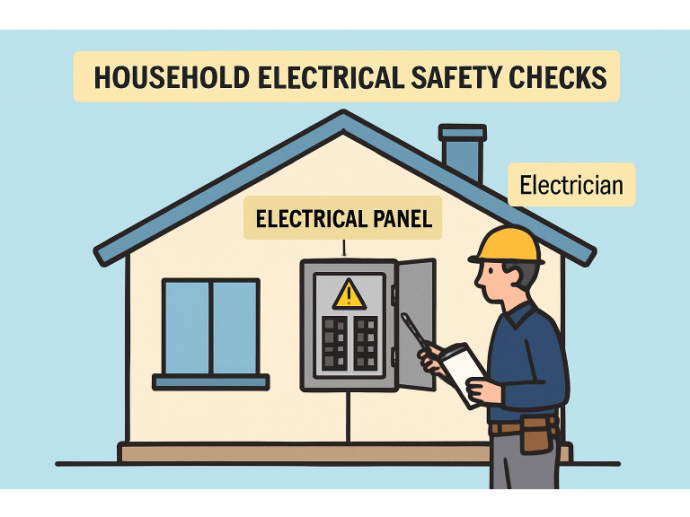
- Electrical Panel Review: The panel must be securely mounted, properly labeled, free of corrosion, and show no evidence of overheating.
Choosing a Qualified Electrician
Selecting a reputable licensed electrician is essential. Look for professionals with solid industry experience, verifiable certifications, and excellent local reviews. Quality electricians stay up to date with the latest safety codes and use reliable testing tools. Many also offer ongoing maintenance plans, so you can schedule and track your home’s inspection needs for continued protection.
DIY Maintenance Tips
Although professional inspections are necessary, you can support household electrical safety by adopting some simple habits:
- Test GFCI Outlets Monthly: Make sure each GFCI outlet in kitchens, bathrooms, and outdoor areas trips and resets as intended.
- Inspect Cords and Plugs: Replace appliances or extension cords with frayed insulation or cracked housings immediately.
- Do Not Overload Circuits: Spread devices and appliances across outlets and use power strips only when necessary; never daisy-chain strips together.
Final Thoughts
Routine electrical safety inspections are a proven strategy for reducing your home’s risk of fire, shocks, and costly damage. Partnering with trustworthy professionals ensures your electrical system remains in excellent working order. With proactive maintenance and attention to warning signs, you can keep your home and family protected while improving energy efficiency and maximizing the lifespan of all your critical appliances and electronic devices.
Comments
