Categories more
- Adventures (62)
- Arts / Collectables (14)
- Automotive (77)
- Aviation (68)
- Bath, Body, & Health (127)
- Children (49)
- Cigars / Spirits (72)
- Cuisine (68)
- Design/Architecture (22)
- Electronics (66)
- Entertainment (40)
- Event Planning (116)
- Fashion (47)
- Finance (10)
- Gifts / Misc (7)
- Home Decor (118)
- Jewelry (41)
- Pets (3)
- Philanthropy (1)
- Real Estate (19)
- Services (60)
- Sports / Golf (38)
- Vacation / Travel (101)
- Watches / Pens (72)
- Wines / Vines (34)
- Yachting / Boating (76)



How Smart HVAC Systems Are Shaping Modern Living

Published
04/16/2026Key Takeaways
- Smart HVAC systems leverage advanced technology for optimal comfort and energy use.
- Features like adaptive thermostats and zoning enable personalized climate control in each space.
- Close integration with smart home platforms boosts convenience and allows remote management.
- Innovative, energy-efficient design contributes to lower utility bills and a smaller environmental footprint.
- Enhanced air filtration and purification features improve indoor air quality and promote health.
The rapid advancement of home technology is making a profound impact on everyday living, with smart HVAC systems leading the way in comfort, efficiency, and convenience. Integrating intelligent components and adaptive controls, these systems are setting new standards for home comfort. Businesses are quickly adapting as well, turning to commercial HVAC service providers for modern heating, cooling, and ventilation solutions that offer the same level of innovation found in residential systems.
Smart HVAC technology is not just about keeping a space at the ideal temperature. By seamlessly integrating sensors, automation, and connectivity, these systems offer precision control while transforming how homes and businesses manage indoor environments. As people look to reduce energy consumption and elevate air quality, smart HVAC solutions are emerging as a cornerstone of efficient, healthy modern living. For property owners seeking upgrades or maintenance for these systems, HVAC Calhoun GA providers offer professional services that support smart HVAC installation, optimization, and long-term performance.
Understanding Smart HVAC Systems
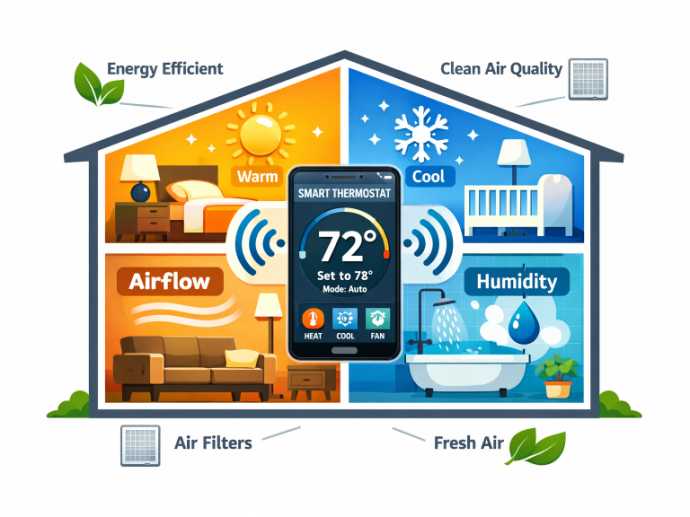
A smart HVAC system relies on interconnected sensors and controllers that monitor occupancy, air quality, humidity, and weather. These inputs allow automatic adjustments of fan speeds, temperatures, and ventilation for optimal comfort and efficiency. Unlike traditional systems with fixed schedules or manual adjustments, smart systems respond in real time. Wi-Fi and Bluetooth enable remote access via smartphones, apps, or web interfaces, helping users save energy, customize comfort, and detect issues early.
Personalized Climate Control
Smart HVAC systems offer personalized climate control using sensors and machine learning in thermostats, which learn routines and adjust temperatures for comfort and savings. Zoning systems divide buildings into areas with individual controls, like cooling bedrooms at night and saving energy in larger homes. This customization meets diverse comfort needs.
Integration with Smart Home Ecosystems
Smart home technology now extends to HVAC systems, allowing control via voice assistants, scheduled routines, and automation based on daily activities. In commercial buildings, integrating HVAC with building management systems, occupancy sensors, lighting, and security enhances energy efficiency. This integration automates climate control, responding to real-time conditions and optimizing energy, reflecting a shift towards comprehensive smart ecosystems.
Energy Efficiency and Sustainability
Reducing energy use saves money and supports sustainability. Smart HVAC systems with programmable thermostats, analytics, and adaptive compressors optimize heating and cooling, prevent energy waste, and avoid unnecessary cycling. Many support energy-saving modes and renewable integration, offering long-term environmental and financial benefits documented by the U.S. Department of Energy.
Improved Air Quality
Advanced smart HVAC systems go beyond temperature control to actively enhance air quality. This often includes HEPA filters, activated carbon filtration, and built-in air quality sensors that detect allergens, dust, and volatile organic compounds. If air quality drops, the system automatically increases filtration or introduces fresh air from outside.
Some models feature ultraviolet lights or ionization units to inactivate bacteria, viruses, and other pathogens, creating a safer living or working environment. Regular monitoring and maintenance reminders delivered through smartphone apps make it easier to change filters and ensure ongoing improvements in air quality.
Cost Considerations and Return on Investment
The initial price tag for a smart HVAC system and its components may be higher than for traditional counterparts, but these upfront costs are often offset by lower monthly utility bills and a longer system lifespan enabled by proactive maintenance tools. Moreover, some insurance companies offer discounts for homes equipped with smart safety and energy systems, further reducing premiums.
The value extends beyond these direct savings. Comfort, healthier air, and convenience can also make a property more attractive on the real estate market. As smart homes become the standard, smart HVAC systems are proving to be a wise long-term investment.
Future Trends in Smart HVAC Technology
Innovation is accelerating in the smart HVAC industry, with AI and ML enabling greater system adaptability and energy savings. Predictive maintenance detects failures early, while real-time energy reports help users make smarter choices. Future integration with energy grids, smart appliances, and renewables will make climate management more efficient and sustainable. Smart HVAC systems improve health, comfort, and energy efficiency, setting new standards as they evolve and become more accessible.
Conclusion
Smart HVAC systems mark a major advance in managing indoor environments by integrating automation, connectivity, and data insights to boost comfort and efficiency. They offer personalized climate control, smart home integration, better air quality, and lower energy use, meeting modern convenience and sustainability goals. Though initial costs are higher, long-term savings, performance, and well-being benefits make them a smart choice. As technology progresses, these systems will become more intuitive, adaptive, and accessible, with features like predictive maintenance and integration with renewable energy and smart grids. They are set to shape future living and working spaces, making adopting them a step toward more efficient, healthy, and sustainable environments.
Comments
