Categories more
- Adventures (199)
- Arts / Collectibles (315)
- Automotive (219)
- Aviation (279)
- Bath, Body & Health (513)
- Children (116)
- Cigars / Spirits (271)
- Cuisine (723)
- Design / Architecture (1118)
- Electronics (222)
- Entertainment (162)
- Event Planning (296)
- Fashion (550)
- Finance (195)
- Gifts / Misc (141)
- Home Decor (558)
- Jewelry (396)
- Pets (91)
- Philanthropy (124)
- Real Estate (386)
- Services (221)
- Sports / Golf (213)
- Vacation / Travel (1036)
- Watches / Pens (223)
- Wines / Vines (861)
- Yachting / Boating (4045)



How Tall Are the World's Most Expensive Superyachts

Published
09/14/2026Length gets the headlines, but height tells the real story of what these vessels demand from the world around them. Ports reconfigure berths, bridges get measured and sometimes refused, and harbor cranes stand aside, all because of how far these floating structures rise above the waterline. A superyacht's vertical scale determines where it can go and what infrastructure it needs before it arrives.
Motor yachts and sailing yachts measure their height in entirely different ways. A motor superyacht stacks decks like a compressed tower block, while a sailing superyacht launches masts into the sky that dwarf the hull beneath them. Both categories carry price tags in the hundreds of millions.
Why Superyacht Height Is Harder to Find Than Length
Shipyards publish length, beam, draft, and gross tonnage for almost every vessel. Above-waterline height appears rarely, because it matters most to port authorities and bridge operators, not buyers. The total vertical rise of a motor superyacht from the waterline to the highest point of the superstructure is calculated from deck count, freeboard, and superstructure geometry rather than listed as a headline figure on a spec sheet.
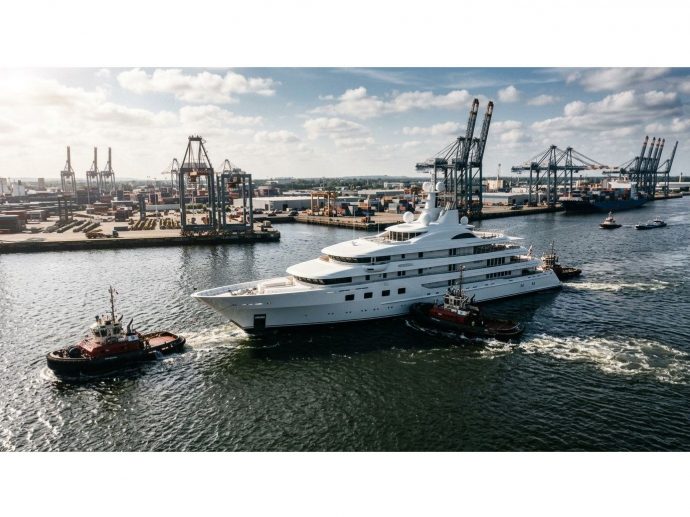
For the largest vessels afloat, that number is substantial. Maritime dimension archives compiled by EasyHeightComparison.com show that a modern megayacht carrying seven or eight stacked decks rises roughly 30 to 40 meters above the waterline, providing a key benchmark for superyacht height comparison when mapping air draft against a 10-story building. Height shapes access, routing, and infrastructure requirements at every port of call.
The sailing superyacht category breaks this convention entirely. Masts reach heights that no motor yacht superstructure approaches, and those masts define the operational limits of the vessel more than any other single measurement.
Azzam: 180.65 Meters Long, Seven Decks
Azzam, built by Lürssen and delivered in 2013, holds the record as the longest private motor yacht in the world at 180.65 meters (592 feet). The vessel carries a beam of 20.8 meters and a draft of 4.3 meters, with seven decks stacked through the superstructure. Nauta Design deliberately kept Azzam's superstructure proportions low and horizontal relative to her length, which is why the yacht reads as sleek rather than boxy.
The architect's stated intent was a vessel that looked smaller than 180 meters. Mario Pedol, founder of Nauta Design, takes it as a compliment when people say Azzam appears shorter than her actual size. Azzam cost an estimated $600 million and belongs to the Abu Dhabi royal family.
Eclipse: 162.5 Meters Long, Nine Decks
Eclipse, built by Blohm+Voss and delivered in 2010, runs 162.5 meters long with a beam of 22 meters and carries nine full decks through the superstructure. Nine decks give Eclipse a notably tall vertical profile for a private yacht, contributing to her distinctive presence in port alongside the Terence Disdale exterior styling.
The top deck houses helicopters and a garage; level eight carries a bar and swimming pool, and the remaining levels stack amenities down to the waterline. Eclipse held the record as the world's longest private yacht until Azzam overtook her in 2013. Estimated value sits between $590 million and $700 million, and Roman Abramovich owns Eclipse.
Dilbar: 156 Meters Long, Seven Decks, Largest by Volume
Dilbar represents a different category of scale. At 156 meters (512 feet) long, with a beam of 23.5 meters and a draft of 6 meters, Dilbar holds the record as the largest superyacht by gross tonnage at 15,917 GT. Seven decks span 3,800 square meters of interior living space.
That tonnage figure reflects the sheer volume inside the hull and superstructure rather than length alone, meaning Dilbar is broader, more voluminous, and heavier per meter of hull than almost any other private vessel afloat. Lürssen built Dilbar for Russian billionaire Alisher Usmanov and delivered the yacht in 2016 for an estimated $600 million.
Sailing Yachts Change the Vertical Equation Entirely
Motor yachts measure their height through stacked decks and superstructure geometry. Sailing superyachts take a completely different approach: the masts define the vertical, and those masts reach heights that no motor yacht superstructure approaches. The practical consequence is enormous. A sailing superyacht carrying an 80-meter mast cannot pass under a bridge that a similarly priced motor yacht clears with room to spare.
Koru: 127 Meters Long, Masts Up to 85 Meters
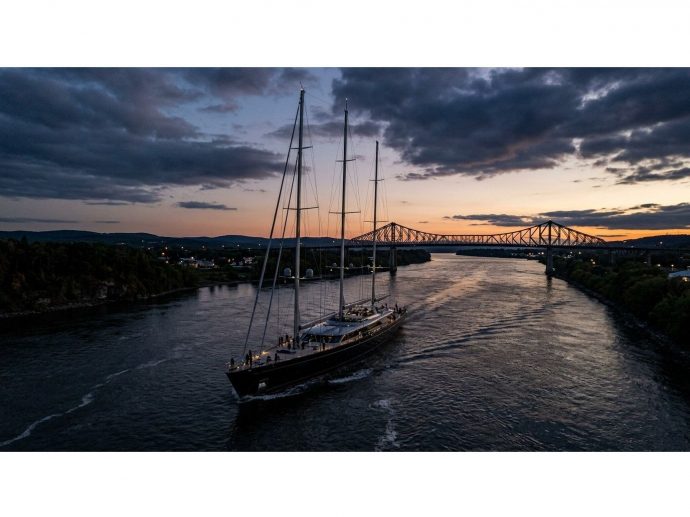
Koru, Jeff Bezos's three-masted sailing yacht built by Oceanco and delivered in April 2023, measures 125.8–127 meters in length. The yacht's trio of masts rises between 65 and 85 meters above the deck, about the height of a 25-story building. During construction, Oceanco had to relocate Koru to Rotterdam specifically to fit the masts, because the primary Alblasserdam facility could not accommodate the mast height without dismantling a historic bridge.
The plan to dismantle the Koningshaven Bridge triggered significant public backlash, forcing Oceanco to find an alternative solution. The three masts reportedly measure approximately 70 meters each. Koru cost an estimated $500 million and carries a sail plan exceeding 20,000 square feet across three mainsails and multiple headsails.
Sailing Yacht A: 143 Meters Long, Three Masts
Sailing Yacht A, built by Nobiskrug and owned by Russian billionaire Andrey Melnichenko, stretches 143 meters in length. The Philippe Starck exterior design features a futuristic, angular hull that breaks sharply from traditional sailing yacht aesthetics. Its three freestanding masts reach approximately 100 meters in height, making Sailing Yacht A one of the tallest privately owned vessels in the world when measured by total above-water height.
Some authorities classify Sailing Yacht A as a sail-assisted motor yacht rather than a pure sailing yacht, because of the role the engines play in propulsion. Either way, the masts create a vertical profile that requires infrastructure accommodation at every port.
What Height Means in Practice for These Vessels
A motor superyacht with eight or nine decks cannot enter many shallow-draft marinas or harbors with low fixed bridges. A sailing superyacht with masts rising 70 or 80 meters is restricted from passing under most bridges in the world, including the majority of spans in European river ports. Koru's bridge episode demonstrated precisely how the vertical reach of these vessels reshapes routing decisions, construction timelines, and public controversy before a yacht completes its first voyage.
Height, not length, is the constraint that most often rewrites a superyacht's operational plan. The world's most expensive vessels are not defined by what they can reach across the water. They are defined by what they must clear above it.
Comments
