Categories more
- Adventures (62)
- Arts / Collectables (14)
- Automotive (77)
- Aviation (65)
- Bath, Body, & Health (123)
- Children (6)
- Cigars / Spirits (71)
- Cuisine (66)
- Design/Architecture (22)
- Electronics (63)
- Entertainment (36)
- Event Planning (115)
- Fashion (45)
- Finance (10)
- Gifts / Misc (6)
- Home Decor (118)
- Jewelry (41)
- Pets (3)
- Philanthropy (1)
- Real Estate (16)
- Services (44)
- Sports / Golf (14)
- Vacation / Travel (85)
- Watches / Pens (33)
- Wines / Vines (34)
- Yachting / Boating (67)



How to Buy Weed and Get the Best Quality?

Published
08/28/2026Buying good weed is not as straightforward as it looks. Legal markets have introduced new problems: inflated lab numbers, beautiful buds with no real effect, and packaging that hides as much as it reveals. Knowing what to look for at the point of purchase is what separates a consistently good experience from repeated disappointment.
For this guide, we spoke with the team at Budora, Canada's Best Online Cannabis Store, offering free same-day weed delivery across Metro Vancouver, BC, with average delivery times of 1 to 3 hours.
Where Can You Actually Buy Weed Legally?
Three main channels exist in most legal markets: physical dispensaries, online delivery menus, and same-day local delivery services.
Physical dispensaries let you speak with a budtender in person. The drawback is that most legal markets require all flowers to be sold in sealed, opaque packaging. You cannot smell or visually inspect the product before paying. Whatever the budtender tells you is the best they can offer without opening a jar.
Online delivery menus give you more information before you commit. A well-run service shows product photos, batch-specific lab results, and harvest dates. You can compare multiple options side by side without being rushed by a counter queue.
For Metro Vancouver, same day weed delivery through dispensaries such as Budora covers most areas within 1 to 3 hours. Online menus from delivery services often display more transparency, lab data, and photos per product than a physical dispensary floor can offer.
What Does Good Quality Weed Actually Look Like?
|
Feature |
Good Quality Signs |
Red Flags |
|
Colour |
Vibrant greens, purples, deep blues |
Dull brown or faded yellow tones |
|
Trichomes |
Dense, frosty crystal coating visible to the naked eye |
Flat, dull surface with no visible crystal layer |
|
Bud structure |
Dense and well-trimmed with minimal stems and leaf material |
Fluffy with excess leaves, or rock-hard from plant growth regulators |
|
Pistils |
Orange or red hairs throughout |
Grey or brown hairs suggesting old or damaged product |
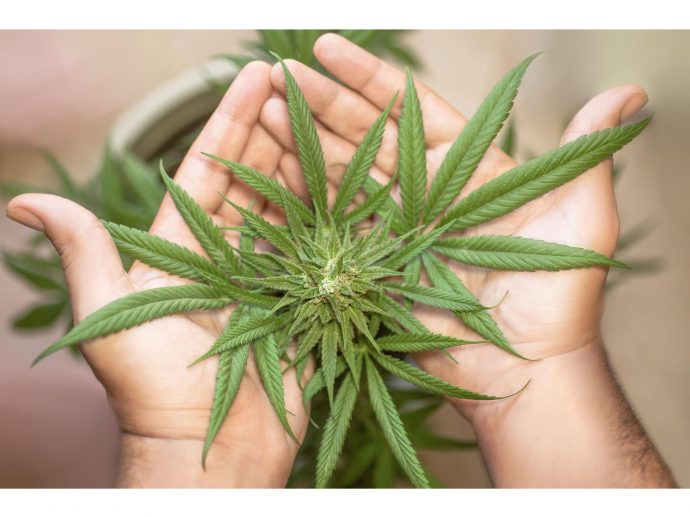
One important warning: cannabis community forums in 2026 are full of accounts of buyers burned by the bag appeal trap. Commercial breeders have learned to grow cannabis that looks stunning on a shelf, dense, purple, and heavily frosted, while producing a flat, short-lived high with no real depth. Visual signals confirm quality but do not guarantee it. Use them alongside the sensory checks below.
How to Tell If Weed Is Good Quality Before You Buy It?
The nose test: High-quality cannabis has a distinct, unmistakable smell. Diesel, gas, sharp citrus, pine, or ripe fruit are all signs of a healthy terpene content. If it smells faintly of freshly cut grass or hay, the batch is rushed through the drying phase and the terpenes are largely gone. The community shorthand: if it is not loud, leave it.
One trap to know: display jars sitting under warm shop lighting degrade within 48 hours. A sample that smells strong on Monday morning may be noticeably weaker by Wednesday afternoon. Ask the budtender when the display jar was last opened before trusting what you smell.
The bounce test: Squeeze a small bud gently between your fingers. Good flowers spring back. If it crumbles to powder, it is over-dried. If it compresses and stays flat, it carries mold risk.
The stem snap test: Bend a stem. It should snap cleanly. If it bends like rubber, the cure is incomplete. If the bud disintegrates as you handle it, the moisture is gone.
The ash test: When smoking, watch the ash colour. Clean-burning, properly cured cannabis burns white or light grey, with a visible oil ring forming just behind the cherry. Dark, black, clumpy ash indicates a rushed cure or unflushed fertilizers still present in the flower.
Why High THC Does Not Mean High Quality?
The most common buying mistake in legal markets is choosing by THC percentage. A published study in the MDPI Cannabis journal, based on a randomized double-blind competition with adult volunteers, found that pleasant aroma, not THC potency or dose, was the only factor positively correlated with positive effects. Research on cannabis and brain health increasingly supports this shift away from potency-first thinking toward full-spectrum cannabinoid profiles.
The analogy the community reaches for is precise: chasing the highest THC percentage is the same as only buying the highest-proof alcohol regardless of flavour, complexity, or drinkability.
What actually determines your experience is the terpene profile. Limonene and Pinene produce uplifting, energizing effects. Myrcene and Caryophyllene lean relaxing and physical. A well-grown flower at 18% THC with a rich terpene content consistently outperforms a corporate 30% product with depleted terpenes.
When reading a label, look for total terpene content. Aim for 1.5% to 2.0% or above. Below 1% means significant terpene loss at some point in the production and curing chain.
Also discard the Indica and Sativa framework. After decades of cross-breeding, almost everything on a modern dispensary shelf is a complex hybrid. The terms survive only as loose marketing shorthand for daytime versus nighttime use. Ask for a specific terpene profile instead of a category label. If a budtender cannot name the dominant terpenes, that is useful information on its own.
What Is the Pack Date Trap and Why It Matters?
Every legal cannabis product must display a pack date: the date the product was sealed in its final container. This is not the harvest date. It is not the date the plant was cut.
The timeline that matters is the harvest-to-package delta. A proper dry and cure takes three to six weeks minimum to slowly convert starches, preserve aromatic compounds, and build a smooth smoking profile. If the gap between harvest and packaging is less than 14 days, the grower uses commercial dehydrators or industrial ovens to rush the batch. The flower tests fine on paper. It smokes harshly in practice.
The secondary trap is the clearance shelf. Dispensaries discount old stock, not problem stock. A product at 40% off was likely packed six to ten months ago. The THC number has not changed. The terpenes have.
Ideal moisture content for well-cured flowers is 10% to 12%. Below 8% means the flower has been over-dried, either through age or deliberate manipulation. At that moisture level, the product crumbles, burns fast, and delivers a fraction of the experience the label implies.
How to Read a Cannabis COA Without Being a Scientist
A Certificate of Analysis is the lab report attached to every licensed cannabis product. Most buyers ignore it. Here is what to actually look at:
Moisture content: Should sit between 10% and 12%. Below 8% is a flag. State laws require labs to report cannabinoid potency as a percentage of dry weight. Growers who intentionally over-dry their lab samples before submission lower the total weight, which mathematically inflates the THC percentage. A crop that actually tests at 20% under proper moisture conditions can display as 28% to 30% on the shelf label.
The fail then pass sequence: Some COAs show a status history. If you see an initial fail followed days later by a pass on the same batch number, that flower was remediated. Ozone gas, gamma radiation, or industrial X-ray machines are used to kill mold spores after a batch fails microbial testing. The buds look perfect afterward. The volatile terpenes do not survive the process. The result is structurally beautiful cannabis that tastes like cardboard.
Terpene breakdown: Look at which terpenes dominate. High-quality, gently cured flower show healthy levels of volatile monoterpenes like Myrcene and Limonene. If the profile is dominated almost entirely by tough sesquiterpenes like Caryophyllene, which survive harsh heat and industrial processing, it is a sign the flower was over-processed or flash-dried.
The testing lab name: Not all labs are equal. Commercial grows have been documented sending samples to facilities known for returning inflated readings. Ask local budtenders or community forums which labs in your market have a reputation for accurate, independent results.
High Quality Weed vs Bad Weed
|
Check |
Good Quality |
Red Flag |
|
Smell |
Loud, distinct, pungent |
Faint, grassy, or hay-like |
|
Visual |
Frosty trichomes, vibrant colour |
Dull brown or flat surface |
|
Touch |
Springy, slightly sticky |
Crumbles or compresses flat |
|
Stem |
Snaps cleanly |
Bends without breaking |
|
Packaging |
Glass jar, nitrogen-flushed tin |
Clear plastic bag, cheap pop-top container |
|
COA moisture |
10% to 12% |
Below 8% |
|
Harvest-to-pack delta |
3 to 6 weeks |
Under 14 days |
|
Total terpene content |
1.5% or above |
Below 1% |
|
Lab test history |
Single pass |
Fail followed by pass on same batch |
Common Weed Buying User Queries
Can I buy weed on Amazon?
No. Amazon does not sell cannabis or THC products in any market. Licensed dispensaries, legal online stores, and regulated delivery services are the only legal channels where recreational cannabis is available.
What is $40 worth of weed called?
A $40 purchase typically gets you an eighth, which is 3.5 grams. This is the most common unit size at dispensaries and the most practical amount to sample a new strain or brand before committing to a larger quantity.
What is the best type of weed to buy for beginners?
Skip strain labels and focus on a balanced profile with moderate THC (12% to 18%), some CBD presence, and a terpene profile that includes Myrcene or Limonene. Avoid high-THC products above 25% until you understand your own tolerance. Start with a single gram before buying a full eighth.
How do I find the best dispensary or delivery service?
Check region-specific cannabis communities on Reddit (r/trees and local variants like r/portlandtrees or r/askvan for Vancouver) for real-time farm drop threads and dispensary performance tracking. These communities follow specific growers and lot quality in ways no formal review platform does, and the information is current.
Comments
