Categories more
- Adventures (123)
- Arts / Collectables (65)
- Automotive (110)
- Aviation (138)
- Bath, Body, & Health (280)
- Children (63)
- Cigars / Spirits (134)
- Cuisine (297)
- Design/Architecture (104)
- Electronics (105)
- Entertainment (62)
- Event Planning (157)
- Fashion (198)
- Finance (19)
- Gifts / Misc (61)
- Home Decor (237)
- Jewelry (165)
- Pets (34)
- Philanthropy (7)
- Real Estate (134)
- Services (82)
- Sports / Golf (61)
- Vacation / Travel (563)
- Watches / Pens (111)
- Wines / Vines (516)
- Yachting / Boating (155)



How to Change a Watch Strap Without Scratching It

Published
09/22/2026Changing the strap is the easiest way to change the look of a watch, and many owners keep several good straps for one watch. The process is simple. Scratches usually happen when the wrong tool slips against the case or when too much force is applied around the lugs.
If it's your first time, work slowly, use a proper spring bar tool rather than a screwdriver or any other sharp object, and keep the watch steady.
How Do You Change a Watch Strap?
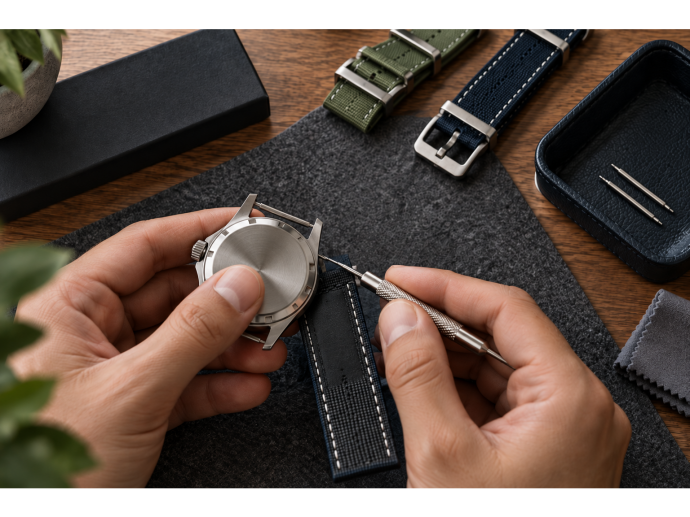
You need a suitable spring bar tool, a clean, soft surface and the replacement strap. A careful first attempt usually takes five to ten minutes. Place the watch face down on a non-abrasive surface such as a microfibre cloth, and make sure there's enough light to see the spring bars clearly.
Why Do Watch Lugs Get Scratched During a Strap Change?
Most accidental scratches happen when the tool slips while compressing the spring bar. The inside faces of the lugs are the most vulnerable because that's where the tool is working.
Rushing increases the risk. So does using a tool that's too large for the available space.
To avoid scratching the lugs, use the correct tool, keep the watch stable, and direct pressure onto the spring bar rather than towards the visible surface of the case. Low-tack protective tape around the lug area adds a layer of safety for a first attempt.
How Do You Remove a Watch Strap?
Place the watch face down on a clean microfibre cloth. If the strap uses ordinary spring bars, gently shift the strap to check the clearance between it and the lugs.
Insert the forked end of the spring bar tool between the strap and the lug. Locate the shoulder of the spring bar and gently compress it away from the lug hole.
Once the tip clears the hole, ease the strap away from the case. Don't pull hard. If the bar won't release easily, reposition the tool rather than pushing harder.
Repeat on the other side.
How Do You Fit a New Watch Strap?
Before fitting the strap, check which section goes at the top and which at the bottom. On most conventional straps, the buckle section sits on the 12 o'clock side.
Insert the correct spring bar through the end of the replacement strap. Place one tip into the first lug hole, then use the tool to compress the opposite end.
Guide the compressed tip between the lugs until it lines up with the second hole. Release the tension gradually until you feel or hear the spring bar click into place.
Give the strap a gentle tug away from the case before wearing the watch. This quick check confirms both ends of the spring bar are properly seated.
Do Quick-Release Straps Need a Spring Bar Tool?
Quick-release watch straps are designed to make strap changes easier. A small lever on the underside of the strap retracts the spring bar with a fingernail, so a separate tool usually isn't needed.
Pull the lever towards the centre, position the strap between the lugs, and release the lever once both ends are aligned.
Quick release doesn't remove the need for care. Always check that both spring bar tips have fully engaged before putting the watch on.
What Type of Watch Strap Tool Should You Use?
A dedicated spring bar tool gives far more control than improvised objects like knives or screwdrivers. For conventional spring bars, the forked end should fit comfortably between the strap and lug without needing much force.
A well-made tool becomes especially useful if you rotate straps regularly. The aim isn't just to release the spring bar quickly but to control it accurately in a very small working space.
Different watches may need different tools. Watches with drilled lugs, screw bars or proprietary attachment systems should be handled according to their specific construction.
What Should You Check Before Changing a Watch Strap?
Check the lug width and confirm that the new strap and spring bars are the right size for the watch.
Check the existing spring bars too. A bent, corroded, damaged or no-longer-springy bar should be replaced rather than reused with a new strap.
The replacement strap should fit between the lugs without effort. If it feels too wide, too narrow or too tight, stop and check the dimensions before going further.
Frequently Asked Questions
Can I change a watch strap myself?
Yes. Most conventional straps can be changed at home with the right tool and a careful approach. Watches with unusual attachment systems may need different tools or professional help.
Can you change a watch strap without a tool?
Quick-release straps often can be. Conventional spring bars are better handled with a proper tool, because improvised sharp objects can slip and scratch the watch.
How long does a strap change take?
A first attempt may take five to ten minutes. Once you're familiar with the process, a straightforward change is usually much quicker.
Should you tape the lugs before changing a strap?
Low-tack protective tape can help, especially for beginners or highly polished cases. It provides a temporary barrier where the tool makes contact.
How do you know the spring bar is secure?
Once fitted, give the strap a gentle pull away from the case. It should stay firmly in place. If the spring bar isn't aligned or doesn't feel solid, remove the strap and refit it before wearing the watch.
Comments
