Categories more
- Adventures (62)
- Arts / Collectables (14)
- Automotive (77)
- Aviation (68)
- Bath, Body, & Health (127)
- Children (49)
- Cigars / Spirits (72)
- Cuisine (68)
- Design/Architecture (22)
- Electronics (66)
- Entertainment (40)
- Event Planning (116)
- Fashion (47)
- Finance (10)
- Gifts / Misc (7)
- Home Decor (118)
- Jewelry (41)
- Pets (3)
- Philanthropy (1)
- Real Estate (19)
- Services (60)
- Sports / Golf (38)
- Vacation / Travel (101)
- Watches / Pens (72)
- Wines / Vines (34)
- Yachting / Boating (76)


How to Choose a Loveseat Color: Styling Dark Gray, Green, and Orange

Published
09/21/2026Choosing a loveseat color often comes down to two competing instincts: dark gray feels easy to coordinate, while green or orange offers more personality. My suggestion is to start with the colors that will remain in your home, then decide whether the sofa should blend into that setting or become its focal point.
A loveseat is a good opportunity to try a more distinctive color. It creates a substantial block of color without occupying as much of the room’s view as a large sectional. With the right surroundings, a small sofa can change the character of the whole space.
Start With the Walls, Flooring, and Existing Furniture
A sofa will usually stay in your home for years, so begin with the things you do not plan to replace: flooring, walls, cabinets, and other large furniture. Throw pillows and artwork can be adjusted later.
If your room has white walls, light wood furniture, and plain curtains, you have considerable freedom. Dark gray can introduce contrast, green can create a gentle focal point, and orange suits a room that needs a stronger personality.
If you already have a patterned rug, colorful cabinetry, or prominent artwork, I would choose a sofa color that connects with something already there. Green in a painting, for example, could be echoed in a green loveseat. If the room already contains several strong colors, dark gray can provide a quieter background.
This approach helps avoid choosing a sofa that looks beautiful on its own but feels disconnected at home. Place the product image beside a photograph of your room and assess the relationship before focusing on the sofa itself.
How to Style Dark Gray, Green, and Orange
I recently browsed Monvane’s loveseat collection. Both its chenille and corduroy models offer dark gray, green, and orange options. Even with the same sofa shape, changing the color opens up different possibilities for the surrounding furniture and accessories.
Dark Gray: Build Layers With Contrast and Texture
Dark gray works well when you want the sofa to remain understated and leave room for accessories to change. However, using similar shades of dark gray for the rug, curtains, and pillows can make the elements feel indistinct.
I would introduce cream or light oatmeal textiles, then add a wooden side table. Differences in brightness and material can give the room depth without requiring several bold colors.
Dark gray also offers flexibility over time. Changing pillows, throws, or artwork does not have to mean reconsidering the whole color scheme. If you enjoy refreshing your decor, the sofa can remain a consistent foundation while smaller pieces provide variety.
Green: Pair It With Wood and Light Textiles
Green is a color I would readily consider for a loveseat. It has a recognizable presence and pairs naturally with wood furniture, cream walls, and pale rugs.
For a softer look, I would use cream pillows and a light wood side table. For a richer combination, I would bring in darker wood and a few black details. Neither approach requires everything else in the room to become green.
I would leave much of the green upholstery visible and repeat the color lightly in artwork or a small decorative object. That gives the sofa prominence while connecting it to its surroundings.
Orange: Let the Sofa Carry the Color
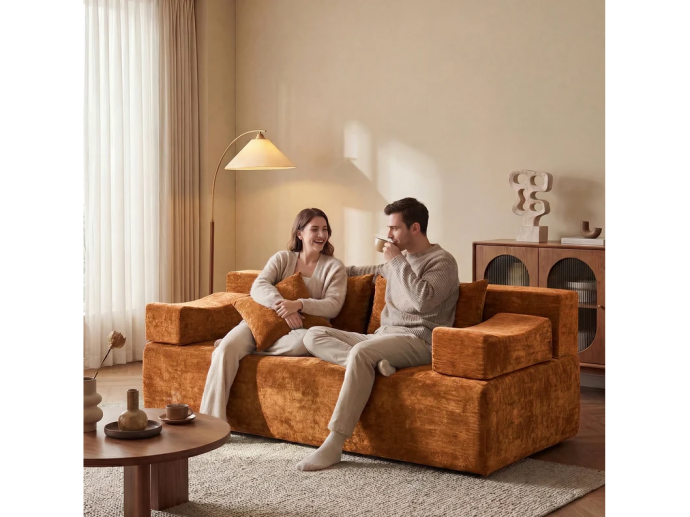
Orange suits anyone who wants the loveseat to stand out. Once I chose it, I would keep the larger background elements simple—cream walls, a plain rug, and wood furniture—before deciding whether another color was needed.
One straightforward combination is an orange loveseat with cream cushions, a dark wood side table, and small black accents in a lamp or picture frame. The orange already provides plenty of interest, so the accessories can be restrained.
If you prefer a more varied palette, a cushion with blue details can introduce contrast. I would avoid adding several large, colorful textiles at once. Establish the orange first, then introduce smaller changes so you can judge what each piece contributes.
Fabric Texture Changes How a Color Looks
After choosing a color, consider the upholstery. Chenille and corduroy can create different visual effects even within a similar color family.
Corduroy has distinct ribs that give the surface a regular pattern. With this fabric, I would favor plain pillows or a textile whose texture is clearly different, allowing the sofa’s ribbing to remain visible.
Chenille has a softer, more finely textured appearance. I would pair it with a side table or lamp with simple, clean lines, creating a contrast between the upholstery and the surrounding furniture.
It is also worth separating a color’s name from its actual shade. Green can lean toward yellow or blue, and dark gray can look different beside warm wood flooring. If a fabric sample is available, place it where the loveseat will go and look at it during the day and in the evening. Without a sample, compare photographs taken in daylight and indoor lighting rather than relying on one product image.
Use Pillows to Connect the Colors
A loveseat has limited room for decoration, so I would start with two pillows rather than filling both ends. Choose colors already present in the room to connect the sofa with the rug, curtains, or artwork.
For example, a green loveseat against a cream wall could have one cream pillow to echo the background and another with a small green pattern to bring the two together. An orange loveseat could begin with two light-colored cushions in different textures.
Then sit down and check the result. If both occupants must remove every pillow before getting comfortable, reduce the number or choose smaller ones. The accessories should make the loveseat more inviting while leaving enough upholstery visible to enjoy the color you chose.
Conclusion
For a living room with white walls and wood flooring, I would choose a green chenille loveseat, a light oatmeal rug, a wooden side table, and two cream pillows. I would add one piece of artwork with a little green in it and hold off on introducing more colors.
I like this combination because the loveseat gives the room character without requiring a large collection of accessories. Getting the main colors right and gradually adding objects you enjoy leaves more room for personal style than buying a complete decorative scheme all at once.
The same approach works when choosing a modular sofa: start with the colors already in the room, then decide whether the upholstery should blend in or stand out.
Comments
