Categories more
- Adventures (62)
- Arts / Collectables (14)
- Automotive (77)
- Aviation (65)
- Bath, Body, & Health (123)
- Children (6)
- Cigars / Spirits (71)
- Cuisine (66)
- Design/Architecture (22)
- Electronics (63)
- Entertainment (36)
- Event Planning (115)
- Fashion (45)
- Finance (10)
- Gifts / Misc (6)
- Home Decor (118)
- Jewelry (41)
- Pets (3)
- Philanthropy (1)
- Real Estate (16)
- Services (44)
- Sports / Golf (14)
- Vacation / Travel (85)
- Watches / Pens (33)
- Wines / Vines (34)
- Yachting / Boating (67)


How to Choose the Best Hair Clinic Near You

Published
05/11/2026Finding a good hair clinic feels harder than it should be. You search online, get a dozen options, read a few reviews, and still aren't sure who to trust. The stakes feel high because hair loss is personal — and the wrong treatment can waste months of time and money. Here's what actually matters when choosing the right hair clinic for your situation.
What Most People Get Wrong When Choosing a Hair Clinic
The most common mistake is picking a clinic based on proximity alone. "Nearest" doesn't mean "best." Many people book an appointment at the closest option, sit through a 10-minute consultation, get handed a generic minoxidil prescription, and leave without understanding why their hair is falling out in the first place.
A good clinic should explain your condition before recommending anything. If a consultation feels rushed or the doctor seems uninterested in your history — stress levels, diet, hormones, thyroid function — that's a warning sign.
Start With Understanding Your Type of Hair Loss
Before you even begin searching, it helps to understand what kind of hair loss you're dealing with. Not all hair fall is the same, and the treatment approach differs significantly.
- Androgenetic alopecia (genetic hair thinning) is progressive and needs long-term management
- Telogen Effluvium is a temporary shedding phase usually triggered by stress, illness, or nutritional deficiency — and is often reversible
- Alopecia areata involves the immune system and requires a different clinical approach
- Scalp conditions like seborrheic dermatitis or fungal infections can also cause hair fall and need targeted treatment
Knowing this helps you ask the right questions during a consultation and evaluate whether the clinic is giving you a real diagnosis or just a standard protocol.
What a Good Hair Clinic Consultation Should Look Like
A thorough first consultation at any reputable hair clinic should include more than a glance at your scalp. Here's what to expect from a quality experience:
- A detailed personal history including diet, stress, sleep, medications, and recent illnesses
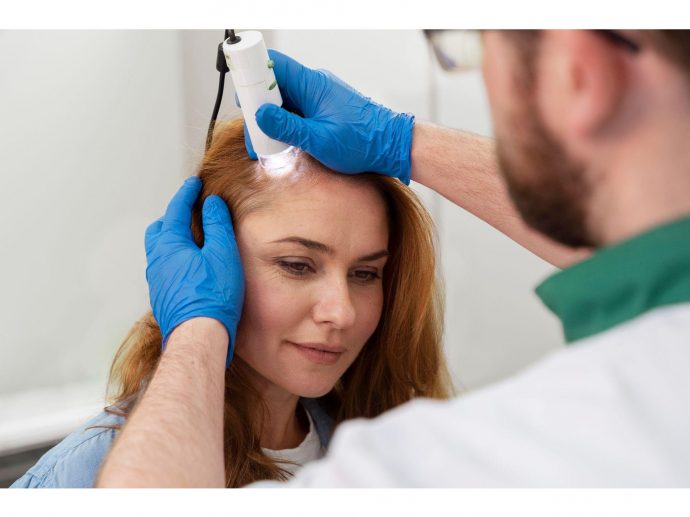
- Scalp analysis (ideally using a trichoscope or dermoscope to examine the scalp closely)
- Blood work recommendations when relevant — thyroid panel, ferritin, vitamin D, DHT levels
- Clear explanation of the diagnosis in plain language
- A treatment plan that's specific to your condition, not a one-size-fits-all prescription
If a clinic skips most of these steps and goes straight to selling a package, reconsider your choice.
How to Evaluate Credentials and Expertise
Dermatologists and trichologists are the right professionals to consult for hair loss. General practitioners can offer initial guidance, but hair loss — especially when it's chronic — needs specialized attention.
When evaluating a clinic:
- Check whether the doctors are board-certified dermatologists
- Look for clinics that have trichologists (specialists in hair and scalp health) on staff
- See if the clinic has published case studies, before-and-after documentation, or patient outcome data
- Read reviews specifically about the quality of diagnosis, not just the ambiance or staff friendliness
Credentials matter. So does the clinic's willingness to refer you elsewhere if your case falls outside their expertise.
The Role of Root-Cause Diagnosis in Hair Treatment
One of the biggest shifts happening in hair care right now is the move toward identifying the root cause of hair loss rather than just treating the symptom. Surface-level treatments can slow hair fall temporarily, but if the underlying cause — whether it's hormonal imbalance, iron deficiency, chronic stress, or a gut health issue — goes unaddressed, the problem usually returns.
Some approaches are built around this idea—combining dermatological assessment with internal health evaluation to create a more complete picture of why hair loss occurs. Exploring options like a Traya hair clinic near you reflects this shift, where clinics look beyond the scalp and consider overall health as part of the diagnosis.
Final Thoughts
Choosing a hair clinic isn't just about convenience. It's about finding a place where someone is genuinely interested in understanding what's happening in your body — not just prescribing the same treatment they give everyone else.
Take your time. Ask questions during the consultation. Notice whether the doctor listens. A clinic that focuses on root causes and explains things clearly is far more likely to give you real, lasting results than one that rushes you out the door with a product bag.
Your hair loss has a reason. The right clinic will help you find it.
Comments
