Categories more
- Adventures (82)
- Arts / Collectables (24)
- Automotive (83)
- Aviation (80)
- Bath, Body, & Health (154)
- Children (55)
- Cigars / Spirits (101)
- Cuisine (110)
- Design/Architecture (43)
- Electronics (78)
- Entertainment (50)
- Event Planning (127)
- Fashion (108)
- Finance (19)
- Gifts / Misc (28)
- Home Decor (144)
- Jewelry (87)
- Pets (13)
- Philanthropy (6)
- Real Estate (59)
- Services (63)
- Sports / Golf (44)
- Vacation / Travel (205)
- Watches / Pens (91)
- Wines / Vines (57)
- Yachting / Boating (98)



How to Clean Up Household Spills Safely and Prevent Lasting Damage

Published
10/16/2026A spilled drink, a leaking pet bowl, or an overflowing sink might seem like nothing more than a minor annoyance, but moisture left unaddressed can quietly damage flooring, fabrics, furniture, and even the structural bones of a home. Responding well comes down to four basic steps: figuring out what the liquid actually is, removing the excess, cleaning the affected surface, and drying everything out completely.
Why the Right Spill-Response Method Matters
Assess the Spill Before Cleaning
Identify the type of liquid
For small amounts of liquid on suitable hard surfaces, some households reach for a wet & dry vacuum to lift moisture before it has a chance to spread—though any such equipment should only be used according to its manufacturer's instructions and on surfaces it's actually designed for.
Not all spills deserve the same response. Plain water is usually low-risk, but sugary drinks can leave behind a sticky residue that pulls in dirt over time. Grease and oil call for different cleaning agents than water-based liquids do, and even cleaning chemicals themselves sometimes need careful handling to avoid unwanted reactions. Bodily fluids or pet accidents may introduce contaminants that call for extra precautions. Whatever the liquid, it should shape your choice of protective gear, cleaning method, and disposal approach.
Check for immediate hazards
Before you start cleaning, scan the area for electrical outlets, power strips, or appliances nearby. Keep kids and pets well away, and avoid walking through liquid on smooth flooring, where a slip is just waiting to happen. If a significant amount of water is pooling near electrical equipment, it's far wiser to step back and call in qualified help than to try handling that risk solo.
A routine spill is a different animal from one involving electrical exposure, sewage, or widespread water intrusion—knowing the difference is part of responding safely.
Remove Excess Liquid as Quickly as Possible
Use the least damaging method first
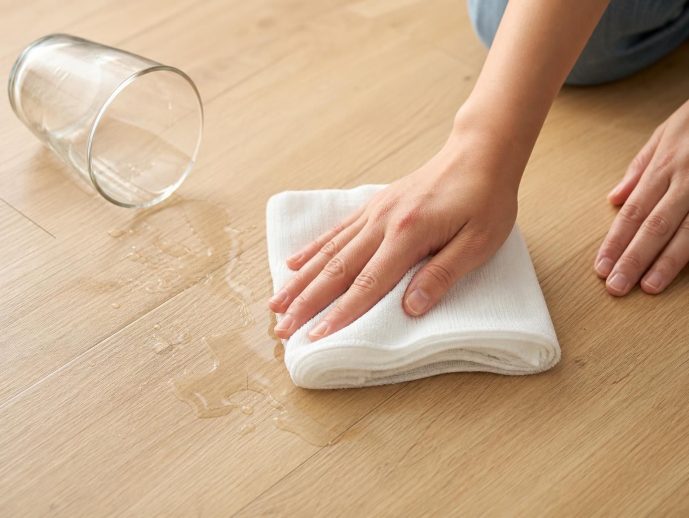
For small spills, absorbent towels or cloths will usually do the job. On fabric or upholstery, blot rather than rub—aggressive rubbing tends to spread liquid around or push it deeper into the fibers. Any liquid-recovery device, such as a wet & dry vacuum, should only be used on material it's intended for, and it's worth checking flooring or appliance care instructions before applying water or cleaners.
Work from the outside toward the center
Blotting from the edge of the spill inward helps contain it instead of pushing it further out. Swap in fresh towels as soon as they're saturated, and empty collection containers safely. Keep in mind that clearing away the visible liquid doesn't guarantee the padding, seams, or subflooring underneath are actually dry.
Quick response:
- Isolate the area.
- Blot or remove excess liquid.
- Start drying immediately.
Clean the Surface Without Creating a Second Problem
Cleaning versus disinfecting
Cleaning removes dirt and organic material; disinfecting targets microorganisms, and it's a separate step. Surfaces generally need a good cleaning before disinfecting, since leftover grime can blunt a disinfectant's effectiveness. Not every spill calls for disinfection—plenty of everyday messes just need routine cleaning.
Follow product-label instructions
Always read the label before reaching for a cleaning product. Stick to the recommended concentration, let it sit for the stated contact time, make sure the room is well-ventilated, and wear gloves or eye protection if the label suggests it. Keep all products well out of reach of children and pets. And never mix bleach with other cleaners or disinfectants—doing so can produce dangerous fumes.
Match the method to the material
Sealed hard floors can typically handle careful damp cleaning, but unsealed wood, laminate seams, or porous stone may swell, stain, or soak up liquid in ways you don't want. Upholstery, rugs, and mattresses often call for manufacturer-specific care, and electronics or electrical appliances should never be treated like an everyday wet surface. Think about the difference between wiping water off sealed tile and dealing with a sugary spill that's soaked into fabric upholstery—the second demands more careful product selection and a bit more patience.
Dry the Area Thoroughly
Why drying is as important as removal
Trapped moisture can lead to lingering odors, material breakdown, or microbial growth. The EPA advises drying wet materials promptly—ideally within 24 to 48 hours—while also addressing whatever's causing the moisture in the first place. A surface can look perfectly dry on top while the padding, carpet backing, or wall cavities underneath stay damp.
Improve airflow safely
Open windows when the weather cooperates, and use fans to circulate air across the area rather than aiming them directly at it, which can send contaminated droplets further afield. A dehumidifier can help in spaces with elevated humidity. Keep an eye out for lingering dampness, odor, discoloration, or warping in the days that follow.
Control indoor humidity
The EPA recommends keeping indoor relative humidity below 60%, with 30 to 50% often considered more comfortable and protective. Fixing the underlying leak or moisture source matters more, in the end, than just treating the visible symptom.
When a Spill Requires Professional Help
Some situations go well beyond routine cleanup: water that's reached walls, ceilings, or insulation; sewage or floodwater contamination; mold covering a large area or returning after you've already cleaned it; visible structural damage or a persistent odor that won't quit; possible water exposure to electrical systems; or a household member who's especially sensitive to contaminants. In these cases, a professional assessment can help track down hidden moisture and determine whether materials can be dried out, cleaned, or need to be replaced entirely.
Common Spill-Cleanup Mistakes to Avoid
- Rubbing a stain aggressively and spreading it further
- Applying disinfectant before removing visible soil
- Mixing cleaning chemicals
- Saturating porous materials unnecessarily
- Ignoring moisture beneath rugs or furniture
- Using equipment on a surface it isn't designed for
- Leaving wet towels or collected liquid in a closed container
- Assuming a clean-looking surface is completely dry
Identify the liquid before choosing a cleaner. Clean first, disinfect only when appropriate. Dry wet materials as quickly as possible. Never mix bleach with other cleaning products. Treat electrical and contaminated-water hazards differently.
Building a Practical Spill-Response Routine
- Protect people: isolate the area and address slip or electrical hazards.
- Identify the material: determine the liquid and affected surface.
- Remove excess moisture: blot or absorb using suitable methods.
- Clean appropriately: choose a compatible product and follow its label.
- Dry and monitor: improve airflow and check hidden areas.
A drink spilled on a kitchen floor calls for a different response than water soaked into a rug—the floor may only need a quick wipe and some drying time, while the rug might need extended airflow to keep odors from setting in.
A Cleaner Home Starts With Moisture Control
Fast action, an eye for the surface in question, careful product use, and thorough drying—these are the building blocks of effective spill response. Keeping absorbent cloths, gloves, ventilation tools, and manufacturer instructions within easy reach makes it a lot easier to respond calmly when something spills. The best approach isn't necessarily the most aggressive one; it's the one that removes the hazard while protecting the surface, the people in the home, and the air they breathe. Take a moment to review what's in your cleaning cabinet, and think about which situations might call for a professional instead.
Comments
