Categories more
- Adventures (62)
- Arts / Collectables (14)
- Automotive (77)
- Aviation (68)
- Bath, Body, & Health (127)
- Children (49)
- Cigars / Spirits (72)
- Cuisine (68)
- Design/Architecture (22)
- Electronics (66)
- Entertainment (40)
- Event Planning (116)
- Fashion (47)
- Finance (10)
- Gifts / Misc (7)
- Home Decor (118)
- Jewelry (41)
- Pets (3)
- Philanthropy (1)
- Real Estate (19)
- Services (60)
- Sports / Golf (38)
- Vacation / Travel (101)
- Watches / Pens (72)
- Wines / Vines (34)
- Yachting / Boating (76)



How to Create a Flexible TV Area in an Open Concept Living Room

Published
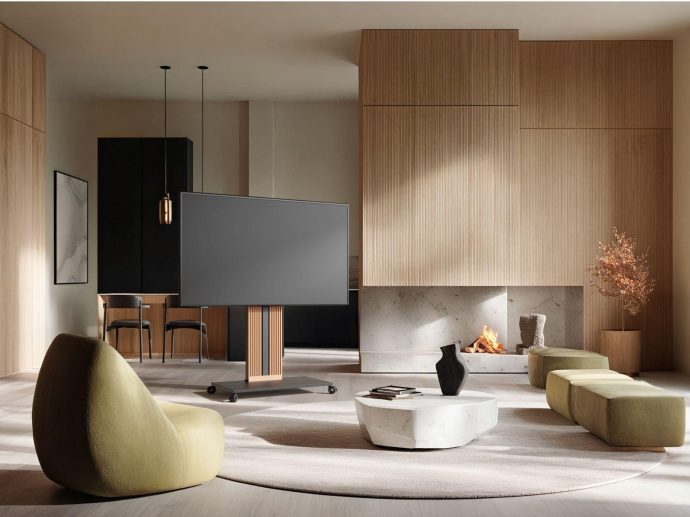
09/21/2026Creating a flexible TV area in an open concept living room comes down to three decisions: define the viewing zone without closing off the space, position the screen around both sightlines and circulation, and choose a TV setup that matches how the room actually changes. The goal is not to make every part of the setup movable, but to give the television enough flexibility to work with different seating positions and activities without disrupting the open layout.
Define the TV Zone Without Closing Off the Room
An open-plan living room still needs a recognizable TV zone, but it does not need walls or bulky dividers to create one. Start with the orientation of the seating.
If the sofa already faces a clear section of the room, that relationship can establish the viewing zone. An area rug can reinforce the boundary by grouping the sofa and chairs together, while lighting can distinguish the living area from a nearby dining space.
When the living and dining areas already have clearly separated furniture groups, adding another physical divider may make the room feel fragmented. When the boundaries are less obvious, changing the direction of the sofa or using a rug is often enough to create visual separation.
This keeps the television connected to a defined seating area without turning that part of the room into a separate enclosure.
Position the TV Around Viewing Angles and Circulation
Available wall space should not be the only factor that determines where the television goes. In an open concept living room layout, first identify where people actually watch from and where they regularly move through the space.
If viewing happens almost entirely from one sofa, a fixed front-facing position may work well. If the screen is also watched from a dining table, kitchen island, or secondary seating area, a single fixed viewing angle becomes more restrictive. In that case, positioning the television where it can turn toward different parts of the room may be more practical than rearranging furniture around one permanent viewing direction.
Circulation sets another limit. A position between the kitchen and living area may provide a good sightline, for example, but it becomes inconvenient if people constantly need to walk around the television or its support. Moving the screen closer to the edge of the living zone and adjusting its angle can preserve both visibility and a clear path between spaces.
Windows should also be considered as part of the viewing position rather than as a separate design issue. If daylight creates glare from the main sofa, changing the screen angle may solve the problem without moving the seating or permanently blocking natural light.
The best position is therefore not necessarily the most central one. It is the position that gives the main viewing areas a usable sightline without interrupting the way people move through the room.
Choose the Level of Flexibility the Room Needs
Not every open-plan room needs a highly mobile TV setup. The simplest way to decide is to ask whether the screen needs to change its angle or its position.
If the TV stays in one place but needs to face different seating areas, a swivel stand is usually enough. This works well when the sofa and dining area share the same screen but sit at different angles.
If the television needs to move between separate parts of the room, a rolling stand is more practical. The screen might remain beside the main seating area for everyday viewing, then move closer to another part of the room when people gather elsewhere.
If neither the viewing direction nor the TV position changes very often, a fixed setup may still be the better choice. There is little value in adding mobility that the room does not actually use.
Different TV stands support these levels of flexibility in different ways. The useful distinction is not which stand offers the greatest number of adjustable features, but which type addresses the change that regularly happens in the room.
Make Sure the TV Can Actually Move When Needed
A movable stand does not automatically create a flexible TV area. The rest of the setup also needs to allow the screen to move without creating new obstacles.
Cables are the first constraint to check. A TV that only swivels usually needs limited cable movement, while a rolling setup requires enough usable cable length to reach the intended positions. Power or signal cables should not need to stretch across the floor or pass through a main walking route whenever the television moves.
Connected equipment can create the same problem. If a game console, streaming device, or other component remains inside a fixed cabinet, the TV may still be tied to one location even when the stand itself is mobile. Keeping frequently used equipment on or close to the TV support can make movement more practical.
It also helps to decide in advance where the television is expected to move. A rolling stand does not need unrestricted access to the entire room. In many open-plan spaces, two practical positions are enough—for example, one facing the main sofa and another serving the dining side of the room. Planning around those specific positions keeps cable routing and movement much simpler.
Choose a TV Stand That Supports the Layout
Once the viewing zone, screen position, and required level of movement are clear, the TV stand should support those decisions rather than introduce new ones.
A room that only needs the screen to turn between two seating areas may benefit from a swivel design, while a space that regularly shifts between living and dining use may need a mobile stand. If the TV rarely changes position, a simpler fixed arrangement may be more appropriate.
FITUEYES offers freestanding TV solutions designed around different levels of movement and viewing adjustment. Rather than choosing the stand with the most features, the more useful approach is to match the stand to the specific way the room changes.
A flexible TV area works best when the screen can adapt to the space without forcing the rest of the room to adapt around it.
Comments
