Categories more
- Adventures (62)
- Arts / Collectables (14)
- Automotive (65)
- Aviation (11)
- Bath, Body, & Health (76)
- Children (6)
- Cigars / Spirits (71)
- Cuisine (64)
- Design/Architecture (22)
- Electronics (13)
- Entertainment (4)
- Event Planning (12)
- Fashion (45)
- Finance (10)
- Gifts / Misc (6)
- Home Decor (45)
- Jewelry (41)
- Pets (3)
- Philanthropy (1)
- Real Estate (16)
- Services (23)
- Sports / Golf (14)
- Vacation / Travel (66)
- Watches / Pens (14)
- Wines / Vines (33)
- Yachting / Boating (67)


How to Plan a Safe, Fun Beach Game Day


Published
08/21/2026Key Takeaways
- Choose a flat, open area that leaves room for both games and beach traffic.
- Check weather, tide, surf conditions, parking, and local rules before leaving home.
- Bring sturdy equipment, shade, water, sunscreen, first-aid supplies, and cleanup bags.
- Use short rounds and rotating teams so players of different ages can participate.
- Set clear boundaries, supervision plans, hydration breaks, and a weather backup plan.
A beach game day can be an easy way to bring friends, relatives, or a youth group together for fresh air, movement, and friendly competition. Start with a few durable activities that suit the sand, such as the beach-ready sets available from Cornhole Worldwide, then build the rest of the day around comfort, safety, and flexibility.
Why Beach Game Days Work So Well
Beach games make physical activity feel casual rather than scheduled. A simple target game, relay, or tossing challenge gives people something to do between swimming, eating, and relaxing. They also create natural conversation, especially when teams mix relatives, neighbors, and new friends. The best events leave room for people to play hard, take a break, or simply cheer from a chair.
Pick the Right Beach Setup
Choose a location with firm, level sand and enough open space to avoid blocking walkways or crowding other visitors. Stay away from dunes, nesting areas, emergency access routes, and the active shoreline. A site near restrooms, trash bins, shade, and drinking water is especially helpful for families and longer gatherings.
Before inviting a large group, confirm whether the beach limits tents, amplified music, organized games, alcohol, glass containers, or group size. Also consider the distance from the parking. Carrying coolers, shade gear, and game equipment across deep sand can quickly turn a simple setup into a difficult task.
Check Conditions Before Leaving Home
- Review the hourly forecast, including temperature and chance of thunderstorms.
- Check wind speed, surf, tide times, and beach warning flags.
- Confirm beach access hours, parking conditions, and restroom availability.
- Look for water-quality notices, wildlife restrictions, or temporary closures.
- Tell guests where to find updates if the plan changes.
Sunny skies do not always mean safe water. The National Weather Service recommends checking official surf-zone forecasts and beach advisories before heading out, since distant storms can create hazardous waves and currents. If lightning, high winds, unsafe surf, or extreme heat develop, pause the event, seek proper shelter, or leave.
Build a Practical Packing List
Game Equipment
- Simple outdoor games with sturdy, easy-to-clean parts
- Extra balls, bean bags, discs, rings, or other small pieces
- Cones or soft markers to define play areas
- A tote, wagon, or storage bin for transport
- Tape, spare fasteners, and a small towel for quick repairs
Comfort and Safety Items
- More drinking water than the group expects to use
- Electrolyte drinks for active participants and hot days
- Broad-spectrum sunscreen, hats, sunglasses, and light layers
- An umbrella, pop-up shade, or other permitted cover
- A first-aid kit, wet wipes, hand sanitizer, and reusable trash bags
Design a Game Area That Feels Fair
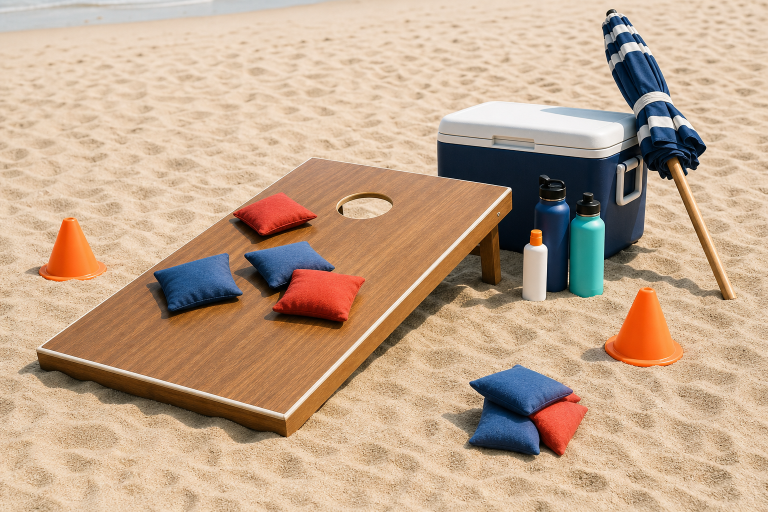
Sand, sun, and wind can make a familiar game play differently. Put target games on the firmest available surface, leave clear space around each lane, and position players so they are not staring into direct sunlight when possible. Keep the whole setup well away from swimmers, passing pedestrians, and food areas. Use soft, visible markers rather than stakes or objects that could create a tripping hazard.
Choose Games for Different Ages and Skill Levels
- Quick target games: Ideal for short turns and mixed-age groups.
- Beach bowling: Easy to adjust by moving the starting line.
- Ring toss: A good option when space is limited.
- Team relays: Best for guests who want more movement.
- Skill challenges: Let guests compete against a personal score instead of each other.
- Clue-based scavenger hunts: Use written prompts instead of collecting shells, plants, or wildlife.
Use a Simple, Flexible Schedule
- First 15 minutes: Set up, explain boundaries, and introduce teams.
- Next 30 minutes: Begin with an easy game that welcomes late arrivals.
- Middle of the event: Rotate teams and take a water and shade break.
- Final round: Play the group favorite or run a low-pressure tournament.
- Last 15 minutes: Pack up, collect waste, and inspect the area.
Ten- to fifteen-minute rounds work well because they prevent fatigue, reduce long waits, and make it easy for guests to join after arriving. Keep score only if the group enjoys it. For many gatherings, funny awards for team spirit, best comeback, or most creative name are more memorable than a serious championship.
Set Rules That Keep the Mood Friendly
Explain the basics before the first throw, choose one scorekeeper, and give beginners a practice turn. Rotate teams after each round so nobody gets stuck on the sidelines. Establish one simple principle: casual games are not worth arguments. If a close call cannot be settled quickly, replay it and keep the day moving.
Plan for Sun, Heat, and Water Safety
Schedule active games in the morning or late afternoon when possible, and make water breaks part of the plan rather than waiting for someone to ask. The CDC advises people exercising in the heat to drink more water than usual, pace activity, and stop if they feel faint or weak, which makes regular breaks especially important for children and older adults. Pacing activity and watching teammates for heat-related symptoms can help hosts spot trouble early.
Assign a responsible adult to supervise children near the water, use designated swimming areas, and follow lifeguard instructions. A game zone is never a substitute for water supervision. If thunder is heard, leave the beach for an enclosed building or hard-topped vehicle, not an open shelter or umbrella.
Make the Event More Inclusive
Offer seated versions of throwing games, use larger and lighter equipment for younger players, and let guests choose whether to compete or participate casually. Pair new players with patient teammates, provide a quiet shaded area for breaks, and ask about mobility or access needs before the event. Flexible rules help everyone enjoy the day without turning recreation into pressure.
Keep Food, Drinks, and Cleanup Simple
Choose sealed, easy-to-share foods that can stay safe in a cooler, and keep food away from active play lanes. Avoid glass where local rules prohibit it or where broken pieces could be dangerous in the sand. At the end, collect small game parts first, then gather wrappers, food scraps, tape, and other waste. Check the sand, nearby seating, and walkways before leaving, so the beach looks as good as it did when the group arrived.
Common Questions About Beach Game Days
What is the best time for a beach game day?
Early morning and late afternoon are often more comfortable, but local tide, weather, crowd levels, and beach access hours should determine the final schedule.
How many games should be planned?
Three to five activities are usually enough for a short event. Larger groups can set up stations and let guests move at their own pace.
What if the weather changes?
Use a backup plan. Move to a covered location, switch to seated activities, shorten the event, or reschedule. Safety matters more than completing every round.
Conclusion
A successful beach game day does not require expensive gear or a packed schedule. Choose a smart location, bring a few flexible games, keep everyone hydrated, respect changing coastal conditions, and leave the space clean. With those basics in place, a simple day at the shore can become a relaxed tradition that guests look forward to repeating.
Comments
