Categories more
- Adventures (62)
- Arts / Collectables (14)
- Automotive (77)
- Aviation (65)
- Bath, Body, & Health (123)
- Children (6)
- Cigars / Spirits (71)
- Cuisine (66)
- Design/Architecture (22)
- Electronics (63)
- Entertainment (36)
- Event Planning (115)
- Fashion (45)
- Finance (10)
- Gifts / Misc (6)
- Home Decor (118)
- Jewelry (41)
- Pets (3)
- Philanthropy (1)
- Real Estate (16)
- Services (44)
- Sports / Golf (14)
- Vacation / Travel (85)
- Watches / Pens (33)
- Wines / Vines (34)
- Yachting / Boating (67)



How Ultra-Wide Screens Are Redefining At-Home Sports Viewing

Published
04/15/2026A decade ago, most living rooms had one simple television that showed a single broadcast. Modern homes now show a very different scene. Large ultra wide displays stretch across the wall and create a view that feels close to a stadium seat.
Global television shipments with screens above 65 inches passed 9.3 million units in 2024. Analysts expect that number to grow each year as households move toward cinema style viewing rooms. Ultra wide screens sit at the center of that shift. Many carry a 21 by 9 ratio rather than the old 16 by 9 standard. That wider frame brings sports coverage to life.
This change has reshaped the way fans enjoy matches at home. Football, basketball, cricket, and tennis all benefit from the wider field of vision. Viewers see more of the pitch, court, or field without constant camera cuts. Broadcasters also design new graphics and camera angles to suit the format. The result gives supporters a deeper sense of presence.
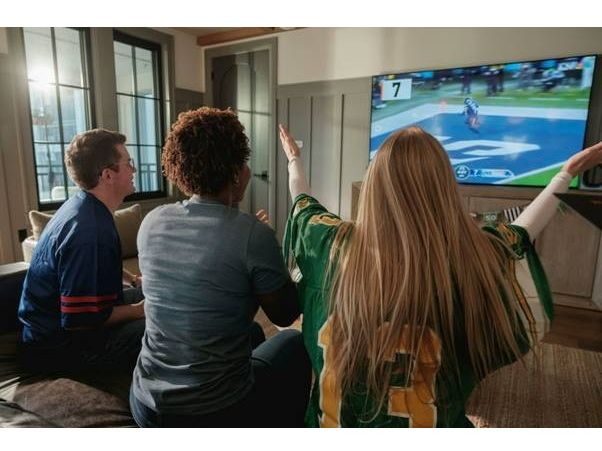
Technology rarely changes habits overnight. Yet the rise of ultra wide displays has slowly altered sports nights across the world. Families gather around a wall sized screen and feel close to the action. Friends meet at home rather than at crowded bars. The living room has become a private arena.
The Popularity of Ultra-Wide Display Technology
From Standard Screens to Cinematic Panels
Traditional televisions used a square shaped frame. Early digital models adopted the 16 by 9 ratio which matched modern broadcast signals. For years that setup served viewers well. Then panel technology improved and manufacturers searched for new ways to expand the experience.
Ultra wide panels appeared first in cinema production and computer monitors. Film studios loved the wider view because it captured landscapes and group scenes with more depth. Engineers later adapted the same idea to televisions. A 21 by 9 panel now allows sports broadcasters to display more horizontal action without crop or zoom.
Ultrawide displays are rapidly expanding and will nearly double from about $14.76 billion in 2025 to $24.3 billion by 2033. As these screens become mainstream, sports fans can enjoy a fresh viewing experience that blends immersion with multitasking.
Beyond raw width, many ultrawide screens are curved to maintain consistent viewing distance. This reduces distortion at the edges and keeps the image more uniform. The result for at-home sports is an immersive viewing environment: the stadium feels closer, the crowd noise seems nearby, and even the scoreboard or on-screen stats can be placed on the extended edges without cutting off the main video. In practice, an ultra-wide screen can function like having multiple screens side by side but without the bezel gaps.
Resolution and Clarity Improvements
Size alone cannot improve sports viewing. Resolution also matters. Ultra wide televisions now pair their wide frame with 4K or even 8K resolution. A modern 4K panel contains about 8.3 million pixels. That density allows viewers to notice fine movement across the field.
Small elements stand out clearly. The spin of a tennis ball becomes visible. Grass marks near the goal line remain sharp. A referee signal no longer looks blurred. These details build trust in what the viewer sees. Many fans even say that slow motion replays feel more accurate on large ultra wide displays.
Why Sports Look Better on Ultra Wide Screens
Wider Field of Vision
Sports depend on space and movement. A football team spreads across the pitch. A basketball offense stretches the defense. A cricket fielder waits far from the batter. Standard screens often hide part of that movement outside the frame.
Ultra wide displays solve this problem by extending the visible area. The camera can show a larger section of the field at once. Viewers understand team structure and tactics more easily. A fan may watch a winger sprint before the pass arrives. That moment builds tension and excitement.
Reduced Camera Switching
Fast sports coverage requires frequent camera changes. Producers cut between angles in order to track action. On narrow displays that process happens every few seconds.
The wider view allows directors to hold a single shot longer. The audience follows the play without sudden shifts. Eye fatigue drops and the brain processes the game more naturally. Many viewers report that matches feel calmer even during tense moments.
Enhanced Crowd Atmosphere
Sports contain more than players and scoreboards. Crowd reaction shapes the atmosphere. Wide displays capture a larger section of the stands. Supporters wave flags, celebrate goals, and react to referee decisions. Those small scenes help recreate stadium emotion at home.
Ultra-Wide Screens: Enhancing Sports and Entertainment at Home
Ultra-wide screens change how fans watch sports at home and they do more than fill a wall. The wider frame gives room for other entertainment without hiding the main broadcast. Modern slot titles include animated reels, glowing symbols, and layered effects that can crowd a standard display. On an ultra-wide monitor or television those elements remain clear, while the match stays in the center panel.
A viewer can keep a football or basketball match on the main section of the screen and open a responsive side window to try casino games at Kwikky. Popular hits Book of Dead and Gates of Olympus appear with full reels and smooth bonus sequences on wide panels. The extra horizontal space keeps symbols readable and animations natural, so the game feels polished rather than cramped.
Screen size matters. Ultra-wide monitors between 34 and 49 inches work well at a desk. Living room televisions from 65 to 85 inches give several people a good view while still leaving room for a secondary window. Bigger panels let bonus rounds, multipliers, and stat overlays stay legible without forcing viewers to sit too near the screen.
Resolution and simple display tweaks improve the experience. Most modern slots perform best at Full HD or 4K. Raise brightness a touch so icons remain visible during dark scenes. Set contrast to a moderate level so gold coins and multipliers pop without glare. Reduce sharpness slightly to avoid jagged edges on fast animations, and switch motion smoothing off to keep reel movement natural. Those small changes cut eye strain and keep visuals consistent across the full width of the screen.
Lighting in the room matters as much as the screen. Soft bias lighting behind the display lowers eye fatigue. Warm LEDs pair well with desert or gold-toned games, while cool blue light suits neon or myth-driven themes. Keep direct light away from the screen to avoid reflections that wash out detail.
With a careful setup, an ultra-wide screen becomes both a stadium window and a flexible entertainment hub. Fans gain a vivid sports view while they also open responsive digital casino games at home, all without cluttering the picture or losing the moment.
Features of Ultra-Wide Displays
Expansive Aspect Ratios
Ultra-wide screens typically have a 21:9 or even 32:9 shape instead of the standard 16:9. This means you get roughly 33% more horizontal space with a 21:9 screen, according to a major monitor maker. In practical terms, you can see more of the field or court on screen at once, with less letterboxing. Designers and gamers value this extra room, and sports fans enjoy having a fuller view of the action. In fact, one model advertises that its 21:9 panel offers “33% extra screen real estate” compared to a normal widescreen. This allows multiple windows or splits on screen without crowding.
Curved Screen Design
Many ultra-wide monitors are curved (often around a 1800–2300R curvature). The gentle arc matches the natural curve of our eyes, which provides a more uniform viewing distance from edge to center. As a result, viewers see the entire picture without turning their heads much. Most ultra-wides are curved for better viewing angles and a more accommodating fit with human eyesight. This means edges stay clear and color fidelity is maintained across the screen. For sports, a curved display can make it easier to track players at the far corners of the field without distortion.
High Resolution and Refresh Rate
These displays often come in high resolutions (3440×1440 or 5120×1440 pixels), ensuring sharp details on a large canvas. Many also support high refresh rates (120Hz, 144Hz or more), which keep fast-paced sports motion smooth and blur-free. A fast-refresh panel is especially useful for sports like soccer or basketball, where quick camera pans happen constantly. The combination of high resolution and high refresh delivers both clarity and fluid action.
Immersive Audio and Technology
Although not unique to ultra-wides, many screens include advanced features. Some have built-in powerful speakers or audio passthrough for surround sound systems, enhancing the stadium feel. Others support adaptive-sync technologies (e.g. FreeSync or G-Sync) that reduce tearing in fast scenes. These traits, coupled with the large size, make ultra-wide monitors mini home theaters for sports.
Productivity and Multitasking
One often-overlooked benefit is multitasking. Designers and traders have long moved to ultra-wide displays because you can put more information side-by-side. It’s similar for fans: you might watch the game on one part of the screen while following stats, chat, or social media on the side. An ultra-wide design yields significantly more workspace, letting users lay out multiple applications at once. This extra space means you rarely need to overlap windows.
Sound Systems and Stadium Atmosphere
Spatial Audio Growth
Picture quality forms only part of the experience. Sound also plays a major role. Modern ultra wide televisions often pair with spatial audio systems. Technologies from Dolby and DTS spread sound around the room through several speakers. A stadium chant then appears to travel across the living room. The roar after a goal moves from left to right as cameras follow the play. Even referee whistles echo with depth. That audio environment works best with a wide visual frame because both senses match the same scene.
Synchronised Broadcast Technology
Broadcasters now design sports audio tracks with surround systems in mind. Microphones sit near fans, benches, and field edges. The audio feed travels through separate channels that match the stadium layout. Ultra wide home theaters reproduce that pattern with high accuracy. The result approaches the atmosphere of live attendance. Many viewers say the gap between home and stadium has narrowed more than ever.
Impact on Sports Broadcasting Strategy
Camera Placement Adjustments
Ultra wide viewing also changes the way networks capture games. Directors now plan camera positions that suit wide displays. A single camera may cover a broader slice of the field than before.
This method reduces excessive zoom and helps maintain tactical clarity. Football analysts appreciate the improvement because they can examine team shape during live action. Coaches sometimes review broadcast footage from ultra wide sources for the same reason.
Graphic Design for Wide Displays
Scoreboards, statistics, and sponsor graphics must also adapt. Designers place these elements along the edges of the screen so they do not block the central action. The extra width creates space for richer information. A broadcast may show possession percentage, shot count, and player speed in separate corners. Fans receive more insight without loss of visibility.
Comments
