Categories more
- Adventures (62)
- Arts / Collectables (14)
- Automotive (77)
- Aviation (12)
- Bath, Body, & Health (76)
- Children (6)
- Cigars / Spirits (71)
- Cuisine (64)
- Design/Architecture (22)
- Electronics (13)
- Entertainment (4)
- Event Planning (12)
- Fashion (45)
- Finance (10)
- Gifts / Misc (6)
- Home Decor (45)
- Jewelry (41)
- Pets (3)
- Philanthropy (1)
- Real Estate (16)
- Services (23)
- Sports / Golf (14)
- Vacation / Travel (66)
- Watches / Pens (14)
- Wines / Vines (33)
- Yachting / Boating (67)



How Washable Sofa Covers Make Pet-Friendly Living Easier

Published
08/17/2026Pets bring fur, paw marks, skin oils, and the occasional accident into the same place where people nap and entertain guests. A sofa can handle that routine better when the parts that collect the most contact can be removed and cleaned.
Washable covers are useful, but only when the owner understands which pieces come off, how they are washed, and how they return to shape. A vague removable-cover label does not answer those questions.
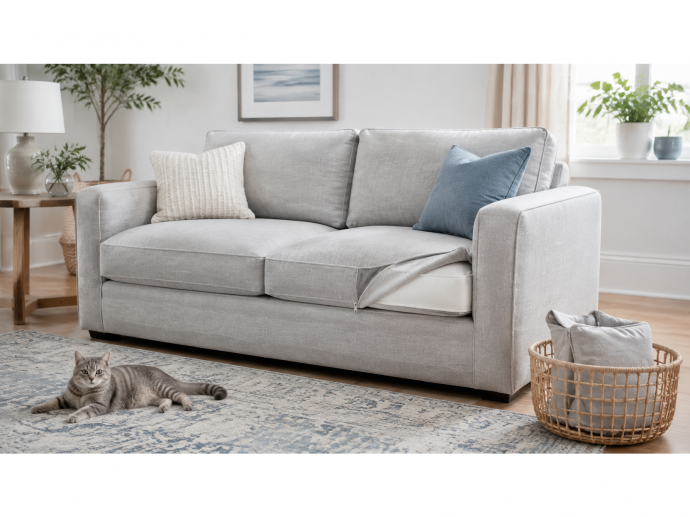
This sofa with washable covers combines removable cushion covers with pet-friendly upholstery described as stain-resistant, spill-proof, scratch-resistant, and resistant to fur cling. The listing also shows why the cleaning plan must account for power-reclining parts that do not go into a washing machine.
Confirm Exactly What Is Removable
Ask whether the seat covers, back covers, arm covers, and frame upholstery can be removed. Product images may show a zipper on one cushion while the rest of the sofa remains fixed.
Create a simple map before purchase. Mark machine-washable parts, removable parts that require professional care, and fixed areas that need spot cleaning. The map reveals how much of the real pet-contact zone is serviceable.
Read the Cleaning Label Before the First Wash
Fabric composition alone does not determine the wash method. Linings, backing, zippers, coatings, and thread can react differently to water, heat, and agitation.
Follow the sewn label and the product instructions for the exact color option. Do not increase water temperature because a stain looks difficult. Heat and aggressive drying can shrink a cover enough to make refitting hard or impossible.
Photograph the Fit Before Removal
Take pictures of zipper direction, seam alignment, cushion orientation, and how fabric sits at each corner. Label the hidden side of matching covers if the care instructions allow it.
Remove one cover at a time during the first cleaning. This keeps the remaining cushions available as references. It also reduces the chance of mixing pieces that look similar but were cut for different positions.
Vacuum Before Washing
Loose fur and grit should not enter the washing machine when they can be removed first. Vacuum the cover, open folds, and use a lint tool suited to the fabric.
Pre-cleaning protects the machine and helps water reach the actual stain. Shake out the cover outdoors when appropriate, but avoid pulling at loops or textured yarns. Inspect zippers for trapped hair before closing them for washing.
Treat Scratches as a Separate Problem
Washability removes soil, not structural damage. Scratch-resistant fabric may reduce visible claw marks, yet repeated digging can still stress seams, loosen fibers, or damage the cushion beneath.
Keep nails maintained and provide a nearby scratching surface or pet bed. A washable throw over the favorite nesting spot can protect the cover between full cleaning cycles. Rotate removable cushions when permitted to distribute wear.
Build a Layered Cleaning Routine
Use three levels: frequent fur removal, immediate spot response, and occasional full-cover cleaning. This prevents every small mark from becoming a laundry project.
Set a schedule based on the animal and season rather than an arbitrary date. A shedding dog may require frequent vacuuming in spring, while a cat that sleeps on one back cushion may only need that cover cleaned more often.
Keep the Sofa Usable During Laundry
Removing every cover at once can leave the main seating unusable for a day. Clean in batches if the care instructions and color consistency allow it, or keep an alternate seating plan for drying time.
Never return a damp cover to foam. Trapped moisture can create odor and may affect the cushion. Air-dry fully when directed, then refit while following the product's sequence to avoid stretching one seam excessively.
Protect Fixed Power Components
Reclining bases, controls, motors, wiring, and fixed upholstery need dry, careful maintenance. Disconnect power where the instructions require it before cleaning around moving areas.
Do not spray cleaner toward switches or gaps. Apply an approved product to the cloth rather than directly to the sofa when guidance permits. Keep children and pets away until the surface is dry and the mechanism is ready to operate.
Choose Color With Fur and Stains in Mind
No color hides every form of mess. Light fabric may show soil, while very dark fabric may highlight pale fur and lint. Mid-tone colors close to the pet's coat can make daily shedding less visible between cleanings.
Texture affects visibility too. A smooth short pile may release fur more easily, while an open weave can hold it. Request a swatch and test it with a small amount of clean shed fur before choosing.
Store a Cover-Care Kit Nearby
Keep approved clothes, a fabric brush, a lint tool, and the written care instructions in one labeled container. Add zipper bags for small removable pieces if the sofa uses them.
The kit should not include every household cleaner. Limiting it to approved tools reduces the risk that someone reaches for bleach, solvent, or an untested stain product during a rushed cleanup.
Set Realistic Expectations
Removable covers reduce the cost and effort of maintaining high-contact cushions. They do not protect the frame, eliminate claw damage, or make every stain removable.
Choose the sofa after confirming cover scope, wash method, drying time, scratch resistance, and access around powered parts. When those details fit the household routine, pets can share the room without making each mark feel like a furniture emergency.
Plan for Replacement and Rotation
Ask whether individual covers can be ordered later and whether dye lots may vary. A replacement seat cover can extend useful life, but a new piece may not match fabric that has faded or worn for several years.
Rotate matching cushions only when they are designed for more than one position. Note the rotation date inside the care record so one side does not receive every pet landing. If a cover develops a loose seam, stop using that area and seek repair before washing enlarges the opening.
Test the Refit Process
After the first wash, allow enough time to reinstall covers without rushing. Align corners before closing the zipper, compress foam evenly, and avoid pulling from one narrow point.
Check that seams return to their original locations and that the cushion still fits the reclining mechanism. A cover that bunches near a moving gap needs correction before the sofa is powered again. Photograph the successful sequence for the next cleaning cycle.
Comments
