




John Steven Mullaly is a financial services professional and private investor based in Cohasset, Massachusetts, with more than 25 years of experience advising life sciences and biotechnology companies. A graduate of Northeastern University and the Boston University Questrom School of Business, he has worked extensively with institutional investors, analysts, and management teams while serving in senior advisory roles, including Managing Director at LifeSci Advisors in Boston. Beyond his professional background, Mullaly maintains an active involvement in outdoor sports and community programs, including volunteer work with a New England based adaptive ski organization. His hands-on experience as an avid skier provides practical context for understanding how preparation, technique, and route awareness support safe uphill travel. This article presents foundational uphill skiing tips for new skiers, focusing on equipment selection, movement efficiency, and planning considerations that help beginners build confidence while navigating uphill terrain.
Uphill Skiing Tips for New Skiers
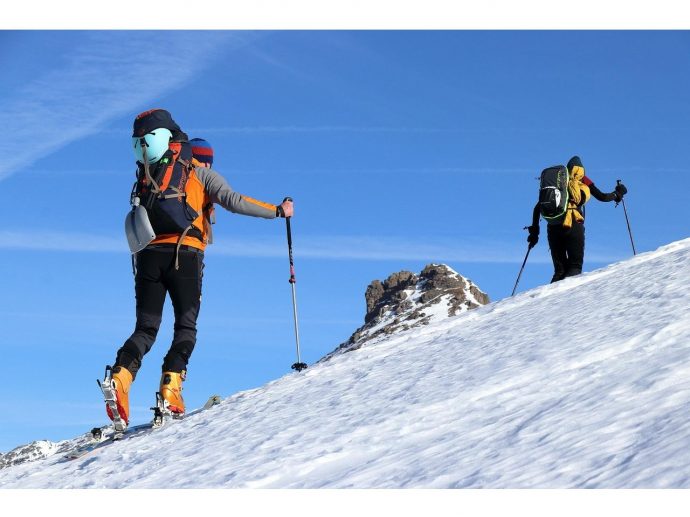
Uphill skiing entails climbing a slope on skis instead of riding а chairlift. People also call it skinning or ski touring. To move uphill, а skier attaches climbing skins to their skis’ base. The skis grip the snow and stop the skis from sliding backward. The idea sounds simple, but beginners often find it confusing at first.
One way to prepare is to have the right equipment. Uphill skiing requires specialized touring bindings that allow switching between а walking mode for climbing and a ski mode for descending. Touring boots are also vital and work the same way by staying flexible during the climb and becoming stiff for downhill control.
Climbing skins provide traction. They, however, need regular care, such as drying after use and keeping the glue clean, to function well. Beginners may prefer shorter, lighter touring skis, which are easier to carry and manage than full-length skis.
Skiers should expect to sweat while climbing. Light clothing - such as a thin shirt or sweater - works best on the ascent, while a ski jacket suits the downhill portion. Extra layers allow quick adjustment to weather changes. Helmets are often optional for uphill travel. However, a hat may provide comfort during the climb.
Strong movement skills set а good foundation for safe climbs. Beginners should keep skis in contact with the snow rather than lifting them. A skier should slide each ski forward while it stays on the surface. This technique helps maintain balance and prevents unnecessary fatigue.
Beginners also need to master how to use climbing skins effectively. Skins have directional fibers that stick to the ski base, allowing forward glide but preventing backward slip. A skier activates this grip by pressing weight through the center of the ski before moving forward. On flatter terrain, skiers should extend their strides slightly to maximize the glide. On steeper slopes, shorter steps keep pressure centered and maintain traction.
Two other key techniques include looking ahead and controlling stride length. When skiers keep their eyes forward, they maintain balance and avoid poor posture caused by looking down. Looking ahead helps them anticipate terrain changers and keep the body aligned for smoother movement. Meanwhile, stride control supports efficiency and safety. Gentle slopes allow longer strides with less effort. Steeper climbs require а skier to take shorter strides to maintain traction and reduce fatigue.
Mastering efficient turns is also essential for uphill skiing. Beginners benefit from learning rounded turns, which involve making gentle, wide arcs instead of sharp direction changes. These turns allow continuous movement because the skis stay pointed uphill and remain in contact with the snow. On steeper slopes, step-through turns support balance by letting the skis form simple “A” or “V” shapes, which keep body weight centered over the skis.
Kick turns remain the most crucial turning skill for steep terrain and tight switchbacks. To execute a kick turn, the skier plants the uphill ski firmly to create a stable base, then swings the downhill ski around into the new direction to form a wide “T” shape. Poles provide balance during the turn. Skiers then carefully shift their weight before bringing the uphill ski around to complete the turn.
Safe uphill travel also depends on navigation skills and planning tools. Avalanche forecasts and mapping apps help skiers choose safer routes and assess terrain risks. For early morning, evening, or night travel, headlamps with navigation support improve visibility and orientation. Many ski areas also publish uphill travel maps and policies, which guide skiers toward approved and safer paths. Besides reliance on digital tools, skiers need to develop route-finding skills, learn how to set an efficient skin track, and read snow and terrain conditions to adapt their approach as conditions change.
About John Steven Mullaly
John Steven Mullaly is a Cohasset, Massachusetts based financial services professional with a long career focused on healthcare and life sciences. He has served as a Managing Director at LifeSci Advisors, where he advised small and mid-cap biotechnology companies on investor relations and capital markets strategy. Now working as a private investor, he applies his experience evaluating emerging technologies across the life sciences sector. Mullaly is also an avid skier and mountain biker and volunteers with a New England adaptive ski program, reflecting his continued engagement with outdoor recreation.
