Categories more
- Adventures (62)
- Arts / Collectables (14)
- Automotive (77)
- Aviation (65)
- Bath, Body, & Health (123)
- Children (6)
- Cigars / Spirits (71)
- Cuisine (66)
- Design/Architecture (22)
- Electronics (63)
- Entertainment (36)
- Event Planning (115)
- Fashion (45)
- Finance (10)
- Gifts / Misc (6)
- Home Decor (118)
- Jewelry (41)
- Pets (3)
- Philanthropy (1)
- Real Estate (16)
- Services (44)
- Sports / Golf (14)
- Vacation / Travel (85)
- Watches / Pens (33)
- Wines / Vines (34)
- Yachting / Boating (67)



LEED-Certified Eco Acoustic Solutions for Workspaces

Published
06/29/2026Modern workplaces are expected to do more than simply provide desks and meeting rooms. They must support employee wellbeing, encourage collaboration, reduce distractions, and align with sustainability goals. As businesses increasingly pursue green building certifications, workplace design has become a crucial part of creating healthier and more efficient environments.
One area that often goes unnoticed is acoustics. Excessive noise and echo can reduce concentration, lower productivity, and increase stress. At the same time, companies are under growing pressure to select environmentally responsible building materials that contribute to certifications such as LEED (Leadership in Energy and Environmental Design).
Fortunately, today's eco acoustic solutions combine excellent sound absorption with sustainable materials, helping businesses create quieter workplaces while supporting their environmental objectives.
What Is LEED Certification?
LEED is one of the world's leading green building certification systems. Developed to encourage sustainable construction and operation, it evaluates buildings across several environmental categories.
Projects earn points for features including:
- Energy efficiency
- Indoor environmental quality
- Sustainable materials
- Water conservation
- Waste reduction
- Innovation in design
Choosing environmentally friendly acoustic products can contribute to credits related to indoor environmental quality and material selection, making them a valuable investment for commercial projects.
Why Acoustics Matter in Sustainable Workspaces
Many businesses focus on lighting, ventilation, and energy efficiency while overlooking workplace acoustics.
Poor acoustic conditions can negatively affect employees by causing:
- Difficulty concentrating
- Reduced speech clarity
- Increased stress levels
- Lower productivity
- More frequent distractions
- Fatigue during meetings
A sustainable office should not only minimise its environmental footprint but also create a comfortable environment where employees can perform at their best.
What Makes an Acoustic Solution Eco-Friendly?
Not every acoustic product is environmentally responsible.
Sustainable acoustic solutions are typically manufactured using materials that reduce environmental impact without compromising performance.
Common characteristics include:
- Recycled raw materials
- Low-emission manufacturing
- Long product lifespan
- Recyclable components
- Minimal waste during production
- Safe indoor air quality
These features support both sustainability goals and healthier workplaces.
Make a Difference Recycled Materials
One of the biggest innovations in acoustic design is the use of recycled PET felt.
Manufactured from recycled plastic bottles, these materials provide outstanding sound absorption while helping divert plastic waste from landfills.
Many modern recycled PET acoustic panels offer:
- Excellent acoustic performance
- Lightweight installation
- Attractive contemporary designs
- Durable finishes
- Low maintenance requirements
- Sustainable manufacturing processes
They are increasingly used in offices, schools, hospitality venues, and public buildings seeking environmentally responsible interior solutions.
How Eco Acoustic Solutions Improve Workplace Performance
The benefits extend well beyond sustainability.
Better Concentration
Reducing background noise allows employees to focus on tasks without constant interruptions.
This is particularly valuable in open-plan offices where conversations can easily travel across the workspace.
Improved Communication
Echo reduction improves speech clarity, making meetings and collaborative discussions more productive.
Video conferencing also becomes clearer with fewer distracting reflections.
Greater Employee Wellbeing
Research consistently shows that quieter workplaces contribute to lower stress levels and greater employee satisfaction.
Comfortable acoustic environments help people remain engaged throughout the working day.
Enhanced Interior Design
Modern acoustic products are available in a wide variety of colours, textures, and custom designs.
Rather than appearing purely functional, they can become attractive architectural features that complement contemporary office interiors.
Key Acoustic Products for LEED-Friendly Offices
Different workspaces require different acoustic strategies.
Wall Panels
Wall-mounted acoustic panels absorb reflections from large vertical surfaces, reducing reverberation throughout the room.
They are ideal for:
- Open offices
- Conference rooms
- Reception areas
- Breakout spaces
Their decorative appearance also enhances interior aesthetics without sacrificing functionality.
Ceiling Solutions
High ceilings often create excessive echo because sound travels long distances before reflecting.
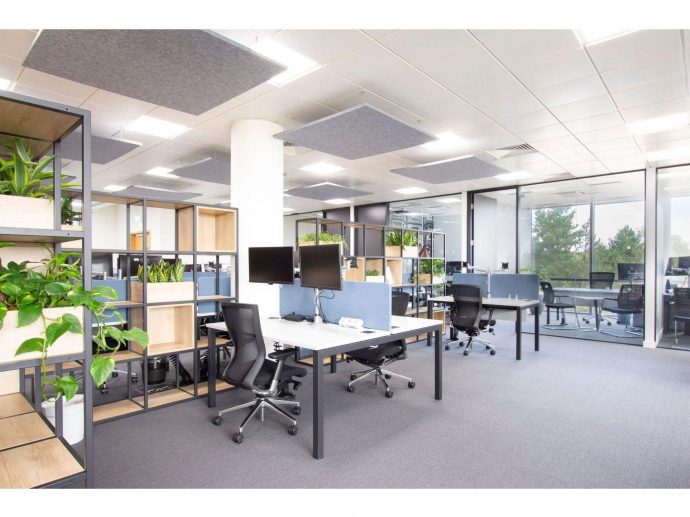
Installing acoustic ceiling rafts provides effective overhead sound absorption while maintaining an open, modern appearance.
They work especially well in:
- Coworking spaces
- Atriums
- Boardrooms
- Large commercial offices
- Educational facilities
Flexible Acoustic Dividers
Freestanding acoustic screens and partitions provide additional sound absorption while creating visual privacy between workstations.
These are particularly useful in hybrid offices where layouts frequently change.
Best Practices for Designing Sustainable Acoustic Workspaces
Achieving excellent acoustics requires more than simply adding a few panels.
Follow these best practices.
Begin With an Acoustic Assessment
Identify areas where echo and excessive noise are most noticeable before selecting products.
This helps target acoustic treatments where they will have the greatest impact.
Combine Wall and Ceiling Treatments
Using multiple sound-absorbing surfaces creates a balanced acoustic environment.
Treating only walls or only ceilings often leaves noticeable reflections.
Consider Future Flexibility
Many workplaces continue evolving to accommodate hybrid work models.
Selecting modular acoustic products makes future layout changes easier.
Prioritise Sustainable Materials
Choose products manufactured from recycled or responsibly sourced materials whenever possible.
This supports both environmental goals and long-term building performance.
Common Mistakes to Avoid
Even well-designed offices can overlook important acoustic considerations.
Focusing Only on Energy Efficiency
A highly energy-efficient building can still provide a poor employee experience if excessive noise remains unresolved.
Comfort and sustainability should work together.
Treating Acoustics as an Afterthought
Acoustic planning is most effective when incorporated during the early stages of office design.
Retrofitting later may increase costs.
Choosing Products Based Only on Appearance
Stylish finishes are important, but acoustic performance should remain the primary consideration.
Always evaluate sound absorption ratings alongside aesthetics.
Ignoring Open Collaboration Areas
Collaborative spaces often generate the highest levels of noise.
Proper acoustic treatment prevents sound from spreading throughout the office.
The Long-Term Value of Sustainable Acoustic Design
Investing in environmentally friendly acoustic solutions delivers benefits that extend far beyond certification points.
Businesses may experience:
- Higher employee productivity
- Improved workplace wellbeing
- Better communication
- Lower maintenance costs
- Enhanced corporate sustainability credentials
- Increased client confidence
- More attractive office environments
As environmental standards continue to evolve, sustainable acoustic design is becoming an essential feature rather than an optional upgrade.
Conclusion
Creating a truly sustainable workplace involves more than reducing energy consumption or choosing recycled furniture. Acoustic comfort plays a vital role in employee wellbeing, productivity, and overall building performance.
LEED-certified eco acoustic solutions offer an effective way to control noise while supporting green building objectives. From recycled PET wall panels to suspended ceiling systems, modern acoustic products combine environmental responsibility with exceptional performance.
By incorporating sustainable acoustic materials into workplace design, businesses can create healthier, quieter, and more inspiring environments that benefit employees, visitors, and the planet alike. Investing in eco-friendly acoustics today helps future-proof workspaces while demonstrating a genuine commitment to sustainability and workplace excellence.
Comments
