Categories more
- Adventures (62)
- Arts / Collectables (14)
- Automotive (77)
- Aviation (65)
- Bath, Body, & Health (123)
- Children (6)
- Cigars / Spirits (71)
- Cuisine (66)
- Design/Architecture (22)
- Electronics (63)
- Entertainment (36)
- Event Planning (115)
- Fashion (45)
- Finance (10)
- Gifts / Misc (6)
- Home Decor (118)
- Jewelry (41)
- Pets (3)
- Philanthropy (1)
- Real Estate (16)
- Services (44)
- Sports / Golf (14)
- Vacation / Travel (85)
- Watches / Pens (33)
- Wines / Vines (34)
- Yachting / Boating (67)




Published
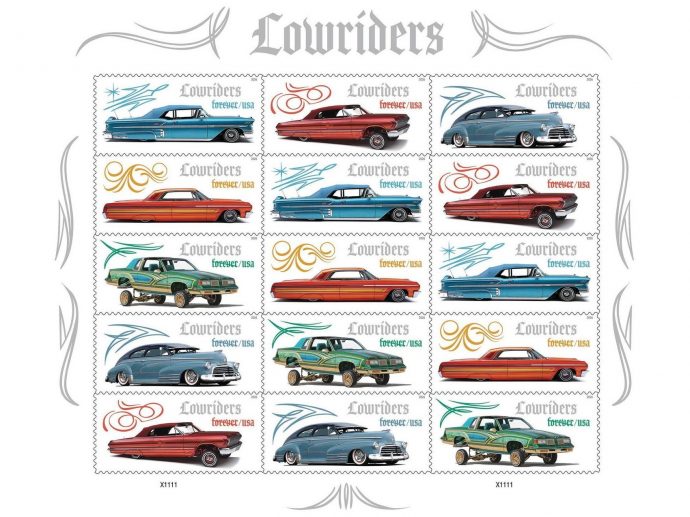
03/28/2026 by U.S. Postal ServiceThe U.S. Postal Service held a first-day-of-issue ceremony for its new Lowriders stamps today at the Logan Heights Library. With this issuance, USPS celebrates lowrider car culture, rooted in working-class Mexican American/Chicano communities throughout the American Southwest.
"A lowrider is a masterpiece of engineering and artistry, a rolling canvas of art. They are often painted with murals that tell stories of family, faith and history," said Gary Barksdale, the Postal Service's chief postal inspector, who served as the dedicating official. "The lowrider culture is about creating a space to celebrate pride, a sense of belonging and building a community that is always there for each other."
What, precisely, is a lowrider? It is a customized automobile outfitted with smaller-than-factory wheels — or "rims," preferably with wire spokes — that reduce its height. Many include dazzling paint jobs, crushed velvet upholstery and welded-chain steering wheels. In addition, a special hydraulic system allows the driver, at the touch of a button, to raise and lower the chassis or run the vehicle through tricks, such as driving on three wheels or "hopping" (bouncing).
Lowriders reflect the owner's imagination, craftsmanship and "Chicano ingenuity," a trait associated with using unconventional thinking to solve problems. With a considerable amount of time, effort and expense, an older American car model, can be transformed into a one-of-a-kind rolling masterpiece. Traditionally, groups of owners show off their rides by driving slowly — or "cruising" — along a commercial corridor in a neighborhood or around a park.
Lowriding took off in the 1970s, but it was born in East Los Angeles and the Southwest borderlands in the 1940s. Discrimination at the time caused some young Chicano men to rebel and flaunt their differences. Mimicking the African American hipsters of the jazz world, they decked themselves out in zoot suits, two-tone shoes and broad-brimmed hats and called themselves "Pachucos." Some of them lowered their cars chassis, becoming the first lowriders.
During the 1960s Chicano Movement, lowrider culture became one small but highly visible display of Chicano pride in the fight for dignity and self-respect. The car made a statement for its owner: I am here, I am somebody. Car clubs thrived, each with their own special plaque that members displayed in their car's rear window. Most were male-only organizations, but in the late 1970s women started their own clubs, too, and today lowriding is a family tradition. Clubs continue to represent belonging and pride, and club members help raise funds for various causes while they showcase their lowriders in car shows and parades.
Lowrider culture has captured the attention of people around the globe. Clubs have formed in Japan and numerous other countries. At the Smithsonian National Museum of American History, a gorgeous lowrider model stops visitors in their tracks, when they visit the third-floor exhibit.
The stamps are available at Post Office locations nationwide and online at usps.com/shopstamps.
News about the stamps is being shared on social media using the hashtag #LowridersStamps.
Comments
