Categories more
- Adventures (199)
- Arts / Collectibles (315)
- Automotive (219)
- Aviation (279)
- Bath, Body & Health (513)
- Children (116)
- Cigars / Spirits (271)
- Cuisine (723)
- Design / Architecture (1118)
- Electronics (222)
- Entertainment (162)
- Event Planning (295)
- Fashion (550)
- Finance (195)
- Gifts / Misc (141)
- Home Decor (558)
- Jewelry (396)
- Pets (91)
- Philanthropy (124)
- Real Estate (386)
- Services (221)
- Sports / Golf (213)
- Vacation / Travel (1036)
- Watches / Pens (223)
- Wines / Vines (861)
- Yachting / Boating (6985)


Managing Mild Arthritis and Stiffness in Horses

Published
08/24/2026If you've owned a horse long enough, you've probably seen this moment. He comes out of the stall a little slow, takes a few stiff steps, and then loosens up once he's moving. Most owners brush it off at first. But when the stiffness starts showing up every morning, or he's suddenly reluctant to pick up the canter he used to love, it's usually arthritis settling in. It's one of the most common conditions in horses of almost any age, and it tends to catch owners off guard because it develops so gradually.
The good news is that a diagnosis of arthritis isn't the end of a horse's working life or comfort. With the right mix of veterinary guidance, daily management, and consistent nutrition, most arthritic horses stay sound, active, and genuinely happy for years.
How Arthritis Develops in a Horse's Joints
Arthritis is, at its core, wear on the joint. Healthy joints rely on cartilage to cushion the ends of the bones and on synovial fluid to keep everything moving smoothly. Years of work, repetitive strain, or even just normal aging can wear that cartilage thin. Once it thins enough, bone starts moving closer to bone, and the joint responds with inflammation, swelling, and pain.
This is why arthritis shows up so often in horses that have had long careers in jumping, reining, or dressage, but it isn't limited to performance horses. Pasture horses develop it too, especially as they move into their late teens and twenties. The damage itself can't be reversed, so the goal isn't a cure. It's slowing the progression and keeping the horse comfortable enough to keep moving, which actually helps the joint more than rest does.
Spotting the Early Signs
Morning stiffness is usually the first clue, and it's easy to miss because it often fades within the first ten or fifteen minutes of movement. Owners tend to notice a shorter stride, a reluctance to bend on one rein, or a horse that's suddenly cranky about being groomed around a particular joint. Swelling or heat around a knee, hock, or fetlock is a stronger signal, as is a horse who seems to shift his weight off one leg while standing.
Behavior often changes before gait does. A horse that used to greet you at the gate might start hanging back. One that always picked up the correct lead without fuss might start swapping leads or refusing jumps he used to clear easily. None of these signs are dramatic on their own, so it helps to actually write down what you notice and when. That pattern is exactly what a vet needs to start narrowing things down.
Working With Your Vet on a Diagnosis
It's tempting to chalk stiffness up to “just getting older,” especially in a horse who's otherwise doing fine. But waiting to call the vet usually means the joint has already sustained more damage by the time treatment starts. A lameness exam, flexion tests, and often x-rays or ultrasound will confirm which joint is affected and how advanced the arthritis is.
From there, your vet might recommend anti-inflammatory medication for flare-ups, or in more advanced cases, joint injections to reduce inflammation directly at the site. Neither of these fixes the underlying wear, but they buy comfort and time, which matters. A horse that's less painful moves more, and moving more is one of the best things for an arthritic joint. So the earlier you get a diagnosis, the more management options you have on the table.
Daily Habits That Ease Stiffness
Stall rest is one of the worst things for an arthritic horse, even though it feels like the safe, cautious choice. Joints are meant to move, and synovial fluid only circulates properly when they do. Turnout and light, consistent exercise almost always beat total rest, as long as the workload matches what the horse can handle that day.
Footing matters more than most owners expect. Deep, uneven, or rock-hard ground puts extra strain on joints that are already compromised, so flat, even surfaces are usually the better choice for daily work. A longer, slower warm-up gives stiff joints time to loosen before real work begins, and a proper cool-down afterward keeps them from tightening back up. Keeping a horse at a healthy weight takes a surprising amount of pressure off the joints too, since every extra pound is weight those joints have to carry through every stride. Regular farrier visits round this out, because balanced hooves change how force travels up through the leg.
Feeding for Joint Support
Diet won't undo existing damage, but the right nutrition can support the joint from the inside and take some pressure off everything else you're doing. Glucosamine and chondroitin are the two ingredients most vets bring up first, since they supply raw material the body uses to maintain cartilage. Omega-3 fatty acids help on the inflammation side, which matters because ongoing inflammation is what keeps a joint sore and swollen even when the horse isn't working.
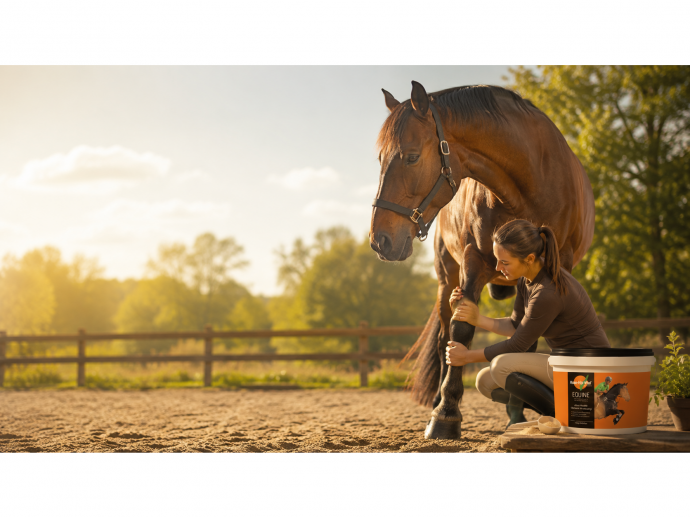
Whole-food anti-inflammatory sources are worth a look too. Rosehip is one of the more studied options here, and it's the reason many owners add a supplement like Rosehip Vital to the daily feed alongside their vet's recommendations. It won't replace medication a vet has prescribed, but as a consistent daily habit, it can genuinely help take the edge off the low-grade inflammation that comes with arthritis. Whatever you choose, give it time. Joint nutrition is a slow build, not a quick fix, and most owners notice changes over weeks rather than days.
The Path Forward From Here
Arthritis is common enough that most horses will deal with some version of it eventually, and that's not a reason to panic. It is a reason to pay attention early, involve your vet before the stiffness becomes a bigger problem, and build a daily routine around movement, good footing, and steady nutrition. None of this reverses the wear already done to the joint. But together, it's usually enough to keep a horse moving comfortably, doing the work he enjoys, for a long time to come.
Comments
