Categories more
- Adventures (62)
- Arts / Collectables (14)
- Automotive (77)
- Aviation (65)
- Bath, Body, & Health (123)
- Children (6)
- Cigars / Spirits (71)
- Cuisine (66)
- Design/Architecture (22)
- Electronics (63)
- Entertainment (36)
- Event Planning (115)
- Fashion (45)
- Finance (10)
- Gifts / Misc (6)
- Home Decor (118)
- Jewelry (41)
- Pets (3)
- Philanthropy (1)
- Real Estate (16)
- Services (44)
- Sports / Golf (14)
- Vacation / Travel (85)
- Watches / Pens (33)
- Wines / Vines (34)
- Yachting / Boating (67)



Navigating Complex Government and Municipal Housing Inventories


Published
08/24/2026The housing market, in August 2026, offers many paths to homeownership. Beyond typical listings, a significant opportunity lies in properties sold directly by government entities. These homes, acquired through processes like tax foreclosure, can be great finds. However, they come with specific rules, eligibility, and buying processes that can be hard to understand.
This is where data-driven real estate platforms truly shine. We know that finding and buying these unique homes needs more than a simple search. It requires deep information, clear steps, and a good grasp of the rules.
In this guide, we will look closely at city-owned homes, like those in Milwaukee, and properties from federal groups such as HUD and the VA. We'll explain how these homes are grouped, who can buy them, and the key steps to making an offer. By using a complete national real estate platform, buyers can easily sort through these special listings. This helps them make smart choices and find new housing options.
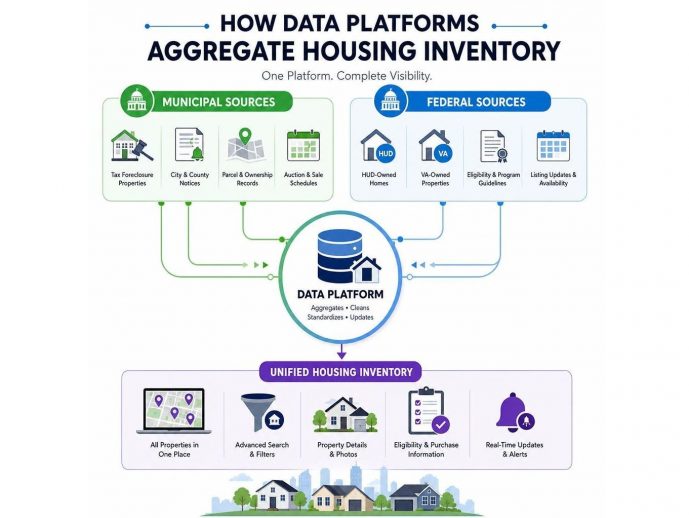
The landscape of government-owned residential properties presents both unique opportunities and distinct challenges for prospective buyers. Unlike traditional market listings, these homes often come from public inventory, primarily acquired through tax foreclosure. Understanding the specific categorization and processes involved is crucial for successful acquisition. A robust data-driven real estate platform can cut through this complexity, offering market transparency by aggregating information from diverse municipal and multi-agency records.
Analyzing Municipal Listings via a Data-Driven Real Estate Platform
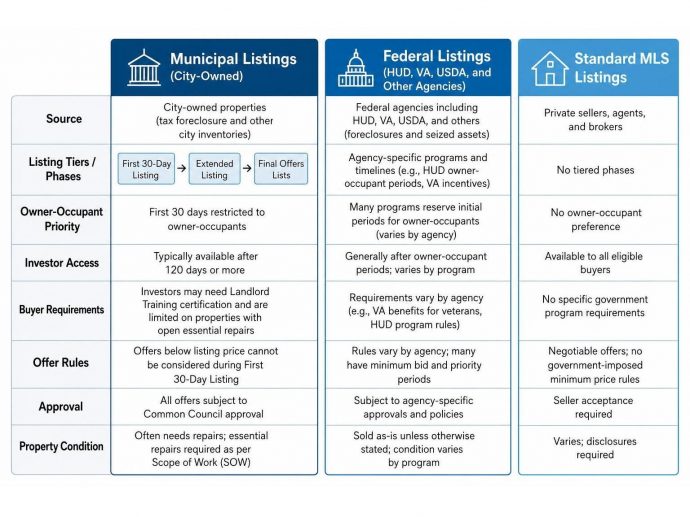
Cities like Milwaukee often find themselves owning hundreds of residential properties due to tax foreclosure. To manage this inventory and encourage neighborhood stabilization, they implement structured sales programs with specific listing tiers. These tiers are designed to prioritize certain buyer types and facilitate the disposition of properties at various stages of their availability.
Initially, properties are often placed on a First 30-Day Listing. During this exclusive window, offers are typically restricted to owner-occupants. This municipal policy bias aims to encourage individuals who will live in and maintain the property, fostering community stability. Under Wisconsin Foreclosure Law, offers below the listing price cannot be considered during this initial period, ensuring fair market value and preventing speculative low-ball bids.
Following the initial period, properties may move to an Extended Listing. These can be listed either directly with the city or through collaborating brokers. Properties that remain on the market for 120 days or more often become accessible to a broader range of buyers, including real estate investors. However, investors frequently face additional requirements, such as obtaining a Landlord Training Program certification prior to closing and limitations on the number of properties they can purchase with open essential repairs. All offers, regardless of the listing tier, are legally subject to Common Council approval, adding a layer of municipal oversight to the transaction.
Finally, some properties transition to Final Offers lists. These properties have often remained unsold for extended periods and may be candidates for demolition if no viable offers are received. Despite the potential for significant repair needs, they can represent deep value for buyers willing to undertake substantial rehabilitation.
A data-driven real estate platform provides a centralized hub to track these listing tiers, understand the associated buyer restrictions, and monitor the progress of properties through the municipal sales pipeline. This level of detail empowers buyers to strategically target properties that align with their eligibility and investment goals.
Federal Disposition Programs from HUD, VA, and USDA
Beyond municipal inventories, several federal agencies also sell single-family homes and multifamily properties, presenting another avenue for buyers. These programs operate under different mandates and processes than city-level sales, and a comprehensive property search tool can help navigate them. For instance, the U.S. Department of Housing and Urban Development (HUD) is a well-known entity that sells homes. These are typically properties that had FHA-insured mortgages and were foreclosed upon.
However, HUD is not alone. Other federal departments and agencies with federal disposition programs include:
- Department of Veterans Affairs (VA): Sells homes acquired through foreclosures on VA-guaranteed loans.
- Federal Deposit Insurance Corporation (FDIC): Disposes of assets, including real estate, from failed financial institutions.
- Internal Revenue Service (IRS): Auctions properties seized for unpaid taxes.
- US Army Corps of Engineers: May have surplus properties available.
- U.S. Marshals Service: Sells properties seized in connection with criminal investigations.
- USDA Rural Development: Offers homes in rural areas acquired through foreclosure on their loan programs, often aimed at promoting rural development and homeownership.
While the fundamental goal of selling residential real estate is similar across these agencies, their specific bidding processes, financing options, and property conditions can vary significantly. For example, HUD homes often have specific bidding periods for owner-occupants before opening to investors, similar in spirit to municipal programs but with different timelines and requirements. VA homes might have specific incentives for veteran buyers. A sophisticated property search platform can aggregate these diverse listings, providing buyers with a broader view of government-owned homes for sale and helping them understand the unique aspects of each agency's process.
Core Insights Provided by a Data-Driven Real Estate Platform
Acquiring government-owned properties demands a rigorous due diligence process that goes beyond what's typically required for a standard MLS listing. This is where the analytical power of a data-driven real estate platform becomes indispensable. Such a platform can integrate various data points, offering valuation algorithms, property analytics, and tools for capital planning that are tailored to the unique aspects of these transactions.
Consider how a platform can synthesize complex requirements across different property types:
Scope of Work and Essential Repair Calculations
One of the most critical aspects of purchasing city-owned properties, particularly those acquired through tax foreclosure, is understanding the "Scope of Work" (SOW) and essential repair requirements. Unlike traditional sales where a buyer might conduct an inspection and negotiate repairs, city-owned properties often come with a pre-defined list of necessary repairs that the buyer is obligated to complete. These essential repairs are crucial for bringing the property up to code and ensuring habitability.
The financial implications of these repairs are significant. Proof of funds submitted with an offer must cover not just the purchase price, but also the estimated cost of these essential repairs as outlined in the city's SOW. This means that a buyer's rehab capital needs to be accounted for upfront. A data-driven platform can be invaluable here, potentially integrating with or providing tools to help buyers estimate these repair budgets more accurately. While the city provides an estimated SOW, a thorough inspection report by a qualified professional remains essential. The platform can help organize these details, ensuring that buyers have a clear financial picture and are prepared for the full cost of acquisition and rehabilitation. This level of financial underwriting is key to making a competitive and compliant offer.
Buyer Qualification and Municipal Compliance Screening
The eligibility criteria for purchasing city-owned homes are stringent and designed to ensure responsible ownership and community revitalization. A data-driven platform can help buyers pre-screen themselves against these municipal compliance checks, saving time and avoiding automatic disqualifications.
Key disqualifying factors for buyers in cities like Milwaukee include:
- Delinquent Property Taxes: Buyers with outstanding property taxes on other properties in the city are typically disqualified.
- Outstanding City Judgments: Any unresolved financial obligations to the city can prevent a purchase.
- Unabated Health or Building Code Violations: Buyers with active code violations on existing properties must resolve them prior to submitting an offer.
- Code Violation Convictions: A conviction for a Department of Neighborhood Services or Health Department violation within the past year can lead to disqualification.
- Prior Tax-Foreclosure Ownership: Individuals who had property tax-foreclosed by the city within the past five years are generally ineligible.
Furthermore, investor buyers often face additional requirements. As of August 2026, many cities, including Milwaukee, mandate that investors obtain a Landlord Training Program certificate prior to closing. This ensures they are equipped to manage rental properties responsibly. Investor purchases may also be limited, for example, to one property with open essential repairs at a time, to prevent over-leveraging and ensure timely rehabilitation.
For owner-occupants, the initial 30-day listing periods are strictly reserved. This bias aims to put homes directly into the hands of residents who will contribute to the neighborhood. A sophisticated platform can highlight these specific requirements, allowing prospective buyers to understand their eligibility and prepare all necessary documentation, from proof of funds to compliance certifications, well in advance.
Advanced Sourcing for Off-Market and Distressed Real Estate
Beyond the initial listings, a data-driven real estate platform offers significant advantages in sourcing off-market and distressed properties. These are often the assets that require deeper research, specialized knowledge, and a strategic approach to acquisition. For properties that have been on the market for extended periods or are considered for demolition, the right tools can reveal hidden value and facilitate urban revitalization.
Utilizing a Data-Driven Real Estate Platform for Distressed Assets
Properties that have been listed for 120 days or more, particularly in municipal inventories, often transition into a category with broader buyer access, including investors. These long-term vacant city properties represent distressed assets that, while potentially requiring substantial rehab assessments, can offer significant investment opportunities. A comprehensive real estate search engine can track these extended listings, providing granular data on how long a property has been available, its price history, and any changes in its listing status.
For real estate agents assisting buyers, the ability to access these properties for viewing is paramount. In many cities, "City Keys" are available to licensed real estate agents, allowing them to arrange physical viewings. A data platform can streamline the process of identifying properties that qualify for agent access, helping to coordinate inspections and gather detailed information for rehab assessments.
The unique insights provided by such a platform allow for precise market timing and acquisition efficiency. For instance, an investor might use the platform to identify properties that have just passed the 120-day mark, knowing that they can now submit an offer after obtaining their Landlord Training Program certification. This strategic approach, informed by detailed data, empowers buyers to target opportunities that might be overlooked in a less transparent market.
Evaluating Final Offers and Demolition Candidates
The "Final Offers" list represents the last stage for many city-owned properties before they are considered for demolition. While these properties often come with the most significant challenges, they also present unique opportunities for those willing to undertake structural rehabilitation or land recycling projects. Properties on this list are explicitly identified as candidates for demolition, meaning the city is actively seeking bids to avoid the cost and effort of demolition.
A data-driven platform can provide crucial context for evaluating these properties. It can display historical data, such as previous listing prices, the duration the property has been on the market, and any available information regarding its structural condition or zoning assessment. For buyers interested in these properties, the platform can help formulate a bidding strategy by providing insights into similar past sales or demolition costs in the area. This allows buyers to make informed decisions about whether the potential for rehabilitation outweighs the risks and costs involved, contributing to urban renewal efforts rather than allowing properties to be razed.
Frequently Asked Questions
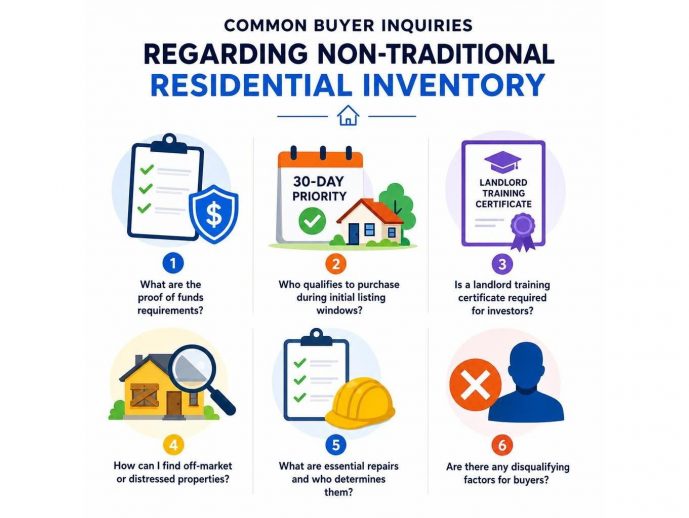
Navigating the nuances of purchasing government-owned residential properties often leads to specific questions. Here, we address some of the most common inquiries prospective buyers have when considering non-traditional residential inventory.
How do proof of funds requirements differ for municipal tax-foreclosed properties?
For municipal tax-foreclosed properties, proof of funds requirements are often more comprehensive than for traditional real estate transactions. It's not enough to simply demonstrate you have the purchase price. Instead, your financial verification must show that you possess funds covering the total of the purchase price plus the estimated essential repair funds. These essential repair funds are typically specified on the property's Scope of Work (SOW), which is provided by the city. This requirement ensures that buyers have sufficient rehab reserves to bring the property up to code and make it habitable, aligning with the city's goal of revitalizing its housing stock. Without proof of funds for both components, an offer may be automatically rejected.
Who qualifies to purchase city-owned homes during initial listing windows?
During the initial listing windows, such as the First 30-Day Listing period, municipal policies strongly prioritize owner-occupants. This means that only offers from individuals who intend to live in the property as their primary residence are considered. This owner-occupant priority is a deliberate strategy to promote neighborhood stability and direct homes to residents rather than investors. During this period, bidding restrictions are often in place, including a list price floor, meaning offers below the listed price cannot be accepted under Wisconsin Foreclosure Law (in the case of Milwaukee). Real estate investors typically face an investor waiting period and can only submit offers once the property moves to an extended listing phase, often after 30 days or more, and usually with additional municipal regulations like requiring a Landlord Training Program certificate.
Which federal agencies list residential properties for public acquisition?
Several U.S. federal agencies list single-family homes and multifamily properties for public acquisition, each with its own specific inventory and process. The most commonly known is the U.S. Department of Housing and Urban Development (HUD), which sells homes acquired through FHA loan foreclosures. However, other significant agencies include:
- Department of Veterans Affairs (VA): Offers homes acquired through foreclosures on VA-guaranteed loans.
- Federal Deposit Insurance Corporation (FDIC): Disposes of real estate assets from failed banks.
- Internal Revenue Service (IRS): Auctions properties seized for tax delinquencies.
- US Army Corps of Engineers: May have surplus housing or other properties.
- U.S. Marshals Service: Sells properties seized in connection with criminal cases.
- USDA Rural Development: Provides listings for homes in rural areas acquired through their loan programs, often aimed at promoting rural homeownership.
Each agency's process, from bidding to financing, can differ, making it beneficial for buyers to explore their specific websites or utilize a comprehensive platform that aggregates these diverse federal listings.
Conclusion
The journey to acquiring government-owned residential properties, whether from a city like Milwaukee or federal agencies such as HUD and the VA, is paved with unique opportunities and specific requirements. In August 2026, the housing market continues to evolve, and these non-traditional avenues offer distinct advantages for both owner-occupants seeking affordable homes and investors looking for revitalization projects.
By leveraging the power of data integration, a sophisticated real estate platform empowers buyers to navigate these complex markets with confidence. From understanding the tiered listing systems of municipal inventories to deciphering the specific requirements for proof of funds and buyer eligibility, these platforms provide the essential insights needed for informed decision-making. They transform what could be an overwhelming process into a streamlined acquisition strategy, enhancing market efficiency and unlocking a wider range of housing opportunities for everyone.
Post HTML
Comments
