Categories more
- Adventures (213)
- Arts / Collectibles (373)
- Automotive (852)
- Aviation (380)
- Bath, Body & Health (3650)
- Children (138)
- Cigars / Spirits (294)
- Cuisine (727)
- Design / Architecture (1122)
- Electronics (243)
- Entertainment (163)
- Event Planning (295)
- Fashion (554)
- Finance (206)
- Gifts / Misc (141)
- Home Decor (583)
- Jewelry (415)
- Pets (92)
- Philanthropy (124)
- Real Estate (400)
- Services (225)
- Sports / Golf (216)
- Vacation / Travel (1072)
- Watches / Pens (237)
- Wines / Vines (871)
- Yachting / Boating (9084)




Online video editor

Published
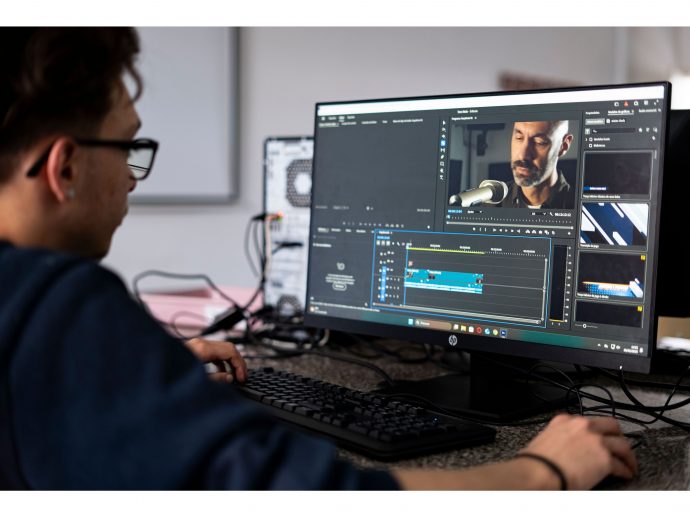
11/01/2026An online video editor consents operators to edit videos in a browser. Online tools have utilities like trimming, cutting, transitions, text overlay, and background music. Maximum editors have templates for social media content and work with different file types. They do not offer the wide range of functions of Adobe Premiere Pro and other software but are perfect for people who want to create videos quickly and collaborate.
How can online video editors deal with large file sizes?
Online video editors utilize browsers, video compression, cloud storage, proxy files, and other methods to reduce the size of video files. Multiple techniques can allow a beginner to edit a video without spending money on expensive software or hardware.
6 Ways Online Video Editors Handle Large Files
- Video compression
Online editors compress the final size of a video using codecs like H.264 to reduce the size of a video file by up to 80%. For example, a user can upload a 1 Gb file and get a compressed version that can still provide excellent visual quality. However, the compression results depend on the source resolution and bit rate of the video being processed.
- Cloud processing and storage
A cloud-based online video editor allows users to store video in the cloud or use remote processing to reduce the memory footprint of the local machine. However, the ability to use cloud processing is limited by internet upload speeds and the allocated storage space on the server.
- Proxy files
An online video editor generates proxy files to edit large videos without additional memory consumption. In most cases, proxy files are low-resolution copies of the source material. After editing, users can export the edited video using the original source file.
- Streaming and partial loading
Instead of loading the entire video into a local machine’s memory, an online editor can read a video file. Although this method is similar to proxy files, it does not always store information about the entire video in a single proxy file.
- Adjustable export settings
Users can reduce the resolution, bit rate, or choose a more efficient codec to reduce the size of the output video. For example, they might reduce a 4K (3840 × 2160) resolution file to 720p (1280 × 720).
- Local browser processing
Some online editors process video in the browser without relying on the cloud. It allows reducing the memory consumption when rendering a video. However, the final output resolution might still depend on the computer’s RAM, CPU, browser, and storage space.
How much space does a large video need?
The table below indicates the file size of a video depending on its length and bit rate. The units are based on decimal (SI) rather than binary:
Video duration 5 Mbps 20 Mbps
- 5 minutes 188 MB 750 MB
- 30 minutes 1.1 GB 4.5 GB
- 60 minutes 2.25 GB 9 GB
What happens when you upload a 5 GB video?
The exact procedure depends on the online video editor, but a typical workflow contains the following steps:
- Original 5 GB video
- Upload and validation
- Depends on connection speed and upload limits
- Generate previews or proxies
- Optional; depends on the editor
- Edit and render
- Export the finished video
To estimate how long it takes to upload the 5 GB file to the online editor, one can divide the size by the connection speed, considering that 1 Mbps equals 0.125 MBps: 5000 / 10 = 500 seconds or 67 minutes.
Tips for beginners
- Check the editor’s file size limit and free plan policies.
- Use 1080p (Full HD) if a 4K (3840 × 2160) resolution is not necessary.
- Reserve some space on your hard drive to store the final output file.
- Use a high-quality and stable internet connection for cloud-based editors.
- Ensure that the online editor does not transfer private or confidential video footage to third parties if it processes content in the cloud.
Can online editors export videos in 4K resolution?
Yes! The best online video editors provide the option to export 4K resolution videos. However, there are several aspects to consider: the specific video editor, a user’s account status, and the source footage. One should realize that converting a lower-resolution video to 4K will not make it look better. Moreover, it is advisable to work with native 4K video content.
Features of online Editor
Below is a list of most online video editor features that fit for an article, web page, or comparison:
Feature Description
1 Video Trimming Remove unwanted parts from the beginning, middle, or end of a video.
2 Video Splitting Divide a video into multiple clips.
3 Video Merging Combine multiple video clips into one video.
4 Crop and Resize Change video dimensions for different platforms.
5 4K Video Export Export videos at resolutions up to 3840 × 2160 when supported.
6 Video Compression Reduce file size while maintaining acceptable quality.
7 Transitions Add smooth visual effects between clips.
8 Text and Titles Add headings, captions, labels, and animated text.
9 Subtitles and Captions Generate or add subtitles to improve accessibility.
10 Audio Editing Adjust volume, remove audio, or add sound effects.
11 Background Music Add music tracks to videos.
12 Voice-over Recording Record narration directly within the editor.
13 Filters and Effects Improve colors and apply creative visual effects.
14 Speed Control Slow down or speed up video playback.
15 Green Screen Replace a green background with another image or video.
16 AI Video Editing Use AI tools for captions, scene detection, and other automated tasks.
17 Templates Create videos using ready-made designs.
18 Screen Recording Record your screen for tutorials and presentations.
19 Webcam Recording Record yourself using a webcam.
20 Aspect Ratio Presets Prepare videos for YouTube, Instagram, TikTok, and other platforms.
21 Cloud Storage Save projects and media online, depending on the service and plan.
22 Collaboration Allow multiple users to review or edit projects where supported.
23 Drag-and-Drop Interface Arrange clips, images, and audio easily.
24 Timeline Editing Organize video, audio, and text on separate tracks.
25 Export Options Select resolution, format, and other output settings where available.
26 Watermark-Free Export Export without editor branding when the plan permits.
27 Stock Media Library Access stock footage, images, music, and graphics.
28 Social Media Sharing Publish or download videos for online platforms.
29 Automatic Transcription Convert spoken words into editable text.
30 Browser-Based Access Edit videos without installing desktop software.
Note: Not every online editor offers all these features for free. Some, particularly 4K export, AI tools, premium templates, cloud storage, and watermark-free downloads, may require a paid subscription.

Comments