Categories more
- Adventures (62)
- Arts / Collectables (14)
- Automotive (77)
- Aviation (65)
- Bath, Body, & Health (123)
- Children (6)
- Cigars / Spirits (71)
- Cuisine (66)
- Design/Architecture (22)
- Electronics (63)
- Entertainment (36)
- Event Planning (115)
- Fashion (45)
- Finance (10)
- Gifts / Misc (6)
- Home Decor (118)
- Jewelry (41)
- Pets (3)
- Philanthropy (1)
- Real Estate (16)
- Services (44)
- Sports / Golf (14)
- Vacation / Travel (85)
- Watches / Pens (33)
- Wines / Vines (34)
- Yachting / Boating (67)


Step-by-Step Curly Hair Daily Routine

Published
01/06/2026Curly hair has its own rhythm, texture, and personality. It can look defined and bouncy one day, and frizzy or flat the next—especially without a consistent care routine. For anyone heading home after a curly haircut Houston appointment or simply trying to bring out the best in their natural texture, a clear routine changes everything. A structured, repeatable daily routine helps curls stay hydrated, defined, and healthy while reducing breakage and frizz. This guide lays out a complete step-by-step curly hair routine you can follow every day, including wash days, refresh days, night care, climate adjustments, and product layering strategies. Adjust the steps to your curl type, density, lifestyle, and weather conditions.
Curly hair requires three core elements each day:
- Moisture to combat dryness and frizz
- Definition to help curls maintain their natural pattern
- Protection to prevent damage from friction, weather, and styling
Because curls are naturally more porous, the cuticle lifts more easily, allowing moisture to escape. This is why curls tend to be drier than straight hair and why a consistent routine makes such a difference. The following steps are structured around these needs.
Morning Routine: Set Your Curls Up for the Day
Your morning routine will differ slightly depending on whether it is a wash day or a refresh day. Both aim to restore moisture, encourage definition, and protect your curls from humidity and friction throughout the day.
Step 1: Assess Your Curls
Before applying any product, look at your curls and feel them. Do they seem dry, stretched, or frizzy? Are they still well-defined from the previous day? This tells you whether you need a full refresh, light misting, or a full wash-and-style routine. Working with what your hair already has prevents overloading it with unnecessary product.
Step 2: Hydrate – Always Start with Water or Mist
Water is the most important moisturizing ingredient for curly hair. Even on non-wash days, curls respond best when products are applied to damp—not dry—hair.
You can hydrate by:
- Lightly misting curls with a spray bottle
- Using a store-bought curl refresher spray
- Rewetting key sections at the sink
Avoid soaking your hair fully unless it is a wash day. The goal is to awaken the curls and reactivate yesterday’s styling products.
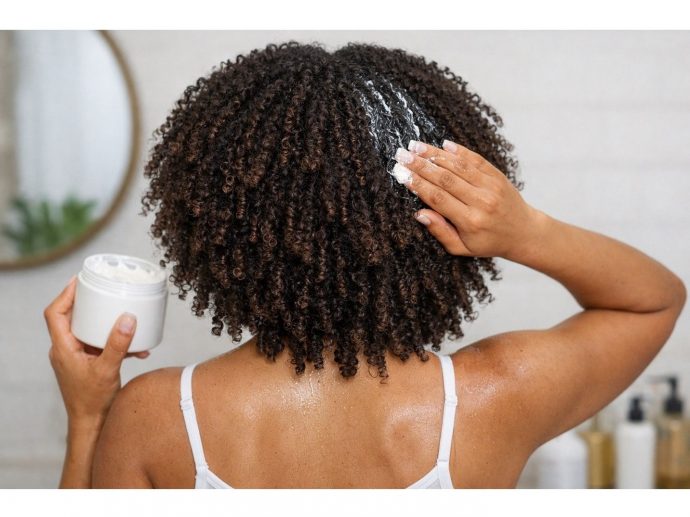
Step 3: Apply Leave-In Conditioner
Leave-in conditioner forms the base of your daily routine. It adds slip, softens strands, and creates a protective layer that seals in moisture.
How to apply:
- Emulsify a small amount between your hands
- Glaze it over your curls, focusing on mid-lengths and ends
- Use the "prayer hands" method to smooth product downward
For very dry curls, add a bit more leave-in. For fine curls, keep the amount light to avoid weighing hair down.
Step 4: Define Curls with Cream or Gel
Once hydrated and conditioned, curls need definition and hold.
Two main product options are used here:
- Curl cream for soft, touchable definition
- Gel or custard for longer-lasting hold and frizz control
You may layer both if your curls tend to frizz easily. Apply products to damp hair using one or more of these techniques:
- Scrunching upward to encourage curl formation
- Finger-coiling individual curls that need help forming
- Raking product through with fingers for even distribution
Avoid brushing at this stage, as it separates curls and increases frizz.
Step 5: Dry Gently – Air Dry or Diffuse
Drying method has a huge effect on curl shape.
Air drying benefits:
- Zero heat damage
- Soft, natural finish
Diffusing benefits:
- Faster drying
- More volume at the roots
If diffusing, keep the dryer on low or medium heat and low airflow. Cup sections of hair gently with the diffuser and lift toward the scalp without roughing the curls.
Avoid towel rubbing. Instead, blot excess moisture with a microfiber towel or cotton T-shirt to protect the cuticle.
Step 6: Break the Gel Cast (Optional)
If you used gel, you may notice your curls feel crunchy after drying. This is called a gel cast and is actually beneficial—it locks curls into shape while drying.
To soften the cast:
- Add a few drops of lightweight oil or serum to your palms
- Scrunch curls gently from ends upward
This leaves curls soft, shiny, and defined without removing the hold entirely.
Non-Wash Days: How to Refresh Curls
Most people with curly hair do not wash it daily. Refreshing keeps curls looking defined while avoiding dryness from overwashing.
Ways to refresh include:
- Spritzing hair with water and scrunching
- Using a store-bought curl revitalizer
- Mixing water and leave-in conditioner in a spray bottle
- Re-coiling sections that lost definition
Target only the areas that need help—usually the front, crown, or ends. This keeps buildup down while maintaining freshness.
The Ideal Wash Day Routine (When You Shampoo or Co-Wash)
Wash day typically happens anywhere from every two days to once a week, depending on scalp condition, lifestyle, and hair type.
Step 1: Cleanse the Scalp Gently
Use a sulfate-free shampoo or cleansing conditioner. Focus on the scalp rather than the entire hair length. Massage with fingertips to stimulate circulation and remove buildup, allowing suds to rinse through the lengths.
Step 2: Condition Thoroughly
Apply conditioner generously, focusing on the ends. Detangle with fingers or a wide-tooth comb. Let it sit for at least a few minutes to soften the hair cuticle and restore moisture.
Step 3: Deep Condition Regularly
Add a deep conditioner once a week or as needed for:
- Extra moisture
- Elasticity
- Reduced breakage
Heat or steam improves penetration. Rinse with cool water to seal the cuticle and enhance shine.
Step 4: Style While Hair is Wet
Curly hair responds best when styled while wet or very damp. Apply your leave-in conditioner, curl cream, and gel as outlined earlier. The wetter the hair, the more defined the finished curl pattern will generally be.
Night Routine: Protect Curls While You Sleep
How you treat curls at night affects how much work you have to do in the morning.
Key nighttime protection strategies include:
- Sleeping on a silk or satin pillowcase
- Wearing a silk bonnet or scarf
- Putting hair into a loose "pineapple" ponytail on top of the head
These reduce friction, preserve moisture, and maintain curl shape.
For very dry curls, apply a light mist of water and a small amount of leave-in before bed. Avoid heavy oils at night, which can cause buildup on the scalp and pillowcase.
Weekly and Occasional Add-Ons
Beyond the daily basics, curly hair benefits from periodic treatments.
Clarifying
Use a clarifying shampoo every 3–4 weeks to remove product buildup. This is important for people who use gels, creams, and oils frequently.
Protein Treatments
Protein strengthens curls that feel limp, mushy, or over-moisturized. Alternate with moisture masks to maintain balance.
Scalp Care
Healthy curls start at the scalp. Gentle exfoliation or scalp massage oils can help maintain balance, reduce itching, and encourage growth.
Customizing the Routine for Curl Types
Different curl families benefit from slightly different product weights and routines.
Wavy Hair (Type 2)
- Use lighter leave-ins and gels
- Avoid heavy butters and oils
- Focus on root lift and light moisture
Curly Hair (Type 3)
- Balance moisture and protein
- Layer cream and gel for definition
- Add regular deep conditioning
Coily Hair (Type 4)
- Prioritize rich creams and butters
- Protective styles can help retain moisture
- Avoid daily manipulation to reduce breakage
Common Daily Mistakes to Avoid
- Applying products to dry hair only
- Overwashing and stripping natural oils
- Using terrycloth towels that roughen the cuticle
- Skipping leave-in conditioner
- Ignoring nighttime protection
Avoiding these habits will make curls easier to manage over time.
Building Consistency
The most important part of any curly hair routine is consistency. Curls thrive when treated gently, moisturized regularly, and styled with intention. Over time, you will begin to recognize how your curls behave in different weather, products they respond to, and how much moisture they need.
Use this routine as a foundation, then adjust based on how your hair feels. The goal is not perfection, but predictable, healthy curls that suit your lifestyle and texture.
Adapting Your Routine to Climate and Season
Climate dramatically affects curls. In humid areas, curls pull moisture from the air and expand, which causes frizz. In dry climates, they release moisture and become brittle. To adapt:
- In humidity, emphasize gels with strong hold and anti-humidity serums
- In dry seasons, increase leave-in conditioners and oils
- In windy weather, protective styles reduce tangling and moisture loss
- After swimming, rinse immediately and follow with conditioner to remove chlorine or salt
If you live in a humid subtropical area like Houston, expect more frequent refreshing and anti-frizz support. In drier winter air, prioritize deep conditioning and gentle detangling.
Building Curl-Friendly Habits
Beyond products and steps, daily habits have a cumulative impact on curl health:
- Keep hands out of your hair during the day to avoid frizz
- Schedule regular trims to remove split ends
- Avoid tight hairstyles that stress the edges
- Stay hydrated and maintain a balanced diet to support growth
Consistency turns these habits into effortless maintenance.
Example Daily Schedules for Different Lifestyles
Busy professional
- Quick morning mist and curl refresh
- Gel for hold that lasts through long days
- Pineapple and satin pillowcase at night
Active or gym-focused person
- Gentle rinse or refresh after workouts
- Light leave-in to prevent salt and sweat dryness
- Low-manipulation styles like loose buns or braids
Student or low-maintenance routine
- Wash days twice weekly
- Simple leave-in plus gel combination
- Night bonnet to stretch days between washes
Troubleshooting Guide for Common Curl Problems
Frizz that appears mid‑day
- Increase gel hold level
- Finish with a small amount of anti‑humidity spray
- Avoid touching curls once they are dry
Flat roots, big ends
- Diffuse with head upside down
- Clip roots while drying for lift
- Ask your stylist about strategic layers
Curls losing shape after sleep
- Refresh with mist + leave‑in mix
- Re‑coil sections with finger‑coiling
- Protect better at night with bonnet or scarf
Excess buildup or greasy feeling
- Clarify with a gentle clarifying shampoo
- Reduce heavy butters and oils
- Rinse thoroughly between products
Final Thoughts
A daily curly hair routine is less about strict rules and more about understanding your texture. With hydration, definition, and protection as the core principles, you can customize these steps for any curl pattern—from loose waves to tight coils. By following a structured morning, wash day, refresh, and nighttime routine, and by adapting to climate and lifestyle, you set your curls up to stay defined, strong, and healthy every single day.
Most importantly, pay attention to how your hair responds. Your routine should evolve as your curls change with weather, length, and health. Over time, you will build a reliable system that supports frizz control, curl definition, and overall hair health—without spending hours in front of the mirror.
Comments
