




Key Takeaways
- Adopting sustainable piping materials can significantly reduce environmental impact while maintaining performance.
- Innovative manufacturing and system design approaches can drive substantial CO2 savings.
- Smart maintenance and energy efficiency measures help extend system life and minimize waste.
In today’s evolving industrial world, sustainability has shifted from being an ideal to a vital operational goal. More businesses are seeking to reduce their environmental impact by prioritizing eco-friendly systems and materials. The pipe supply sector is at the forefront of this transition. By partnering with an experienced industrial pipe supplier, companies can find solutions that meet their performance needs while also advancing sustainability.
Forward-thinking industries see responsible sourcing and innovative design as key to reducing emissions and resource use. Choosing the right piping materials aligns with environmental goals. The demand for greener options is about benefits for businesses and the planet, not just compliance.
From manufacturing to energy, companies adopt greener solutions for viability, cost, and regulation. Eco-friendly piping strategies help meet sustainability, efficiency, and reliability goals.
Sustainable piping systems prove beneficial ecologically and economically. This article highlights materials, technologies, and strategies that maximize returns, helping operations thrive in a resource-conscious world.
Eco-Friendly Materials in Industrial Piping
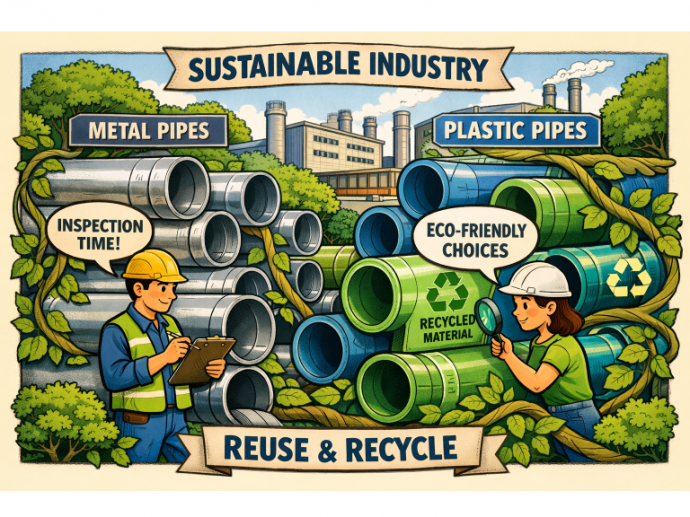
Sustainable pipe systems start with material selection. Recycled and recyclable metals, such as stainless steel and aluminum, are trusted for their durability and closed-loop lifecycle. These metals can be processed and reused repeatedly with minimal loss of structural attributes. High-density polyethylene (HDPE) has also gained popularity due to its lightweight properties, corrosion resistance, and impressive longevity, making it suitable for a wide range of industrial applications.
Composite materials, such as fiber-reinforced polymers, combine high strength with reduced weight, resulting in more efficient shipping and less environmental impact during installation. The use of such modern materials reduces strain on raw resources and lowers emissions throughout the lifecycle of the piping system.
Green material selection alone can cut a project’s carbon footprint, especially when paired with supply chain partners who embrace responsible sourcing and recycling. The focus on sustainability in the materials phase sets the stage for even larger gains as projects advance.
Innovative Manufacturing Processes
Recent manufacturing advances have taken sustainability to the next level. For example, the RAUTITAN flex green pipe system developed by REHAU is manufactured from renewable feedstocks and results in more than 90% fewer production emissions than legacy pipes. Such innovations highlight how manufacturers can dramatically increase sustainability by redesigning production inputs and methods.
Industry leaders are now investing in closed-loop systems that capture and reuse byproducts and adopting clean energy technologies on the factory floor. These efforts not only shrink environmental footprints but also reduce costs tied to energy consumption and waste management. According to the U.S. Environmental Protection Agency, modernizing industrial processes plays a pivotal role in lowering national greenhouse gas emissions.
Designing for Sustainability
Design also has a profound impact on the sustainability of industrial piping installations. Optimized routing and layout design reduce the volume of materials required, minimizing waste while controlling installation costs. When paired with modern leak detection technologies, these systems prevent resource loss and potential environmental contamination.
Modular design makes it easier to upgrade and replace system components, extending the service life of infrastructure and reducing material disposal. Energy-efficient pumping systems, which consume less power during normal operations, further compound these long-term savings and boost an organization’s sustainability profile. The American Society of Mechanical Engineers’ guidelines for energy-efficient systems support these strategies and emphasize their growing adoption.
Energy Efficiency in Piping Systems
Industrial facilities consume significant amounts of energy, much of which is used in moving fluids or gases through piping networks. Simple measures such as proper pipe sizing reduce friction losses, which means pumps work less and consume less power. Pipes with smooth interior surfaces have lower flow resistance, making system operation more efficient overall.
Insulating thermal piping prevents unnecessary heat loss, enabling systems to deliver reliable performance while conserving energy. Advanced flow control valves and automated management software enable real-time adjustments, keeping systems operating at peak efficiency under any conditions. Each of these improvements contributes to sustained energy savings, especially as systems scale in size and complexity.
Maintenance and Lifecycle Management
Longevity is a core component of sustainability. Regular inspections and preventive maintenance should be central to all industrial piping operations. Preventive programs dramatically lower the risk of unexpected failures, which can lead to costly replacements and environmental harm. Protective coatings and corrosion management solutions further extend pipe life in even the harshest environments.
Timely repairs prevent small issues from turning into costly breakdowns or hazardous leaks, helping businesses maintain uninterrupted operations and avoid unnecessary waste. When systems are maintained effectively throughout their lifecycle, both environmental and financial costs are minimized.
Regulatory Compliance and Environmental Standards
Most industries must comply with stringent regulations around emissions, water management, and waste disposal. Choosing sustainable piping systems makes it easier to align with both current laws and anticipated future requirements. This not only protects organizations from potential fines or penalties but also positions them as responsible corporate citizens committed to stewardship of resources.
Conclusion
Sustainable solutions in industrial pipe supply offer a powerful alignment of environmental and business benefits. With careful attention to materials, manufacturing processes, system design, and maintenance, organizations can enhance resource efficiency, minimize waste, and prolong the service life of critical assets. Investing in these strategies now ensures operational resilience and lasting value for businesses seeking to lead the way in sustainability.
