


Key Takeaways
- A strong venue safety plan starts with proactive risk assessment tailored to the venue’s layout, audience, and event type
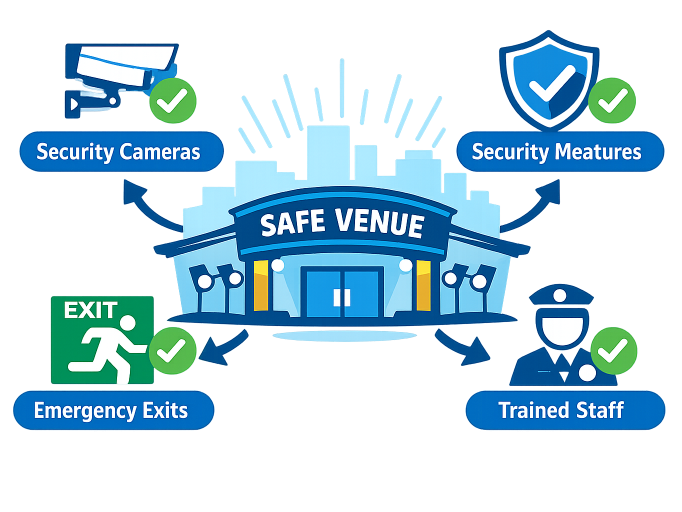
- Layered safety systems combining surveillance, access control, and crowd management reduce vulnerabilities across multiple points
- Staff training and clear emergency protocols are essential for fast, coordinated responses during incidents
- Collaboration with local authorities strengthens preparedness and improves response efficiency in emergencies
- Continuous review and improvement ensure safety strategies stay relevant as risks and venue conditions evolve
Safety is a non-negotiable priority for any venue hosting events, whether for live entertainment, business gatherings, or community functions. A solid approach not only safeguards guests, performers, and staff but also builds confidence in returning visitors and ensures successful, memorable experiences. Building a reliable venue safety plan lays the foundation for a secure environment that addresses all potential risks and threats.
Developing and maintaining effective safety strategies demands attention to detail and ongoing commitment. Modern best practices call for both proactive risk identification and adaptable protocols. Clear procedures, strong staff awareness, and state-of-the-art technology come together to minimize risks and respond effectively to incidents. Implementing comprehensive strategies also helps venues meet legal standards, uphold their reputation, and foster a welcoming atmosphere for everyone.
Comprehensive Risk Assessment
A thorough risk assessment is the first step in building a robust venue safety plan. This process involves evaluating the unique features and vulnerabilities of your space, including architectural layout, audience demographics, and event type. Assess structural integrity, fire hazards, crowd dynamics, and external threats such as weather or neighborhood crime rates. Regularly review these risks and adapt your strategy to changes in the venue setup or the types of events you host.
Collaboration with Authorities
Building strong working relationships with local law enforcement, fire departments, and emergency medical teams is critical. These agencies offer expertise in risk analysis and incident management, help ensure regulatory compliance, and participate in emergency drills. Maintaining open communication channels ensures your venue benefits from up-to-date safety insights and rapid coordination during emergencies. Periodic collaborative exercises with these partners keep all teams ready for various incident scenarios.
Development of an Emergency Response Plan
An effective emergency response plan outlines clear actions for a range of incident types, including medical emergencies, fires, natural disasters, and security breaches. Assign roles and responsibilities to staff members, clearly designate evacuation routes and assembly points, and create a communication strategy to share information quickly with both staff and attendees. Regular drills, combined with post-incident reviews, help you identify gaps and keep your plan responsive to new challenges.
Implementation of Advanced Surveillance Systems
Modern surveillance systems enhance situational awareness and deter misconduct. High-definition cameras, real-time monitoring centers, and integrated alarm systems provide continuous oversight of all critical areas, including entrances, exits, and high-traffic zones. Pairing technology with active monitoring enables quick identification and response to concerning activities. Maintaining data privacy and complying with local surveillance laws is also essential in upholding the rights of visitors and staff.
Access Control Measures
Controlling who enters and moves throughout your venue is key to maintaining a safe environment. Use ticket scanning, bag checks, and walk-through metal detectors to monitor entry points and identify potential threats before they reach the main areas. Secure personnel-only sections with electronic badges or biometric access. Clearly marked pathways and staffed checkpoints help streamline guest flow while reinforcing safety protocols.
Staff Training and Awareness
Personnel are the first line of defense during incidents. All staff, from front-of-house staff to technical teams, should participate in regular training covering emergency response protocols, customer service, conflict de-escalation, and the use of safety equipment. Empowering staff with knowledge and confidence contributes to faster, calmer responses in high-stress situations and reassures attendees that their safety is a genuine priority.
Crowd Management Strategies
Effective crowd management prevents dangerous bottlenecks and ensures that people can enter, move through, and exit the venue smoothly. Use signage to direct guests, designate distinct entry and exit points, and deploy staff to monitor crowd flow and density, especially in areas where people might congregate. Technological solutions, such as real-time headcount tools and crowd monitoring software, complement physical measures by providing data-driven insights for staffing and space adjustments.
Regular Review and Improvement
A truly effective venue safety strategy is never static. Continuous review of risk assessments, protocols, and staff performance ensures your plan evolves with new threats and industry standards. Use feedback from post-event debriefs, attendee surveys, and resources from regulatory bodies like the Occupational Safety and Health Administration to identify opportunities for improvement. Adopting a learning mindset helps your venue stay ahead of risks and be prepared to act confidently in any situation.
Final Thoughts
Integrating these essential elements strengthens your venue’s defenses against potential hazards and demonstrates a visible commitment to the well-being of every individual who enters your doors. Focusing on constantly evolving best practices not only enhances safety but also fosters an environment where guests and staff feel protected and valued.
