Categories more
- Adventures (62)
- Arts / Collectables (14)
- Automotive (77)
- Aviation (59)
- Bath, Body, & Health (123)
- Children (6)
- Cigars / Spirits (71)
- Cuisine (65)
- Design/Architecture (22)
- Electronics (63)
- Entertainment (23)
- Event Planning (104)
- Fashion (45)
- Finance (10)
- Gifts / Misc (6)
- Home Decor (67)
- Jewelry (41)
- Pets (3)
- Philanthropy (1)
- Real Estate (16)
- Services (23)
- Sports / Golf (14)
- Vacation / Travel (69)
- Watches / Pens (14)
- Wines / Vines (34)
- Yachting / Boating (67)



The New Standard in Luxury Real Estate Marketing: AI-Generated Staging and Property Visuals

Published
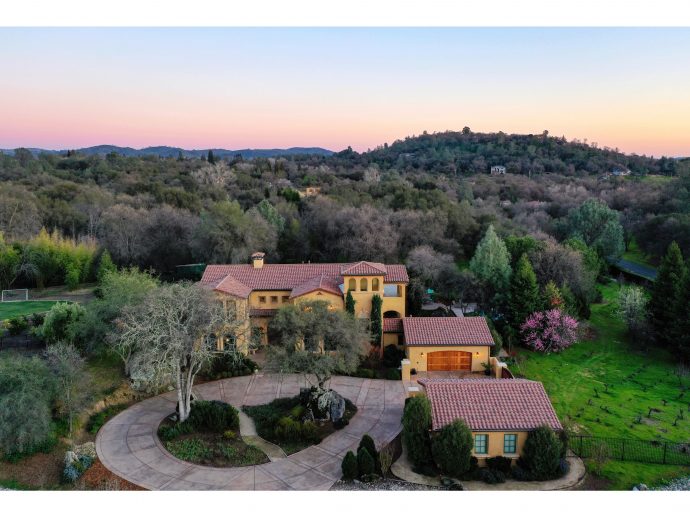
07/28/2026Luxury real estate marketing is undergoing a quiet but significant shift. Where agents once relied exclusively on professional photographers, physical staging crews, and weeks of lead time to prepare a listing, a growing number of firms are now turning to Higgsfield’s easy to use exclusive tool, AI Image Generator to produce staged interiors, twilight exteriors, and lifestyle visuals in a fraction of the time. Higgsfield, an AI platform used across marketing, real estate, and creative industries, is among the tools agents are adopting to keep pace with a market where visual presentation increasingly determines whether a buyer clicks into a listing or scrolls past it.
Why Has Visual Presentation Become So Central to Luxury Listings?
Affluent buyers are rarely purchasing square footage alone. They are buying into a lifestyle, a sense of prestige, and an emotional impression of what living in a space would feel like. Industry research consistently shows that staged homes perform meaningfully better than unstaged ones, and in a luxury segment where listings routinely command seven and eight figures, the stakes attached to first impressions are considerably higher.
For agents and developers marketing multiple properties at once, particularly new construction or high-end rental portfolios, the traditional staging model has struggled to keep pace. Physical staging requires coordinating furniture rental, delivery, installation, and eventual removal, often at a cost running into the thousands of dollars per property, before a single photograph is taken.
That cost and timeline pressure compounds quickly for firms managing seasonal inventory or turning over multiple listings in the same building or development. A staging crew booked out for weeks can hold up an entire marketing calendar, and every day a property sits without polished visuals is effectively a day it is invisible to buyers browsing listings online, where competing properties with stronger imagery are already generating inquiries.
The shift reflects a broader reality in high-end property marketing. Buyers now browse listings online first, often internationally, and the quality of a property's visual presentation has become as influential as the property itself in generating serious inquiries, a dynamic that ties closely into how presentation and design investment shape buyer perception across the luxury property market more broadly.
What Is Driving the Shift Toward AI-Generated Staging?
Traditional staging timelines simply do not match the speed at which luxury listings now need to reach the market. A property sitting empty while staging is arranged represents lost marketing time in a segment where competing listings are only a click away. AI-generated staging compresses that timeline from weeks to hours, letting agents move from an empty or outdated interior to a fully furnished, presentation-ready image without waiting on a physical installation crew.
Cost efficiency is a significant factor as well. Firms managing large portfolios, developers marketing new construction, and agencies handling multiple concurrent listings are increasingly weighing the return on physical staging against a far less expensive digital alternative that can be regenerated across several design directions for the same space. Platforms like Higgsfield have made this comparison more favorable by letting a single subscription cover staging, exterior touch-ups, and campaign graphics together, rather than requiring separate tools for each task.
Scalability plays a role too. An agency staging a single flagship listing might reasonably absorb the cost and lead time of a physical setup, but an agency or developer marketing an entire building of comparable units faces a very different equation, where regenerating a handful of design directions across dozens of near-identical floor plans is far more practical through software than through repeated physical installations.
Can AI-Generated Visuals Actually Meet the Bar for Luxury Marketing?
This is the question that has historically separated luxury real estate from the broader residential market when it comes to AI adoption. Luxury interiors are defined by materials, proportion, and architectural detail, marble surfaces, tall ceilings, expansive window lines, and bespoke millwork, and a staging tool that flattens those details into generic furniture placement undermines the very value it is meant to showcase.
The technology has matured considerably to address this. Current AI visualization platforms, Higgsfield included, are built to preserve a room's actual architectural proportions and lighting conditions while layering in furnishings and finishes, rather than replacing the space with a generic template. For a segment where buyers are attuned to authenticity and craftsmanship, that distinction has become the deciding factor in whether AI-generated visuals are seen as a credible marketing tool or a shortcut that undercuts a listing's perceived value.
How Is Higgsfield's AI Image Generator Being Used in Property Marketing?
Higgsfield AI is a native AI creative suite, offering advanced AI image, video, and voice generation, editing, and upscaling tools, and its image workspace has become one of the platforms real estate marketers are experimenting with to produce campaign-ready property visuals. Rather than treating staging as an isolated task, agencies are using Higgsfield's broader creative toolset to generate not just furnished interiors, but full marketing assets, twilight exterior shots, lifestyle imagery, and social-ready graphics, from the same workspace.
Higgsfield gives users access to 15 or more leading image models, including Nano Banana Pro, GPT Image, Seedream, and FLUX, allowing a marketing team to generate the same property visual across several models and select whichever output most convincingly holds the property's actual scale and finishes. That flexibility matters for agencies producing visuals for a range of property types, from minimalist new-construction condos to ornate legacy estates, where a single model's aesthetic bias will not suit every listing. Because Higgsfield centralizes these models in one workspace, teams also avoid the workflow friction of exporting files between separate staging, editing, and upscaling tools.
What Capabilities Matter Most for High-End Property Visuals?
A handful of specific features determine whether an AI-generated property image holds up to luxury marketing standards, and Higgsfield's image generator addresses each of them directly.
Preserving Architectural Accuracy While Adding Staging
The most consequential capability for real estate use is holding a room's true proportions, window placement, and ceiling height steady while introducing furnishings and finishes. Any tool that subtly distorts a space undermines buyer trust the moment a prospective purchaser walks through the door and finds the room does not match its marketing image. This is an area where Higgsfield's model selection matters, since different models within its workspace handle proportion accuracy differently depending on the property type.
Producing Resolution That Holds Up Across Every Channel
Luxury listings are marketed across MLS platforms, private brokerage decks, international print publications, and large-format digital displays, all of which demand different resolution standards. Higgsfield's image generator supports native output at up to 4K resolution, which matters when the same visual needs to move from a web listing to a printed investor deck without a noticeable drop in quality.
Generating Text-Accurate Marketing Collateral in the Same Workflow
Property marketing rarely stops at a bare image. Listings, brochures, and social campaigns typically require overlaid text, addresses, pricing, agent branding, that needs to render cleanly. Nano Banana Pro, one of the models available through Higgsfield's workspace, is built on a reasoning engine designed to render legible text directly inside a generated image, addressing a persistent weak point in earlier generations of AI image tools where overlaid text came out garbled or illegible.
Editing Specific Elements Without Regenerating the Whole Image
Luxury clients and agents frequently request granular revisions, swapping a piece of furniture, adjusting a wall finish, or refining a lighting mood, without wanting to restart an entire visual from scratch. Higgsfield's built-in inpainting tool allows a specific area of a generated image to be edited directly, which keeps revision cycles fast when a listing needs several rounds of client approval before going live.
How Does AI-Generated Staging Compare to Traditional Physical Staging?
Physical staging retains real advantages for in-person showings, where a buyer walking through a property benefits from tangible furniture and finishes they can touch and sit in. AI-generated staging through a platform like Higgsfield is not positioned as a full replacement for that experience but as a marketing layer that operates before a buyer ever schedules a showing, shaping the online impression that determines whether that showing happens at all.
|
Factor |
Traditional Physical Staging |
AI-Generated Staging with Higgsfield |
|
Turnaround time |
Days to weeks, dependent on furniture delivery and installation |
Hours, generated directly from existing property photos |
|
Cost per property |
Often thousands of dollars in rental, delivery, and labor |
A fraction of physical staging cost, covered within a Higgsfield subscription |
|
Design flexibility |
One staged look per physical setup |
Multiple styles generated from the same photo, compared side by side |
|
Best suited for |
In-person showings and walkthroughs |
Online listings, remote buyers, pre-construction units, rapid campaigns |
|
Revisions |
Requires re-staging the physical space |
Edited directly within the image using Higgsfield's inpainting tool |
For empty new-construction units, properties between owners, or listings being marketed internationally to buyers who may never see the space in person before an offer is made, Higgsfield's AI-generated visuals fill a gap that physical staging cannot address on the same timeline or budget. Increasingly, agencies are using both together, physical staging for the properties buyers will walk through, and Higgsfield for the broader marketing campaign, remote listings, and rapid-turnaround inventory.
Who in the Luxury Real Estate Industry Is Adopting This Technology?
Real estate marketing agencies handling multiple concurrent luxury listings are among the earliest adopters, given the scale advantage of generating staged visuals across dozens of properties without coordinating physical installation for each one. Developers marketing new construction and pre-completion units are using Higgsfield to generate AI-generated interiors that sell units that do not yet physically exist in finished form, giving buyers a believable sense of the finished space well ahead of delivery.
Brokerages working with international buyers, who often make purchasing decisions based primarily on digital presentation before ever visiting in person, are also leaning into higher-quality AI visuals from platforms like Higgsfield to compensate for the reduced role physical showings play in that segment. Photographers and creative studios serving the luxury market are incorporating Higgsfield into their own workflows as well, using its staging and touch-up tools alongside traditional photography to speed up post-production.
Marketing teams within larger brokerage networks are a further adopter group worth noting, since they are often responsible for maintaining visual consistency across hundreds of listings and agents at once. For that use case, having a single workspace capable of producing staging, exterior enhancement, and branded campaign assets together reduces the coordination overhead of managing several disconnected vendors for what is ultimately one marketing deliverable per listing.
How Do Agencies Get Started With Higgsfield for Property Marketing?
Adopting Higgsfield into an existing marketing workflow does not require replacing a firm's current photography process. Higgsfield is free to start with, offering daily generation credits so a team can test staging outputs against their own listing photos before committing further, and paid plans unlock higher resolution output and team collaboration features for agencies producing visuals across multiple listings and team members at once.
A practical starting point is uploading photography from a single active listing and generating a few staging directions to compare directly against the cost and timeline of a physical staging job already budgeted for that property. Teams that find the output holds up to their standards typically expand Higgsfield's use to twilight exteriors, social campaign graphics, and pre-construction visualization from there.
What Does This Mean for the Future of Property Marketing?
As buyer expectations around visual quality continue to rise and listing timelines continue to compress, AI-generated staging through platforms like Higgsfield is positioned to move from an experimental tactic to a standard component of luxury real estate marketing workflows. The agencies and platforms leading this shift are not simply replacing photographers, they are expanding what a single property marketing budget can produce, generating multiple design directions, formats, and campaign assets from the same base photography.
For an industry built on presenting aspiration and lifestyle as much as square footage, the ability to generate polished, architecturally accurate visuals in hours rather than weeks represents a meaningful competitive advantage, one that is likely to become table stakes across the luxury segment rather than a differentiator, as tools like Higgsfield continue to mature.
Comments
