Categories more
- Adventures (199)
- Arts / Collectibles (315)
- Automotive (219)
- Aviation (279)
- Bath, Body & Health (513)
- Children (116)
- Cigars / Spirits (271)
- Cuisine (723)
- Design / Architecture (1118)
- Electronics (222)
- Entertainment (162)
- Event Planning (295)
- Fashion (550)
- Finance (195)
- Gifts / Misc (141)
- Home Decor (558)
- Jewelry (396)
- Pets (91)
- Philanthropy (124)
- Real Estate (386)
- Services (221)
- Sports / Golf (213)
- Vacation / Travel (1036)
- Watches / Pens (223)
- Wines / Vines (861)
- Yachting / Boating (7033)



The Power of Consistency in Dog Training: Building a Well-Behaved and Confident Canine


Published
05/25/2026Key Takeaways
- Consistency in training helps dogs understand expectations, reducing anxiety and confusion.
- Regular, short training sessions are more effective than infrequent, lengthy ones.
- Involving all family members in the training process ensures uniformity and reinforces desired behaviors.
Table of Contents
- The Importance of Consistency in Dog Training
- Benefits of Regular Training Sessions
- Involving the Whole Family in Training
- Common Mistakes to Avoid
- Building Confidence Through Routine
- Final Thoughts
Consistent training forms the foundation of a harmonious relationship with your dog. When routines, rules, and expectations are clearly defined, your pet is more likely to thrive both emotionally and behaviorally. A reliable, consistent approach offers comfort and guidance, making it easier for your dog to adapt and excel in any environment. Whether you are new to canine training or looking to improve your approach, prioritizing consistency is an invaluable step to achieving results that last a lifetime.
Dogs naturally respond to structure. This is why Long Island dog training frequently emphasizes the significance of uniformity when teaching basic commands, addressing problem behaviors, and establishing household rules. A structured environment not only reduces confusion but also enhances your dog's emotional stability. By sticking to proven training techniques and maintaining a predictable daily schedule, your dog learns to anticipate positive reinforcement and understand their boundaries, which ultimately leads to greater well-being and compliance.
The Importance of Consistency in Dog Training
Dogs are creatures of habit who look for cues in their environment and in their people to navigate the world around them. When you use consistent commands and reinforce the same behaviors each time, you provide your dog with a clear understanding of your expectations. This clarity greatly reduces stress and increases your dog's sense of security, which can translate into faster learning and stronger bonds. According to the American Veterinary Society of Animal Behavior, clear communication is fundamental to reducing confusion and correcting problematic behaviors.
Disjointed or erratic training, on the other hand, can cause confusion. Dogs may become anxious or act out if they are unsure of what is expected of them. By eliminating unpredictability and sticking to steady training methods, you are putting your dog on the path to success.
Benefits of Regular Training Sessions
Short, frequent training sessions are proven to be more effective than sporadic, lengthy attempts to teach new behaviors. Dogs have relatively short attention spans, and daily training helps maintain and build upon learned behaviors. A few minutes of focused practice each day is far superior to a single, exhaustive session once a week. This approach keeps your dog engaged, motivated, and eager to learn without overwhelming them or causing frustration. According to the American Humane Society, positive reinforcement and consistent timing and rewards are crucial elements in canine learning.
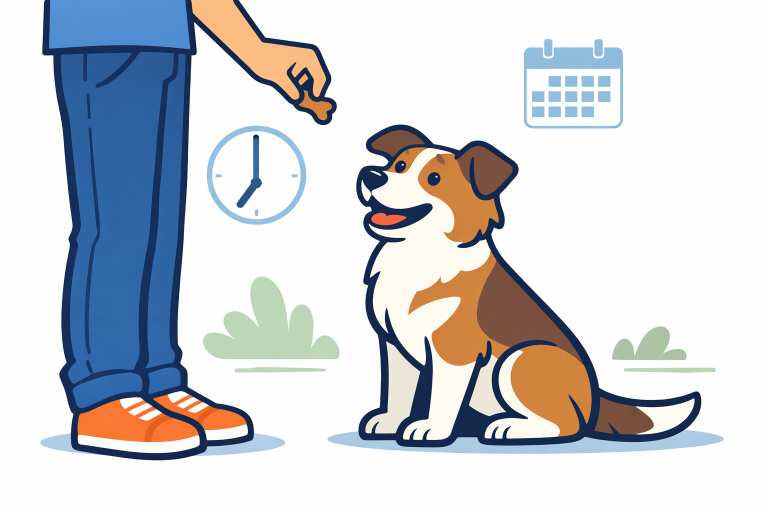
Over time, these short sessions add up, cementing behaviors and making training a natural and enjoyable part of your dog's routine. This persistence helps prevent behavioral regression and sets the stage for ongoing development throughout your dog's life.
Involving the Whole Family in Training
Consistency is not just an individual effort; it requires everyone who interacts with your dog to participate. When each family member uses the same cues, enforces rules uniformly, and rewards positive behaviors in a similar fashion, your dog receives unambiguous messages that accelerate the learning process. If one person allows jumping on the couch and another forbids it, your dog will become confused, making rule enforcement more difficult for everyone. Creating a family training plan and communicating expectations openly ensures everyone is on the same page.
Common Mistakes to Avoid
Even the most dedicated owners can fall into common traps that undermine effective training. One of the biggest pitfalls is inconsistent command usage, such as using both “down” and “off” for the same behavior. Similarly, permitting certain actions at one time but not another (such as allowing begging at the table when guests visit) can foster confusion. Neglecting to offer rewards for positive behavior, especially early in training, is another major setback. To develop a reliable routine, make sure you catch and reward your dog for doing things right, not just when correcting mistakes. Awareness and mindful practice can help eliminate these common errors.
Building Confidence Through Routine
Establishing routines around feeding, exercise, playtime, and training goes beyond just day-to-day management. Predictable schedules help to reduce anxiety and build your dog's confidence, making it easier for them to adapt to new challenges or changes in their environment. According to PetMD, dogs who participate in confidence-building activities become less fearful and more resilient to stress. You can help your dog develop courage and adaptability by introducing gradual changes and positive experiences within a reliable routine.
Final Thoughts
Consistency is at the heart of every successful dog training journey. By sticking to regular, short sessions, enlisting the help of all family members, and establishing dependable daily patterns, you not only encourage positive behaviors but also build lasting trust and confidence in your canine companion. Work with your dog's natural instincts and need for clarity to create a supportive environment where they can flourish as a happy, healthy member of your family.
Comments
