Categories more
- Adventures (62)
- Arts / Collectables (14)
- Automotive (77)
- Aviation (65)
- Bath, Body, & Health (123)
- Children (6)
- Cigars / Spirits (71)
- Cuisine (66)
- Design/Architecture (22)
- Electronics (63)
- Entertainment (36)
- Event Planning (115)
- Fashion (45)
- Finance (10)
- Gifts / Misc (6)
- Home Decor (118)
- Jewelry (41)
- Pets (3)
- Philanthropy (1)
- Real Estate (16)
- Services (44)
- Sports / Golf (14)
- Vacation / Travel (85)
- Watches / Pens (33)
- Wines / Vines (34)
- Yachting / Boating (67)


The Practical Case for Walking the Course Again

Published
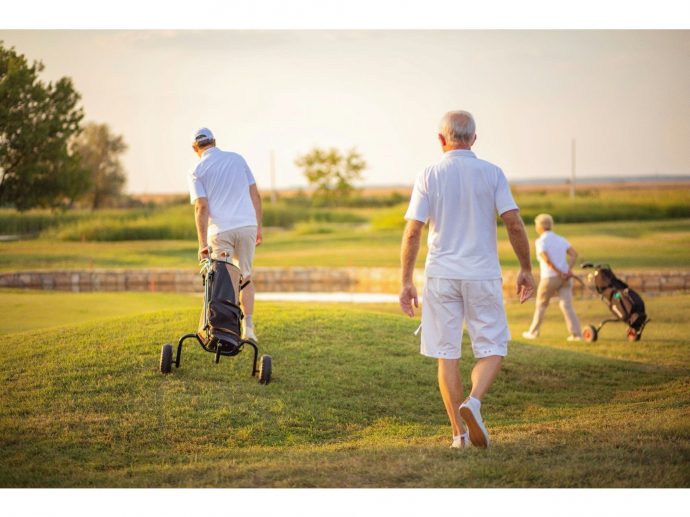
07/29/2026Somewhere along the way, riding became the default. The buggy turned into the standard way to get around, walking became the exception, and for a lot of golfers the question of how to traverse eighteen holes stopped being a question at all. Yet spend time around courses lately and you'll notice something shifting. More players are choosing to walk again, and not out of nostalgia or a purist's sense of how the game ought to be played. They're doing it for practical reasons that hold up to scrutiny.
If you've defaulted to riding for years, the idea of walking a full round might sound like more effort than it's worth, particularly if your memory of it involves a heavy bag digging into your shoulder by the ninth. That's a fair concern, and it's worth addressing honestly. But the case for walking has become a lot more compelling than it used to be, both because of what walking does for you and because the main thing that made it a chore has been largely solved. Here's the practical version, without the romance.
What Walking Does for Your Game
Start with the golf itself, because this is where a lot of players are surprised. Walking tends to help your game in ways that sitting in a cart doesn't. There's a rhythm to walking the course, a steady continuity between shots that keeps you physically warm and mentally in the round. When you ride, you tend to move in bursts, sitting still and then arriving at your ball and hitting, which can leave your body cool and your timing slightly disconnected from shot to shot.
Walking also changes how you read the course. Covering the ground on foot gives you a better feel for the terrain, the slopes, the distances, and the way a hole actually unfolds, all of which feed into better decisions. You arrive at your ball having had time to think, rather than being deposited beside it. Many players find their pace and consistency improve when they walk, because the game becomes one continuous flow rather than a series of stops and starts. None of this makes walking a magic fix, but the idea that riding is neutral for your game is worth questioning, because for a lot of golfers being on foot simply suits the way the round is meant to move.
The Health Side Nobody Disputes
Then there's the part that isn't really up for debate, which is the physical benefit. A round of golf covers a genuinely significant distance on foot, and walking it amounts to several hours of steady, low-impact exercise across varied terrain. For anyone who plays regularly, the difference between walking and riding across a season adds up to a substantial amount of activity gained or forgone, and it's the kind of gentle, sustained movement that tends to suit people across a wide range of ages and fitness levels.
This isn't a lecture about steps and heart rates, and you don't need to treat your round as a workout to appreciate the point. It's simply that walking turns time you were already spending on something you enjoy into meaningful physical activity, without adding a minute to your day or requiring any separate effort. For a lot of players, especially those whose lives don't otherwise involve much movement, that quiet accumulation of low-impact exercise is one of golf's real underrated benefits, and it only exists if you're on your feet. Riding trades it away for a convenience that, as it turns out, you may not need.
The Problem Walking Used to Carry
So if walking helps your game and your health, why did so many people stop? The answer is straightforward and physical. Carrying a full bag of clubs for the length of a round is genuinely tiring, and more than that, it's hard on your body. The weight sits on one shoulder or across your back, and over several hours and several miles it takes a toll, particularly on your back, shoulders, and neck. By the closing holes, the fatigue of hauling that load can start to affect your swing and your enjoyment alike.
For a great many golfers, that was the whole problem, and it's the reason the buggy won. Faced with a choice between arriving at the eighteenth tired and sore or riding in comfort, plenty of people understandably chose to ride. The walking itself was never really the issue, since walking a few miles is pleasant enough. It was the carrying that made it feel like hard work, and that single obstacle quietly pushed a generation of players off their feet and into carts. Solve the carrying, and the entire calculation changes, because what's left is just the walk, which was never the part anyone minded.
How Golfers Solve the Strain Now
This is exactly where things have moved on, and golfers today have several ways to walk without shouldering the load. The simplest is a lightweight carry bag with a good dual strap, which spreads the weight and suits players who don't mind a bit of load and want to keep things minimal. A step up in convenience is the push or pull cart, a manual trolley you steer around the course that takes the weight off your body entirely while still asking you to do the pushing, which many walkers are perfectly happy with.
For those who want to walk with no physical burden at all, a motorised golf trolley is the option that has done the most to bring people back to walking, since it carries your clubs under its own power and follows or leads around the course while you simply walk alongside unencumbered. It removes the exact thing that made walking tiring, letting you cover the round on foot while your bag effectively carries itself. Which of these suits you comes down to how much effort you want to put in and what your body prefers, and none is inherently better than the others. The point is that the old trade-off, walk and suffer the bag or ride and skip the walk, no longer really exists, because every one of these lets you stay on foot while dealing with the weight in a way that works for you.
Deciding What Works for You
Whether walking is right for you depends on a few honest considerations, and there's no universal answer. Your own fitness matters, though the beauty of the modern options is that walking is accessible to far more people than it once was, precisely because the strain has been taken out of it. The terrain of your regular course matters too, since a flat, walkable layout is a very different proposition from a steep, sprawling one, and it's worth being realistic about what your course actually demands on foot.
How you like to play is the final piece. Some golfers love the social ease and speed of riding, and there's nothing wrong with that, while others find they enjoy the round more and score better when they walk it. The worthwhile message is simply that walking deserves a fresh look on its practical merits, rather than being dismissed on the basis of how tiring it used to be with a bag on your back. If the only thing that stopped you was the carrying, that problem has answers now, and the walk that's left is the good part. Try a few holes on foot with the weight handled and see how it feels, because for a lot of players, once they do, they don't go back to riding by default.
Comments
