Categories more
- Adventures (17)
- Arts / Collectables (14)
- Automotive (36)
- Aviation (11)
- Bath, Body, & Health (76)
- Children (6)
- Cigars / Spirits (32)
- Cuisine (16)
- Design/Architecture (22)
- Electronics (13)
- Entertainment (4)
- Event Planning (5)
- Fashion (45)
- Finance (10)
- Gifts / Misc (6)
- Home Decor (45)
- Jewelry (41)
- Pets (3)
- Philanthropy (1)
- Real Estate (16)
- Services (23)
- Sports / Golf (14)
- Vacation / Travel (59)
- Watches / Pens (14)
- Wines / Vines (24)
- Yachting / Boating (17)



The Smart Way High Performers Are Turning Their Workspace Into a Wellness Sanctuary

Published
04/15/2026There is a quiet shift happening in the way serious professionals think about where they work.
It is no longer enough to have a fast connection and a decent monitor. The workspace itself, its comfort, its design, its effect on the body over a long day, has become a genuine priority.
And honestly? It makes complete sense.
The people who perform at the highest levels have always understood that physical wellbeing and mental output are directly linked. Rest and recovery are not rewards for hard work. They are conditions for it.
What used to be reserved for executive suites and high-end hotel lobbies is now finding its way into home offices and private studies. People are investing in their personal environments the same way they invest in their craft. Thoughtfully. Intentionally. Without cutting corners.
The result is a new kind of workspace. One that looks exceptional, functions brilliantly, and actually takes care of the person sitting in it.
Why the Old Office Setup Is No Longer Good Enough
For a long time, the standard approach to setting up a workspace was purely functional.
Get a desk. Get a chair. Get it done.
That approach made sense when work was something you left behind at the end of the day. But that boundary has blurred significantly for most high-achieving professionals. Work follows them home. It follows them on weekends. It follows them on holiday.
When your workspace is also your recovery space, the demands placed on it change completely.
A chair that is merely adequate becomes a genuine problem over eight, ten, or twelve hours. Poor posture accumulates. Tension builds in the neck, shoulders, and lower back. Circulation slows. Focus starts to drift well before the day should be over.
The body keeps the score, as they say. And a workspace that ignores the body is working against you whether you notice it or not.
The good news is that the options available to people who take this seriously have improved dramatically. Premium ergonomic design has merged with genuine luxury in a way that simply was not possible before. You no longer have to choose between something that looks beautiful and something that actually supports you.
The Wellness Upgrade That Changes Everything
Ask anyone who has made a serious investment in their workspace comfort and the response is almost always the same.
"I wish I had done it sooner."
The shift from a standard setup to a genuinely wellness-focused workspace tends to happen in stages. First comes the ergonomic chair. Then the standing desk. Then better lighting. Then acoustic treatment to reduce noise fatigue.
But the upgrade that consistently surprises people the most is the addition of a quality massage chair.
It sounds indulgent. That is precisely why so many people dismiss it at first. But anyone who has spent a full working week with access to one will tell you that the dismissal fades fast.
The ability to decompress mid-afternoon, without leaving the room, without booking anything, without changing into gym clothes, is a genuine performance advantage. Fifteen minutes of proper muscle release between two demanding blocks of work produces a measurable difference in concentration and output.
This is not wellness theatre. It is a functional tool.
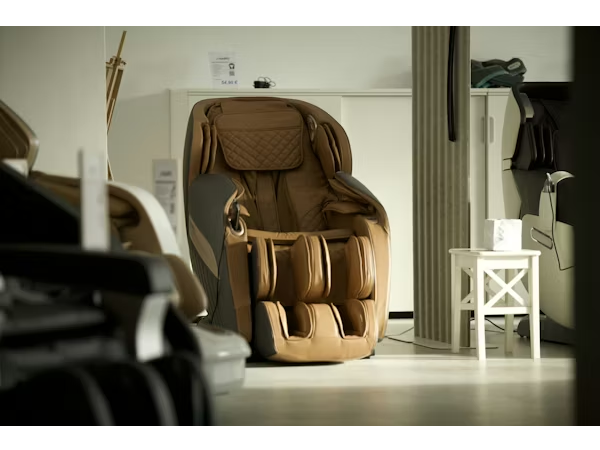
The best options on the market right now go well beyond simple vibration. Full-body compression, heated lumbar support, targeted percussion for the neck and shoulders, zero-gravity recline positions that decompress the spine fully. If you want to find the best office massage chair that genuinely delivers on all of those features, the quality gap between a considered purchase and an impulse buy is significant. Knowing what to look for before you invest makes all the difference.
The features that matter most for a working professional are not the same as those that suit a relaxation lounge. Coverage of the upper back and neck is critical, since that is where desk work accumulates tension most aggressively. Heat functionality accelerates muscle recovery in a way that pressure alone cannot. And the control system needs to be intuitive enough to use without interrupting your workflow.
A chair you have to fiddle with for five minutes to operate is not a recovery tool. It is a distraction.
Designing a Space That Actually Supports Peak Performance
The massage chair is one piece of a larger puzzle.
A truly high-performance workspace is designed holistically, with every element considered for both its aesthetic contribution and its functional impact.
Lighting is a good place to start. Natural light is the gold standard, but layered artificial lighting, combining warm ambient light with cooler task lighting, allows you to adapt the mood of the space to the kind of work you are doing. Creative thinking thrives in different conditions than detail-oriented analytical work.
Sound matters more than most people realise.
An environment with too much ambient noise is obviously distracting. But a space that is completely silent can be equally counterproductive for many people. Acoustic panels, soft furnishings, and even a considered sound system all contribute to a sonic environment that supports sustained concentration.
Temperature control is often overlooked. A space that runs too warm encourages drowsiness. One that is too cool creates tension in the muscles and makes it harder to settle into focused work. A dedicated climate solution for the workspace, separate from the rest of the home if possible, is a worthwhile investment for serious professionals.
The desk itself deserves more thought than it typically receives. Height-adjustable options have become increasingly refined, moving well beyond the clunky mechanical models of earlier generations. The best versions now operate silently, hold exact positions reliably, and come in materials that sit comfortably within a premium interior.
And then there is storage. Not just functional storage, but considered storage that keeps the workspace visually clear. Visual clutter is cognitive clutter. A space that feels ordered allows the mind to stay ordered too.
For further reading on curating a living and working environment that genuinely reflects an elevated standard of living, this site has a deep library of practical luxury guides worth exploring.
The Mindset Behind the Investment
Here is the thing that separates people who build extraordinary workspaces from those who settle for adequate ones.
It is not a budget. It is a mindset.
The professionals who invest seriously in their personal environments understand that they are their most important asset. Everything that supports their capacity to think clearly, recover well, and perform consistently is worth prioritising.
A premium massage chair is not an extravagance. It is maintenance for the machine doing all the work.
A well-designed, beautifully lit, acoustically considered workspace is not self-indulgence. It is an environment engineered for excellence.
The shift in thinking required is small but significant. Instead of asking "can I justify this?" the better question is "what is it costing me not to have this?"
Think about what chronic tension in the neck and shoulders actually costs in terms of focus, mood, and sustained energy over a working week. Think about what a poorly lit, acoustically harsh workspace costs in terms of the quality of decisions made inside it.
The calculation changes quickly once you frame it that way.
What to Prioritise When Building Your Ideal Setup
Not everyone builds their perfect workspace all at once. Most people do it gradually, adding one meaningful upgrade at a time.
If that is the approach you are taking, here is a sensible order of priorities.
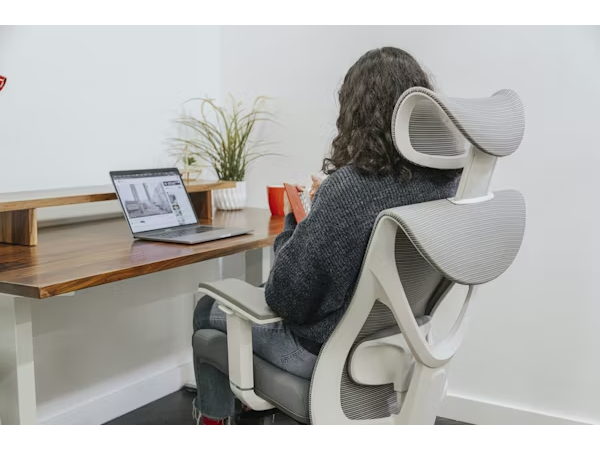
Start with seating. The chair you spend eight or more hours in every day has the most direct impact on your physical state and therefore your mental output. Everything else is secondary to getting this right.
Next, address lighting. The investment is relatively modest and the impact on mood, energy, and eye comfort is immediate and significant.
Then look at desk height and surface quality. A well-proportioned desk at the right height reduces shoulder and wrist strain considerably, particularly for those who type for extended periods.
From there, acoustic treatment and climate control become the refining layer. They are the difference between a space that is good and one that feels genuinely exceptional to spend time in.
The massage chair, for most people, comes in at the point when they are ready to treat the workspace as a complete wellness environment rather than just a functional one. At that point, it is not an addition. It is the finishing touch on something cohesive.
Building Something Worth Coming Back To
The most productive professionals are not the ones who push through discomfort.
They are the ones who have eliminated as much unnecessary discomfort as possible from their environment, so that the energy they do spend goes toward the work rather than toward coping with the space around them.
A workspace that looks after you physically is one you look forward to spending time in.
That matters more than most productivity advice will ever tell you.
Invest in your environment the way you invest in your skills and your relationships. Give it genuine thought. Choose quality over convenience where it counts. And build something that reflects the standard you hold yourself to in everything else.
Because where you work shapes how you work. And how you work shapes everything.
Comments
