Categories more
- Adventures (17)
- Arts / Collectables (14)
- Automotive (36)
- Aviation (11)
- Bath, Body, & Health (76)
- Children (6)
- Cigars / Spirits (32)
- Cuisine (16)
- Design/Architecture (22)
- Electronics (13)
- Entertainment (4)
- Event Planning (5)
- Fashion (45)
- Finance (10)
- Gifts / Misc (6)
- Home Decor (45)
- Jewelry (41)
- Pets (3)
- Philanthropy (1)
- Real Estate (16)
- Services (23)
- Sports / Golf (14)
- Vacation / Travel (59)
- Watches / Pens (14)
- Wines / Vines (24)
- Yachting / Boating (17)



Top Signs of Water Damage in Your Home

Published
04/15/2026Key Takeaways
- Detecting water damage early can prevent costly repairs and health hazards.
- Common clues include discoloration, musty odors, warping, and rising water bills.
- Ongoing maintenance and periodic checks are critical for keeping your home dry and secure.
Water damage can affect more than just your wallet. Left untreated, it may threaten the structure of your home and the health of its occupants. Recognizing the warning signs early puts you in control, reducing stress, repairs, and restoration costs. If you notice suspicious changes to your home’s appearance or smell, acting quickly is crucial. For help with water damage restoration and expert advice, visit Frontierrestorationkc.com.
Many water damage issues begin quietly, hidden behind walls or under floors, until a larger crisis appears. That's why awareness is vital. Whether you live in an older property or a new construction home, regular indoor inspections are a smart preventative measure that can protect your investment and family.
Learning what to look for and how moisture damage presents itself empowers you to tackle problems before they escalate. Your response time matters. Preventing water issues is always more affordable than fixing major damage.
1. Unexplained Stains and Discoloration
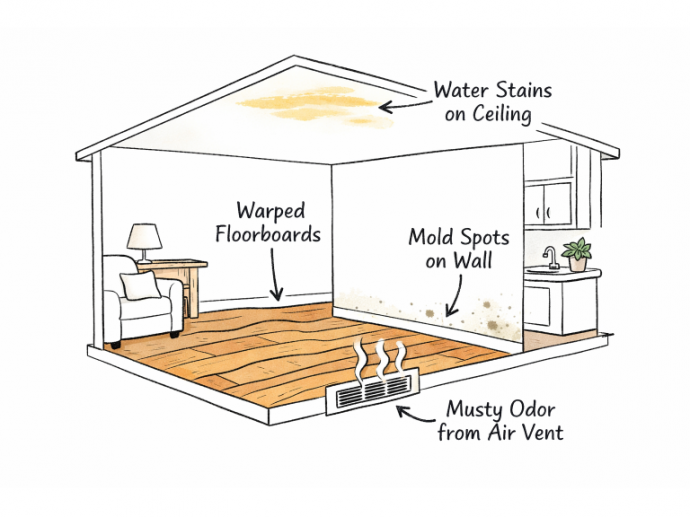
Stains on ceiling tiles, drywall, or your home’s siding often hint at unseen water leaks. These marks may appear yellow, brown, or rusty, sometimes starting as small spots that gradually grow over time. Even minor discoloration can signal active leaks behind the scenes. Schedule a professional inspection if you see it. Water stains are often caused by roof leaks, faulty plumbing, or overflowing HVAC units. Addressing these marks quickly limits damage and discourages mold growth.
2. Musty or Damp Odors
Persistent musty, earthy, or stale odors are classic indicators of hidden moisture. You’ll often notice these unwelcome smells in basements, closets, laundry rooms, or crawl spaces. Mold and mildew produce these odors as they colonize damp surfaces. If you notice a distinct “old basement” smell or odors that worsen after rain, investigate with urgency. These scents can signify recent or ongoing leaks and may appear even if no visible mold is present yet.
3. Peeling or Bubbling Paint and Wallpaper
When water sneaks behind painted walls or beneath wallpaper, it disrupts the adhesive bonds that hold these finishes in place. As a result, you may observe peeling, flaking, or bubbling surfaces. Sometimes, water can cause wallpaper seams to separate or paint to blister. These textures not only diminish your home’s aesthetic but also suggest a persistent underlying moisture issue that must be identified and remedied at the source.
4. Warped or Buckling Flooring
Moisture accumulating under flooring materials, such as wood planks, laminate, or carpeting, can cause them to buckle, warp, or become spongy. Your feet may feel raised edges or uneven sections when walking across the room. Floor warping usually occurs due to a wet subfloor, which can result from leaking appliances, cracked foundations, or poor drainage. If you notice these changes, act swiftly to locate and address the leak.
5. Unexplained Increase in Water Bills
A sudden spike in your water bill often indicates a hidden leak in your plumbing system. Even if you do not notice puddles or drips, a constant flow behind the walls or under the slab can waste gallons of water daily. Keep track of your monthly statements, and if you notice a sharp increase without any change in household water use, it is time to inspect all major appliances, fixtures, and exposed pipes for problems. Even a minor fixture leak can add up over time, damaging infrastructure and fostering mold growth.
6. Visible Mold Growth
Mold is a sure sign of excess moisture and frequently appears as dark black, green, or white spots on walls, ceilings, or grout. However, mold can also hide in HVAC vents, behind furniture, and under floors. If you see mold growth in spaces usually kept dry, urgent attention is needed. Not only is mold a threat to your home’s structure, but it can also trigger allergies, asthma, and respiratory problems.
7. Sagging Ceilings or Walls
Any soft, swollen, or sagging section of sheetrock or plaster signals serious moisture retention. These bulges can grow larger over time, especially after heavy rainfall or plumbing incidents. Sagging ceilings and walls present both a cosmetic issue and a potential safety hazard, as waterlogged materials may suddenly fail, causing falling debris. Prompt evaluation by a restoration professional can prevent further loss and reduce longer-term impacts.
8. Sounds of Dripping or Running Water
Unexplained water sounds (such as dripping, rushing, or gurgling), particularly when all faucets and plumbing fixtures are off, can indicate a hidden leak. Listen especially in bathrooms, behind walls, and near the water heater or furnace. Even faint or occasional noises should not be ignored, as small leaks can grow and erode structures if left unchecked. Use your senses: an investigation might reveal a fixable problem before it becomes a crisis.
Conclusion
Knowing the early warning signs of water damage means you can take action before minor problems turn into serious emergencies. Make it a habit to regularly inspect all visible surfaces and hidden corners of your home. Small leaks can quickly escalate into big issues for your health and finances. For peace of mind, address water issues promptly and rely on professionals for assessment and repairs when needed.
Comments
