Categories more
- Adventures (62)
- Arts / Collectables (14)
- Automotive (77)
- Aviation (65)
- Bath, Body, & Health (123)
- Children (6)
- Cigars / Spirits (71)
- Cuisine (66)
- Design/Architecture (22)
- Electronics (63)
- Entertainment (36)
- Event Planning (115)
- Fashion (45)
- Finance (10)
- Gifts / Misc (6)
- Home Decor (118)
- Jewelry (41)
- Pets (3)
- Philanthropy (1)
- Real Estate (16)
- Services (44)
- Sports / Golf (14)
- Vacation / Travel (85)
- Watches / Pens (33)
- Wines / Vines (34)
- Yachting / Boating (67)


Published
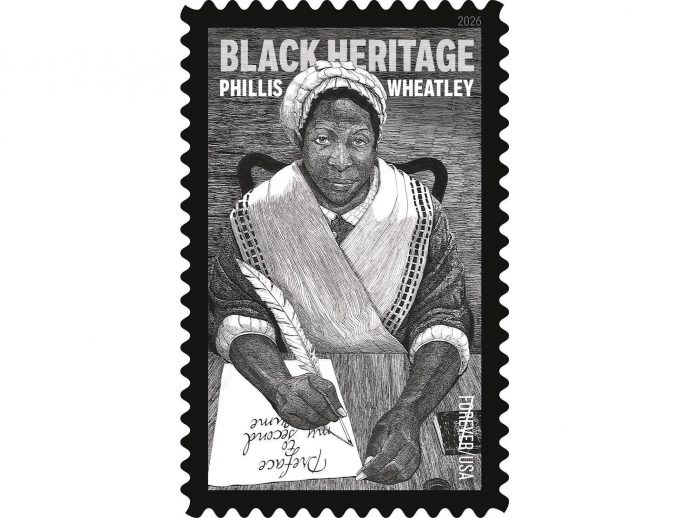
02/25/2026 by U.S. Postal ServiceThe U.S. Postal Service held a first-day-of-issue stamp dedication to commemorate the life of Phillis Wheatley at the historic Old South Meeting House.
"An important goal of the Postal Service's stamp program is to honor the people, places and things that represent the very best of our nation," said Chenise R. LeDoux, USPS vice president of Southern Area retail and delivery operations, who served as the dedicating official. "That is what our Black Heritage stamps are all about. Introduced in 1978, the Black Heritage series has put a spotlight on distinguished African Americans and their notable contributions to our nation."
The 49th stamp in the Black Heritage series honors poet Phillis Wheatley (ca 1753-1784), the first author of African descent in the American Colonies to publish a book. An enslaved woman with an education and prominent social connections, Wheatley occupied a rare place in Colonial America. Her poems charmed readers on both sides of the Atlantic and offer subtle commentary on her times, while Wheatley herself has inspired generations of writers.
Born in West Africa and brought to Boston on a slave ship, the child who would become known as Phillis Wheatley was enslaved by merchant John Wheatley and educated in his household. By age 11, she had already begun to compose her own poems. Her 1773 collection, "Poems on Various Subjects, Religious and Moral," showcased her mastery of forms ranging from hymns and elegies to philosophical and narrative verse.
As a figure whose life and writing speak to the complexity of her times, Wheatley is especially relevant in 2026 as we reflect on the Revolutionary era as part of our nation's 250th anniversary celebrations. Wheatley was freed from slavery in 1773, and her later poems reflected growing support for the American Revolution. In late 1775, while George Washington was encamped near British-occupied Boston, Wheatley sent him an ode, published the following year, in which she suggests that the nations of the world are closely watching him to see if a new age in human history is dawning. Washington replied with praise for Wheatley's poetic talents and extended an invitation to meet if she found herself near his headquarters.
Wheatley kept writing but was unable to publish a second book before her death in her early 30s. Her poetry continued to circulate widely, and her book was reprinted several times in the United States. Before the Civil War, abolitionists republished her work as an argument against slavery. Abolitionists and emancipationists invoked her name and accomplishments to affirm a shared humanity and the intellectual ability of people of African descent.
Her legacy endures today: Schools, libraries, community centers and university buildings across the country bear her name, and she has inspired numerous children's books. In 2003, a statue of Wheatley was included in the new Boston Women's Memorial, all part of an ongoing effort to recognize the poet often praised as "the mother of African American literature."
The Forever stamps are available at Post Office locations nationwide and online at usps.com/shopstamps.
News about the stamp is being shared on social media using the hashtag #BlackHeritageStamp.
Comments
