Categories more
- Adventures (17)
- Arts / Collectables (14)
- Automotive (36)
- Aviation (11)
- Bath, Body, & Health (76)
- Children (6)
- Cigars / Spirits (32)
- Cuisine (16)
- Design/Architecture (22)
- Electronics (13)
- Entertainment (4)
- Event Planning (5)
- Fashion (45)
- Finance (10)
- Gifts / Misc (6)
- Home Decor (45)
- Jewelry (41)
- Pets (3)
- Philanthropy (1)
- Real Estate (16)
- Services (23)
- Sports / Golf (14)
- Vacation / Travel (59)
- Watches / Pens (14)
- Wines / Vines (24)
- Yachting / Boating (17)



Wearable Symbols: How Tiny Adornments Became Fashion’s Most Intimate Visual Language

Published
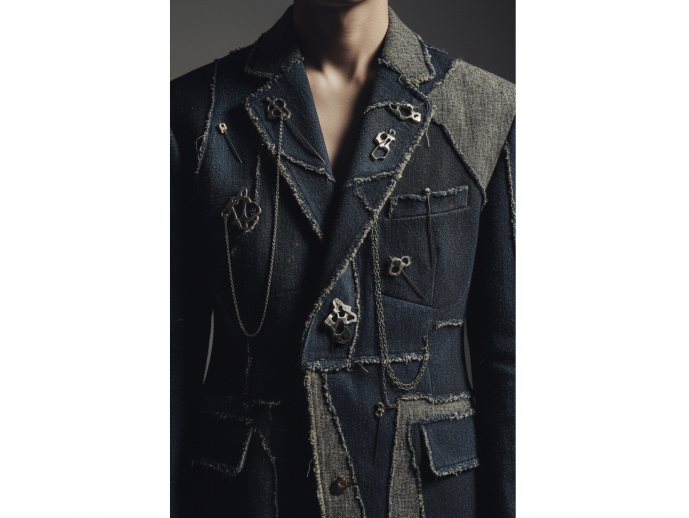
03/18/2026In contemporary fashion, the most compelling statements are no longer always the loudest. Increasingly, identity is communicated through fragments of small, deliberate details that reward attention. A jacket collar dotted with enamel shapes. A bracelet weighted with miniature objects. A bag strap that looks less like an accessory and more like a curated archive.
These are not mere embellishments. They function as visual language coded, intimate, and deeply personal. In an era defined by mass imagery and algorithmic sameness, tiny adornments have emerged as one of the last spaces where individuality can exist unfiltered.
From Decoration to Declaration
Historically, small wearable objects have always carried symbolic weight. Military insignia, pilgrimage tokens, mourning jewelry, protest badges all served as compact declarations of allegiance or experience. Today’s fashion landscape reinterprets that legacy through contemporary materials and aesthetics.
Modern custom pins operate within this lineage. Whether abstract, illustrative, or typographic, they compress complex identities into palm-sized emblems. On a practical level, they puncture fabric; on a symbolic level, they puncture anonymity.
Collections like those found in curated archives of YearPins’s custom pins collection demonstrate how varied this visual vocabulary can be from minimalist iconography to intricate narrative imagery. Each piece behaves less like an accessory and more like a portable artwork.
Pinned to a garment, the image becomes mobile, interacting with movement, light, and context. It is seen differently in a gallery opening than on a subway platform, yet it retains its core message.
The Jacket as Gallery Wall
In editorial styling and street photography alike, garments increasingly function as surfaces for curated display. The classic denim jacket, for instance, has transformed from utilitarian staple to exhibition space, a textile bulletin board mapping taste, humor, politics, and nostalgia.
Unlike printed graphics, pins remain modular. They can be rearranged, layered, removed, or added as identity evolves. This fluidity mirrors contemporary notions of selfhood: non-static, iterative, responsive to context.
A single piece might reference underground music scenes, internet folklore, regional pride, or personal mythology. Multiple pieces create dialogue among themselves, forming visual sentences rather than isolated statements.
Importantly, the effect is not polished in a conventional luxury sense. It is collage-like, imperfect, human. The wearer becomes curator, archivist, and artist simultaneously.
Micro-Objects as Memory Devices
If pins speak outward, charms often speak inward. Suspended close to the body, they move with breath and gesture, producing subtle sound and tactile feedback. Their intimacy recalls ancient amulets objects believed to carry protection, luck, or spiritual meaning.
Contemporary custom charms continue this tradition in secular form. Instead of religious symbolism, they may encode personal milestones, inside references, or aesthetic affinities. The result is jewelry that functions less as ornament and more as portable memory architecture.
Collections such as custom charms collection reveal how diverse these miniature forms can be: figurative, abstract, playful, solemn. Each piece invites interpretation, yet its full meaning often remains private, known only to the wearer.
This duality is part of the allure. In a culture of oversharing, charms allow for secrecy. They are visible but not fully legible.
Subculture, Signal, Belonging
Throughout history, small symbols have served as entry points into communities. A specific motif can function as shorthand: you either recognize it or you don’t. In punk scenes, DIY pins broadcast anti-establishment ethos. In fandom cultures, discreet symbols identify fellow devotees. In activist movements, badges become tools of solidarity.
Today’s landscape is more fragmented but no less coded. Digital culture has accelerated the creation of micro-aesthetics niche visual languages that circulate within online spaces before materializing in physical form.
Wearing these symbols in public becomes an act of translation, bringing internet-born identities into tangible reality. The body becomes a site where digital and physical selves converge.
The Collector’s Impulse
Another reason these objects resonate is their compatibility with collecting. Unlike garments, which demand space and maintenance, small accessories accumulate easily. They can be stored, displayed, traded, rediscovered.
Collectors often describe their assemblages less as fashion and more as archives snapshots of eras, relationships, or artistic movements. A piece acquired at a concert sits beside one found at a flea market or received as a gift. Each object retains the context of its origin.
Over time, the collection itself becomes autobiographical. Even without explanation, it communicates trajectory: where the person has been, what they valued, which aesthetics shaped them.
Collaboration at a Human Scale
In contemporary art-fashion collaborations, scale often skews monumental runway spectacles, immersive installations, and viral campaigns. Yet there is a growing countercurrent favoring intimate formats.
Small accessories offer a democratic canvas for artists and designers. They are accessible, reproducible, and portable without losing conceptual integrity. An illustrator’s style, a sculptor’s form language, or a graphic designer’s typography can be distilled into wearable micro-sculptures.
Because of their size, these pieces invite close looks, a rare act in a distracted age. To truly see them, one must approach, pause, and focus. The interaction becomes personal rather than performative.
Imperfection as Aesthetic
Another reason these adornments feel contemporary is their tolerance for imperfection. Scratches, tarnish, missing enamel, bent clasps these marks do not necessarily diminish value. Instead, they signal use, time, and authenticity.
In contrast to pristine luxury goods, which often strive for timeless flawlessness, these objects embrace change. They age alongside the wearer, accumulating patina rather than obsolescence.
This aligns with broader cultural shifts toward visible history vintage denim fades, repaired knitwear, distressed leather. Beauty emerges not from untouched perfection but from evidence of life.
Portable Mythology
Perhaps the most poetic interpretation is to view these objects as elements of personal mythology. Humans have always created symbols to narrate existence: talismans, crests, relics, heirlooms. Modern accessories continue this impulse in secular form.
A tiny object can represent an entire chapter of life. It may evoke a place that shaped you, a belief you hold, a version of yourself you once were. Worn daily, it acts as a quiet anchor, a reminder of continuity amid change.
Unlike tattoos, which are permanent, these pieces allow mythology to evolve. Symbols can be added, retired, rearranged. Identity remains dynamic.
Fashion Beyond Consumption
Ultimately, the cultural power of these adornments lies in their resistance to disposability. They are not designed to dominate an outfit or signal trend compliance. Instead, they operate in the margins subtle yet potent.
In editorial contexts, they often provide the element that transforms a look from styled to inhabited. In everyday life, they offer a way to personalize without excess, to signal without shouting, to remember without explaining.
Fashion, at its most compelling, is not about garments alone but about the stories layered onto them. Tiny objects excel at carrying those stories because they demand attention while occupying almost no space.
In a world saturated with spectacle, their scale feels almost radical. They insist that meaning does not require magnitude, that identity can be distilled into symbols small enough to hold in the palm, yet expansive enough to hold a life.
And perhaps that is why they endure. Long after silhouettes change and trends dissolve, these miniature artifacts remain quiet witnesses to who we were, who we became, and the narratives we chose to carry with us.
Comments
