Categories more
- Adventures (62)
- Arts / Collectables (14)
- Automotive (77)
- Aviation (65)
- Bath, Body, & Health (123)
- Children (6)
- Cigars / Spirits (71)
- Cuisine (66)
- Design/Architecture (22)
- Electronics (63)
- Entertainment (36)
- Event Planning (115)
- Fashion (45)
- Finance (10)
- Gifts / Misc (6)
- Home Decor (118)
- Jewelry (41)
- Pets (3)
- Philanthropy (1)
- Real Estate (16)
- Services (44)
- Sports / Golf (14)
- Vacation / Travel (85)
- Watches / Pens (33)
- Wines / Vines (34)
- Yachting / Boating (67)


Why a Bespoke Luxury Interior Is the Ultimate Expression of Personal Style

Published
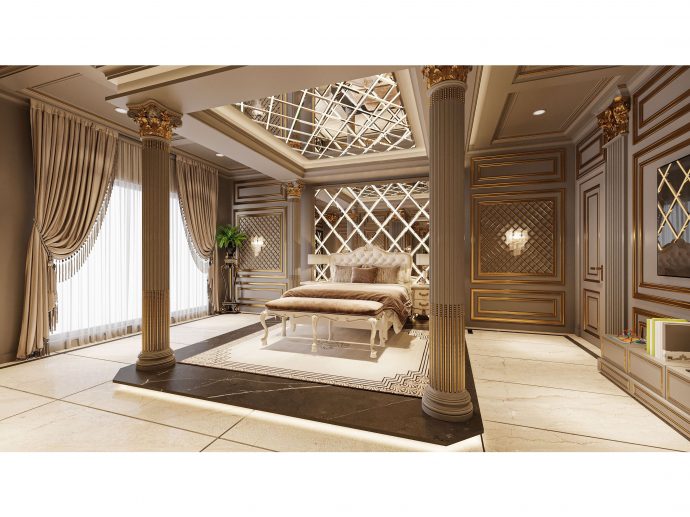
07/01/2026There's a version of interior design that produces spaces that look expensive and feel borrowed. The furniture is beautiful, the materials are exceptional, the proportions are correct. And yet the space reads as a setting rather than a life. You've seen something similar in a hotel lobby, or in a magazine spread that made you linger on the page before moving on. It's impressive in the way that impresses from a distance but doesn't quite resolve into belonging when you're inside it.
A bespoke luxury interior occupies a different category. Not because it costs more, though it often does, and not because the materials are rarer, though they sometimes are. Because it starts from a different premise. The premise is the specific person, or the specific family, who is going to live inside it, and every decision the design makes is in service of that specificity rather than in service of a style category or a market.
What "Bespoke" Actually Requires
The word gets applied loosely in the interiors industry, and it's worth being clear about what genuine bespoke luxury interior work actually entails, because it's meaningfully different from what passes under the label in many contexts.
Genuine bespoke work starts with an investigation rather than a presentation. The designer needs to understand who the client actually is, not who they imagine themselves to be in an idealised version of their life, but who they demonstrably are in the way they live day to day. Where they spend their time at home. How they use different rooms through the course of a day. What they actually own, how much they've accumulated over the years, and how they relate to their possessions. What they find genuinely beautiful versus what they've been told is beautiful by the culture around them.
This investigation is harder to do than it sounds, because most people have never been asked these questions with genuine intent to listen to the answers, and the first version of what they say often reflects aspirations rather than realities. The best bespoke designers know how to work past the first layer, to ask the question that reveals the actual answer rather than the performed one.
What comes out of this investigation is a brief that's genuinely specific to one client in one life. Not "a contemporary aesthetic with warm materials" but something much more particular: the way light falls in this specific room at four in the afternoon and what that means for the colour palette, the collection of objects the client has been accumulating for twenty years and how the furniture needs to relate to them without competing with them, the fact that the client always works at the kitchen table rather than a desk and what that means for how the kitchen should actually be designed.
The Furniture and Objects as Language
In a bespoke luxury interior, the furniture isn't selected from a catalogue, even a very good one. It's designed to solve specific problems within the specific space. A table that's precisely the right height and scale for the room it occupies, made from a material that connects to other elements in the space in a way that was planned from the outset. A sofa whose dimensions were arrived at through conversation about how many people typically use it, in what configuration, at what time of day, and for what purposes.
This sounds like an unusually demanding level of specificity, and it is. It's also what produces rooms that function beautifully rather than just appearing to. The room that looks right in a photograph but feels slightly off when you're in it has usually been designed for the photograph. The room that doesn't particularly photograph but makes everyone who enters it instinctively want to stay has usually been designed for the life.
The relationship between bespoke furniture and inherited or collected objects is one of the more delicate problems in luxury interior design, and one that bespoke work is uniquely equipped to solve. A client who has collected art, books, ceramics, or any category of object over decades has created a visual vocabulary that's entirely their own. A bespoke interior that's designed around that vocabulary rather than despite it produces something that feels cumulative and personal rather than fresh and curated. The distinction is the difference between a home and a showroom.
Materials as Memory and Meaning
One of the characteristics of bespoke luxury interior work that distinguishes it most clearly from standard high-end design is the relationship to materials. In high-end standard design, materials are selected for their quality and their visual appropriateness to the design. In bespoke work, materials can carry an additional layer of meaning that's specific to the client.
The marble from the same quarry as a childhood home in the south of France. The timber species whose grain the client spent their formative years staring at in their grandparents' kitchen. The textile that references a place, a period, or a relationship that matters to the person living in the space. These connections aren't always visible to anyone else, and they don't need to be. What they do is give the interior a layer of resonance that impersonal materials, however beautiful, can't replicate.
This is why the initial investigation matters so much. A designer who asks about the client's material history, the spaces that formed them, the objects they've loved and why, arrives at material decisions that have specificity and depth. A designer who presents a materials palette because it's on trend or because it photographs well arrives at something different entirely.
The Long View
A bespoke luxury interior is not a quick project. The investigation, the design development, the specification, the sourcing, the making, and the installation represent a significant investment of time on both sides of the relationship. The client who is in a hurry to have the space finished is working against the process that produces the result they're seeking.
What the time buys is something that can't be compressed: the genuine development of an interior that's specific to the life it needs to contain. Revisions that weren't obvious in the first presentation become obvious in the second. Materials that were right in concept need to be held and seen in the actual light of the actual room before they can be confirmed. Scale relationships that look correct on a drawing turn out to need adjustment when the space is taped out on the floor.
The clients who emerge from a bespoke luxury interior process with the strongest results tend to be those who understood from the beginning that the investment they were making was in something genuinely specific to them, and who were willing to engage with the process deeply enough to let that specificity surface. The result is a space that doesn't need to announce itself. It simply exists, in relationship to the life inside it, in a way that standard production, however well-executed, cannot reach.
Comments
