Categories more
- Adventures (62)
- Arts / Collectables (14)
- Automotive (77)
- Aviation (65)
- Bath, Body, & Health (123)
- Children (6)
- Cigars / Spirits (71)
- Cuisine (66)
- Design/Architecture (22)
- Electronics (63)
- Entertainment (36)
- Event Planning (115)
- Fashion (45)
- Finance (10)
- Gifts / Misc (6)
- Home Decor (118)
- Jewelry (41)
- Pets (3)
- Philanthropy (1)
- Real Estate (16)
- Services (44)
- Sports / Golf (14)
- Vacation / Travel (85)
- Watches / Pens (33)
- Wines / Vines (34)
- Yachting / Boating (67)



Why Interior Design Shouldn't Be the Last Conversation in a Build

Published
07/14/2026Building a new home is an exciting opportunity. Every decision, from the floor plan to the exterior materials, contributes to a property that is tailored to the way its owners want to live. Yet one of the most common mistakes made during the process is leaving interior design until the build is almost complete.
By the time paint colours, furniture, and finishes become the focus, many of the most important opportunities have already passed.
The reality is that interior design is not simply about making a home look beautiful. It influences how spaces function, how people move through them, and how every room supports everyday life. The earlier these conversations begin, the greater the opportunity to create a home that feels cohesive from the moment the keys are handed over.
Good Design Starts With the Layout
The layout of a home forms the foundation for every future design decision. While architects focus on the structure and flow of the building, interior design adds another layer of thinking centred around how the spaces will actually be lived in.
Questions such as these are often easier to answer before construction progresses:
- Where will furniture naturally sit?
- How will people move between rooms?
- Which spaces need additional storage?
- Where should lighting create atmosphere as well as function?
- How can the home feel connected rather than compartmentalised?
These decisions become much harder, and often more expensive, once walls have been built and services have been installed.
Small Decisions Have Long-Term Consequences
Many elements that appear insignificant during construction have a lasting impact on how a home functions.
The placement of electrical outlets.
The height of feature lighting.
The depth of built-in cabinetry.
The positioning of windows in relation to furniture.
Whether a doorway feels welcoming or restrictive.
Individually, these may seem like minor considerations. Collectively, they shape how comfortable and practical a home becomes over the years.
Planning these details early allows them to work together rather than requiring compromises later in the project.
Every Room Should Support the Next
A successful home is rarely designed room by room.
Instead, each space should feel connected through a consistent approach to materials, proportions, colour, and function. This creates a sense of flow that makes the entire property feel more considered.
When interior decisions are postponed until the build is nearing completion, it becomes much easier for individual rooms to develop independently. While each room may look attractive on its own, the home can lack a unified identity.
This is one of the reasons interior design for new build projects benefits from being considered alongside the architectural design. It allows every decision to contribute to a single vision rather than becoming a series of isolated choices.
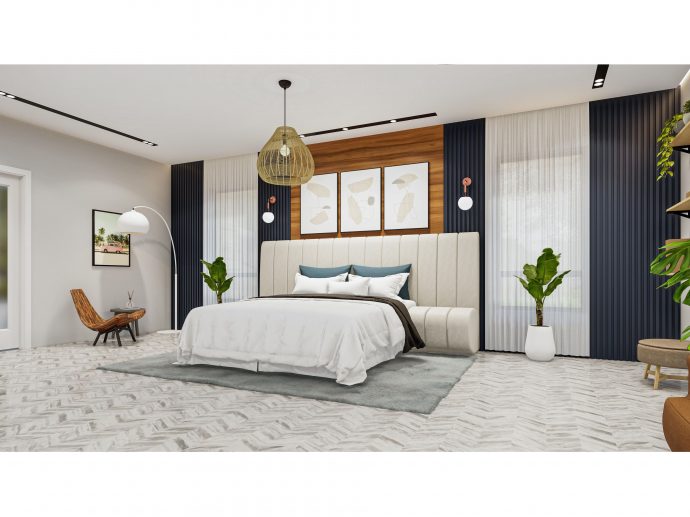
Lighting Needs Early Planning
Lighting is one of the clearest examples of why timing matters.
Feature pendants, wall lighting, integrated shelving illumination, and architectural lighting all require planning before ceilings are completed and electrical work is finalised.
Leaving these decisions until the decorating stage often limits what is possible or results in additional cost to make changes.
Beyond aesthetics, lighting influences how people experience a space throughout the day. It affects mood, highlights architectural features, and supports different activities within the home.
When lighting is considered early, it becomes part of the architecture rather than an addition to it.
Furniture Isn't Just a Finishing Touch
Furniture is often one of the last purchases made during a build, yet it has a significant influence on how rooms function.
Knowing the intended furniture layout before construction is complete can inform decisions such as:
- The size of living spaces
- Power outlet locations
- Television positioning
- Window treatments
- Walkway clearances
Designing around the way a room will actually be furnished helps avoid awkward layouts and ensures each space works naturally once occupied.
Rather than fitting furniture into completed rooms, the rooms themselves are shaped around how people will live.
Collaboration Leads to Better Outcomes
Modern residential projects involve a wide range of professionals, including architects, builders, structural engineers, tradespeople, and landscape designers.
Adding interior design into those conversations earlier creates opportunities for collaboration rather than correction.
Instead of adapting to decisions that have already been made, designers can contribute ideas that improve both aesthetics and functionality while construction is still flexible enough to accommodate them.
This collaborative approach often results in fewer compromises, fewer unexpected costs, and a more cohesive finished home.
For many homeowners, working with an interior design studio provides a central point of coordination, ensuring that the countless design decisions made throughout the project continue to support the overall vision rather than drifting in different directions.
Avoiding Expensive Changes Later
Making alterations once construction has progressed can quickly become expensive.
Moving lighting circuits.
Adjusting plumbing.
Relocating walls.
Modifying bespoke joinery.
Replacing finishes that no longer work together.
Many of these costs can be avoided simply by considering interior design much earlier in the process.
Early planning doesn't necessarily increase the project budget. In many cases, it helps homeowners spend that budget more effectively by reducing rework and preventing avoidable mistakes.
A Home Should Feel Complete From Day One
The best new homes rarely feel as though they need "finishing off" after move-in.
They feel complete because every element has been considered together, from the structural framework through to the finer details that shape everyday living.
Rooms connect naturally.
Lighting enhances the architecture.
Furniture feels perfectly placed.
Storage works without being obvious.
Materials flow seamlessly from one space to another.
That sense of effortlessness is rarely achieved by leaving interior design until the end.
Final Thoughts
Interior design should never be viewed as the final layer applied once construction is complete. It is a fundamental part of creating a home that functions well, feels cohesive, and continues to support its owners for years to come.
Bringing interior design into the conversation early allows practical decisions, architectural features, and aesthetic choices to develop together rather than independently.
The result is more than just a beautiful home. It is a home where every detail feels intentional because it has been considered from the very beginning.
Comments
