Categories more
- Adventures (117)
- Arts / Collectables (52)
- Automotive (110)
- Aviation (131)
- Bath, Body, & Health (277)
- Children (63)
- Cigars / Spirits (128)
- Cuisine (250)
- Design/Architecture (98)
- Electronics (98)
- Entertainment (56)
- Event Planning (145)
- Fashion (186)
- Finance (19)
- Gifts / Misc (54)
- Home Decor (224)
- Jewelry (154)
- Pets (34)
- Philanthropy (7)
- Real Estate (125)
- Services (79)
- Sports / Golf (59)
- Vacation / Travel (513)
- Watches / Pens (108)
- Wines / Vines (381)
- Yachting / Boating (143)


Winter Migration in the Manaslu Region: A Hidden Himalayan Reality

Published
10/14/2026Manaslu region in Nepal is a well-known destination for its perfect view of snow-capped mountains, isolated Himalayan villages, and high Tibetan-influenced culture. The Manaslu Circuit Trek is one of the most popular treks for its stunning landscapes and traditional mountain settlements.
While the region is often praised for its mesmerizing beauty, it has its own share of harsh winter weather. Winter brings significant challenges to an extent that some facilities migrate to spend part of the season in lower-altitude areas.
When wintertime comes, the surroundings change drastically. The trails become difficult to travel, the atmosphere gets gloomy, and high-altitude areas are covered with snow, often making the trails and views invisible.
Aside from this, the harsh winter weather forces the inhabitants of these mountain regions to abandon their houses and migrate to low-level villages.
Understanding this aspect of the region will help the trekkers to evaluate not only the beauty of the landscape of the Himalayan region but also to understand the difficulties of the Himalayan way of life, particularly during winter days.
Why Do People Migrate in Winter in the Manaslu Region?
Manaslu’s winter migration is associated with the region’s cold weather, poor services, and limited economic activities.
When the temperature starts to drop, the environment becomes harsher, and snowfall intensifies.
These conditions may encourage some locals to move down until the climate becomes warmer again. However, not every family and village migrate together at the same time.
There are discrepancies between families and areas regarding when they decide to migrate and how long they stay.
Harsh Weather and Heavy Snowfall
The peak winter season results in freezing temperatures and worse trail conditions, so much so that it becomes challenging to walk and travel. Intense snow cuts off access from one village to the other and to nearby towns.
At the same time, the severe weather makes it harder for the locals to get food, fuel, and other essential supplies.
Livelihood and Economic Challenges
Winter migration also affects the subsistence patterns of the daily life of people living in the Manaslu region. Families who depend on agriculture for their income will have to take a hiatus because the land is either frozen or covered with snow. Animal husbandry is also affected as pasture becomes limited and they need to be brought down from the mountain.
Tourism plays an important role in the local economy, especially for villages along the Manaslu Circuit. However, the number of tourists is significantly reduced in the winter season. This results in reduced employment opportunities and the rundown of businesses.
Access to Education, Healthcare, and Daily Necessities
Families have to climb up narrow trails in order to reach the nearest school, health center, or shop. Such conditions become challenging particularly in the winter. Snowstorms and bad road conditions make travel difficult.
Being at a lower altitude results in better access to transportation and other conveniences. Children can continue their studies despite the severe weather, and elderly people would benefit from being close to the nearest medical services. Therefore, for easy access to basic needs and amenities, locals choose to spend their time at a lower altitude during winter.
Where Do People Go During the Winter?
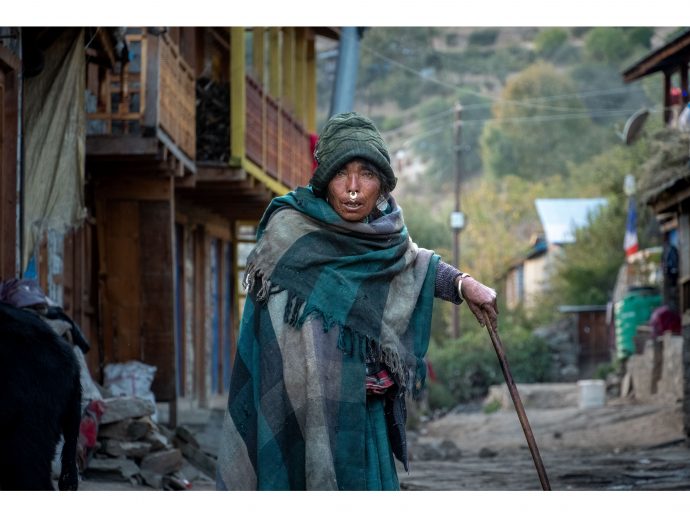
During the winter months, some of the residents temporarily migrate to stay in lower-altitude areas where the climate during the winter months is generally less severe, and where the everyday commute is easier. Some families also stay with relatives or family members.
It is important to understand that winter migration does not result in complete isolation of the entire village. There are people who stay at the high altitude without migrating to look after their homes, animals, land, and other responsibilities. During the winter months, winter migration in the Manaslu Conservation Area has historically been closely linked to both weather-related limitations and economic opportunities.
Villages in the Manaslu Region Most Affected by Winter Migration
The winter migration is particularly important for the people living in the higher reaches of the region because of the greater remoteness and lack of livelihood options in the higher areas.
Samagaon: Situated at a height of 3,530 m (11, 581 ft), Samagaon experiences severe, long cold winters. Due to extreme cold and difficulty in getting basic supplies, some people decide to move somewhere else.
Because the village is one of the major settlements along the Manaslu Circuit Trek, some people still remain in the village to run businesses and manage local responsibilities.
Samdo: Samdo lies at an altitude of 3,860 m (12,664 ft), which is higher and more remote than Samagaon. Its remoteness, proximity to the Nepal-Tibet border, and exposure to the harsh weather conditions have made it challenging to navigate during the winter.
Teahouses along the trails are also shut down for the season because of fewer visitors and difficulty in supply deliveries.
How Does Winter Migration Change Village Life?
Winter migration can bring some pretty noticeable changes to communities. It changes once-busy areas feel deserted and affects the livelihood of families that stay behind. Villages like Samagaon and Samdo, two of the most popular places for trekking, see huge crowds in the busy trekking seasons. So, seeing the places feel less busy than they normally do definitely makes an impact.
Those who decide to stay in the village must plan what items they have to bring with them and what they need, as snow creates difficulties in transport. For some families, this seasonal migration involves separation from each other. Children are sent to spend winter with their grandparents or relatives in the lower settlements, so that they can be safe and continue attending school.
The difference between trekking season and winter clearly shows how much winter has affected the lifestyle of the locals. During the trekking season, in the autumn and spring, the villages have more guests and the surroundings look lively and prosperous. Winter brings few visitors and quieter trails and surroundings. Yet, some inhabitants continue to lead their lives, looking after their belongings, animals, and each other.
The Impact of Winter Migration on Tourism in Manaslu
This seasonal movement not only impacts the life of the village but also the experience of the trek for trekkers. Many people leave the village temporarily, shutting down shops and teahouses during the period of migration. This may complicate the winter trek, especially for remote communities, where accommodation and teahouses are limited.
Trekkers planning to trek during the winter season should be well aware of the temperature and limited services. It may be helpful to contact the desired accommodations in advance and ask whether they will remain open during the season or not. Additionally, it is also better to ask about heating, electricity, and other services in the place of your accommodation.
The overall experience of a trek may be different compared to a trek during another season. It is not possible to say for sure how it will affect it, but, in general, the number of services and facilities will be more limited.
Although the migration period does not cancel the possibility of trekking, it does require more thorough planning and consideration.
What Trekkers Can Learn From This Hidden Himalayan Reality?
The wintertime migration is an insightful observation for trekkers, which signifies that the region is not all about mountains and beautiful landscapes. There are people living there whose lives change with the seasons. Understanding these changes helps trekkers experience the region more respectfully and responsibly.
Most importantly, seasonal migration in the Manaslu region should not be perceived negatively. The migration is conditioned because of the harsh winter climate, which does not allow any economic activity during the season. Recognizing this reality allows trekkers to appreciate the resilience of the people who call this region home.
Comments
