Categories more
- Adventures (213)
- Arts / Collectibles (374)
- Automotive (888)
- Aviation (383)
- Bath, Body & Health (3913)
- Children (138)
- Cigars / Spirits (295)
- Cuisine (727)
- Design / Architecture (1122)
- Electronics (244)
- Entertainment (163)
- Event Planning (295)
- Fashion (555)
- Finance (207)
- Gifts / Misc (141)
- Home Decor (589)
- Jewelry (415)
- Pets (92)
- Philanthropy (124)
- Real Estate (401)
- Services (225)
- Sports / Golf (216)
- Vacation / Travel (1074)
- Watches / Pens (237)
- Wines / Vines (872)
- Yachting / Boating (9084)




After the Hailstorm: A Clear-Eyed Guide to Vehicle Repair

Published
11/03/2026 by By a vehicle repair industry contributor.You know the sound of a hailstorm. Afterward, it can be a shock to see your car covered in dents. This is more than just an ugly sight, it's a major money problem. Colorado gets a lot of bad weather. According to the National Centers for Environmental Information, the state has been hit by 76 separate weather and climate disasters since 1980, each causing over a billion dollars in damages. A lot of that damage happened to cars and trucks.
Dealing with repairs adds more stress. Your insurance adjuster might see 50 dents on your hood, but a trained technician could find 200. This difference is normal. It shows why you need an expert who will fight for a full and correct repair. The goal is to get your car's value back, not just make it look good. If you live in the Front Range, finding the right expert for hail repair denver is the most important step to fixing your car without hurting its original paint job.
Quick answer: Yes, fixing hail damage is almost always a good idea. It protects your car's value and keeps it strong. The best way to do this is with Paintless Dent Repair (PDR). This method gets rid of dents without sanding, filling, or new paint. To pick the right shop, check their PDR skills, see how they handle insurance, and make sure they give a lifetime warranty.
What's inside
- Why Does Hail Damage Matter So Much?
- How Do I Choose the Right Repair Shop?
- What Makes Hail Damage in the Front Range So Severe?
- Frequently Asked Questions
Why Does Hail Damage Matter So Much?
If you don't fix hail damage, your car's resale value drops a lot. It can also cause bigger problems later, like rust and peeling paint.
The first thing you'll notice is the hit to your car's value. A car with no dents is worth more than one covered in them, and this loss in value can be huge. When you try to sell or trade in a car with hail damage, the buyer will subtract the cost of repairs from their offer. This amount is often more than what it would have cost you to fix it. A hail claim can also show up on your car's history report, which future buyers will see.
Besides losing money, hail damage can also harm your car's paint. Every dent stretches the metal. This can cause tiny cracks in the paint that you can't even see. Water can get into these cracks and reach the metal, causing rust. A small dent can turn into a bubbling rust spot, which is much more costly to fix.
Not fixing hail damage can also cause problems with future insurance claims. Let's say you get into a small accident later. The insurance company will look at your car's condition before the crash to decide its value. They will likely lower your payout by the estimated cost of the old hail damage. So, you end up paying for the hail damage anyway, just with a smaller check when you really need it.
Don't just ask, "What will this repair cost?" Instead, ask, "What will it cost me if I don't repair this?" Think about the lost resale value, the risk of rust, and smaller insurance checks later. Often, the cost of doing nothing is much higher than the cost of a good repair that has a warranty.
How Do I Choose the Right Repair Shop?
Choosing the right shop means checking a technician's PDR skills, making sure the business is a real, local place, and asking how they handle insurance.
After a big hailstorm, you'll see a lot of "hail chasers." These are pop-up shops in tents that leave town as fast as they came. Your main job is to tell them apart from real, local experts. A real business has a permanent, physical address. You want a shop that will still be around to guarantee its work later. Ask if their technicians are certified. Groups like PDR Nation have certification programs that show a technician has good skills and follows fair rules. This gives you peace of mind.
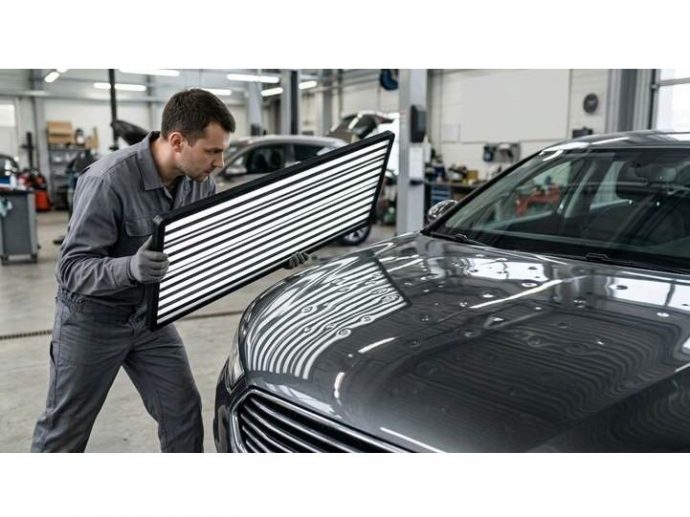
Find a shop that is open about how they work. A good technician uses special lights to show all the damage, which is often more than you can see in the sun. They should be happy to show you what they found. A written lifetime warranty is a must-have. Read the details to see what it covers and what might cancel it.
Ask the shop manager this question: "If you find more damage after you start, how do you work with my insurance company on it?" A good shop will have a set way of showing the new damage to the insurance company and getting it approved for you. Their answer will show you how much experience they have.
Here is a simple comparison to help you spot the difference between a professional shop and a temporary one.
|
Evaluation Point |
Professional PDR Specialist |
"Hail Chaser" Red Flag |
|
Location |
Permanent, physical shop address. |
Temporary tent in a parking lot. |
|
Warranty |
Offers a written, lifetime warranty. |
Vague promises or no warranty. |
|
Insurance |
Works directly with all insurers. |
May ask for cash or direct payment. |
|
Technicians |
Experienced, often certified. |
Experience is unknown or unverified. |
|
Reputation |
Has a long-term local reputation. |
No local history; disappears after the storm. |
Finally, a good shop will never push you to make a decision. They won't offer to cover your deductible if it seems shady. They will give you a clear, detailed price quote and explain how they will fix your car and protect its original paint.
What Makes Hail Damage in the Front Range So Severe?
Colorado's mountains and high elevation create the perfect conditions for damaging hail. This makes car damage a common and tricky problem here.
The state is in an area called "Hail Alley." This is a real weather term. The Rocky Mountains push warm, wet air upward very fast. This creates strong air currents inside thunderstorms. These currents carry ice high into the cold air and keep it there for a long time. This lets the ice grow into big, heavy hailstones. When they get too heavy to stay up, they fall to the ground.
Being up high adds to the risk. In Denver, the air is thinner and gives less protection from the sun's strong UV rays. Over time, these rays can weaken a car's clear topcoat of paint, making it easy to break. When a big hailstone hits this weakened paint, it's more likely to crack. This means a simple PDR fix might not be possible. Instead, the car might need a more expensive repair that includes sanding, body filler, and new paint.
Repair techs in this area often see sharper dents than in other places. The cold air high up and the fast-forming storms create very hard hail. It hits a car's metal panels like a small hammer. A shallow dent is easy to fix. But a sharp dent from hard hail takes a lot more skill to repair without hurting the paint.
Because of these local conditions, it's very important to have a PDR expert check your car carefully. They use special lights and tools to count the dents and check the paint's condition. This close look makes sure they choose the right repair method for the kind of damage Colorado hail causes. This protects your car's original paint and its value.
Frequently Asked Questions
How much does it typically cost to fix hail damage? The cost isn't one flat price. It's based on a pricing chart. A person checks each panel of your car and counts the dents by size (dime, nickel, quarter). The final price depends on how many dents there are, their size, what the panel is made of (aluminum costs more to fix than steel), and whether trim pieces have to come off to reach the dents.
Will a hail damage claim raise my insurance rates? In most cases, no. Hail damage is usually covered by the comprehensive part of your policy, which is for events you can't control. Unlike collision claims, where fault matters, a weather claim like hail does not usually raise your rates.
Can hail dents just be popped out? DIY kits with suction cups or dry ice are risky and often make things worse. They can crack the paint or push the metal too far, which makes a professional repair harder or even impossible. Real PDR uses special tools to slowly work the metal back into shape from behind the panel, which keeps the factory paint safe.
How long does a typical hail repair take? The hands-on repair for moderate hail damage often takes just one to three days. Your car may be at the shop longer because of the insurance steps. The first estimate, the adjuster's approval, and any extra approvals for hidden damage can add several days before the work even starts.
What happens if the damage is too bad for PDR? If a dent is too deep, has cracked the paint, or sits on a sharp body line, it may need a regular body shop repair. A good shop will use PDR on every panel it can save and then work with a trusted body shop on the one or two panels that are too damaged.
The Bottom Line on Hail Repair
Dealing with a hailstorm is about more than fixing how your car looks. It is really about protecting your car's value. Dents you leave alone can lead to rust, a lower resale price, and smaller insurance checks later. Think of the repair as an investment, not just a bill. The real cost often comes from picking the wrong shop, or from doing nothing at all.
Your most important job is to tell a pop-up storm chaser from an established local expert. A permanent address, a written lifetime warranty, and clear answers about insurance are the signs of a real shop. The right shop will fix your car in a way that saves its factory paint, so the repair lasts long after the storm is gone.
About the author
This article is contributed by the team at Mile High Dents, a Denver-area specialist in paintless dent repair (PDR) for vehicles damaged by hail. Established in the late 1980s, the company dedicates over 99% of its work to hail-related repairs. The team focuses on saving a vehicle's factory finish and helps clients through the whole insurance claim process, from the first inspection to the final repair.

Comments