Categories more
- Adventures (62)
- Arts / Collectables (14)
- Automotive (77)
- Aviation (65)
- Bath, Body, & Health (123)
- Children (6)
- Cigars / Spirits (71)
- Cuisine (66)
- Design/Architecture (22)
- Electronics (63)
- Entertainment (36)
- Event Planning (115)
- Fashion (45)
- Finance (10)
- Gifts / Misc (6)
- Home Decor (118)
- Jewelry (41)
- Pets (3)
- Philanthropy (1)
- Real Estate (16)
- Services (44)
- Sports / Golf (14)
- Vacation / Travel (85)
- Watches / Pens (33)
- Wines / Vines (34)
- Yachting / Boating (67)



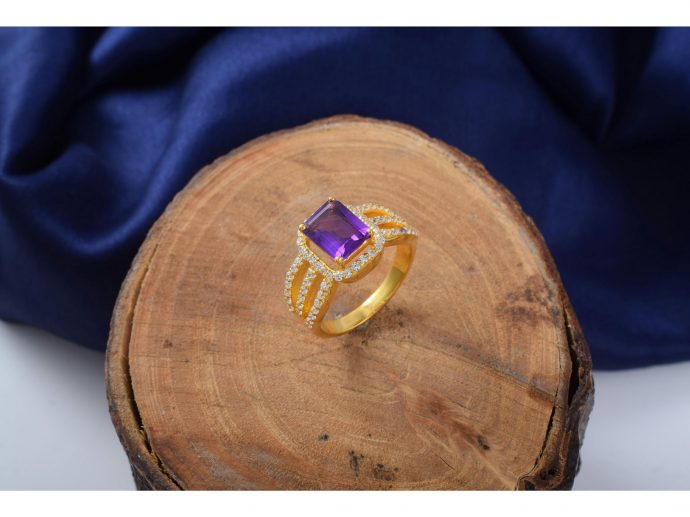
Amethyst Engagement Rings: Meaning, Symbolism, and Spiritual Benefits

Published
02/10/2026Choosing an engagement ring is one of the most symbolic decisions a couple makes. It’s not just about beauty or tradition—it’s about meaning. For couples who value emotional depth, spirituality, and individuality, amethyst engagement rings offer a powerful alternative to conventional diamond rings. Rich in history, symbolism, and spiritual associations, amethyst speaks to love that is intentional, conscious, and deeply personal.
Unlike gemstones chosen primarily for status or resale value, amethyst is selected for what it represents. Its purple hue, long-standing spiritual reputation, and emotional resonance make it especially appealing to couples who see marriage as a partnership rooted in awareness, growth, and mutual respect.
This article explores the meaning, symbolism, and spiritual benefits of amethyst engagement rings, and why they continue to attract modern couples who want their ring to stand for more than tradition alone.
The Meaning of Amethyst in Love and Commitment
At its core, amethyst symbolizes clarity, balance, and inner strength. For centuries, it has been associated with clear thinking and emotional stability—qualities that form the foundation of lasting relationships.
In the context of engagement and marriage, amethyst represents:
- Honest communication
- Emotional maturity
- Calm during conflict
- Mutual understanding
- Conscious commitment
An amethyst engagement ring quietly expresses a belief that love thrives not through perfection, but through awareness and intention. For couples who see marriage as a journey of growth rather than a fairy tale ending, this meaning feels profoundly relevant.
Historical Symbolism of Amethyst
Amethyst has a rich and fascinating history that stretches across cultures and civilizations. Long before it appeared in modern engagement rings, it was revered as a stone of wisdom and protection.
In ancient Greece, amethyst was believed to protect against intoxication—both literal and emotional. It symbolized clarity of mind and control over destructive impulses. Roman leaders wore amethyst as a symbol of authority guided by reason rather than ego.
In medieval Europe, amethyst became closely associated with spirituality and devotion. Clergy wore it as a symbol of humility, purity of intention, and connection to higher values. Royalty valued amethyst for its association with power tempered by wisdom.
When used in engagement rings today, amethyst carries forward these meanings—suggesting a love guided by consciousness, not impulse.
The Spiritual Energy of Amethyst
Amethyst is widely regarded as one of the most spiritually powerful gemstones. Across spiritual traditions, it is associated with heightened awareness, intuition, and emotional healing.
Many believe that amethyst:
- Encourages inner peace
- Reduces anxiety and emotional overwhelm
- Promotes mindfulness and presence
- Enhances intuition and self-awareness
- Protects against negative emotional energy
For couples who are spiritually inclined—or simply value emotional intelligence—an amethyst engagement ring feels like a talisman for a calm, grounded relationship.
Emotional Balance and Harmony in Relationships
One of amethyst’s most celebrated qualities is its association with emotional balance. Relationships inevitably face challenges, misunderstandings, and moments of tension. Amethyst is believed to support calm communication and thoughtful responses rather than reactive behavior.
In symbolic terms, wearing an amethyst engagement ring reflects a shared intention:
- To listen rather than react
- To resolve rather than escalate
- To support emotional well-being within the partnership
This makes amethyst particularly meaningful for couples who prioritize mental health, emotional safety, and mutual respect.
Amethyst and the Crown Chakra
In spiritual traditions, amethyst is closely connected to the crown chakra, the energy center associated with higher consciousness, wisdom, and spiritual connection.
Symbolically, this association suggests that amethyst:
- Encourages deeper understanding between partners
- Supports shared values and vision
- Strengthens spiritual connection within a relationship
For couples who meditate, practice mindfulness, or value spiritual growth, an amethyst engagement ring becomes more than jewelry—it becomes a symbol of shared awareness and purpose.
The Symbolism of Purple: Royalty, Creativity, and Independence
Color carries emotional and psychological meaning, and purple has always been one of the most symbolically rich hues. Historically associated with royalty and nobility, purple also represents creativity, independence, and depth.
In modern symbolism, purple often reflects:
- Individuality and non-conformity
- Emotional depth
- Creative expression
- Confidence and self-assurance
Choosing a purple gemstone like amethyst signals a willingness to step outside tradition and define love on personal terms. For non-traditional couples, this symbolism feels especially powerful.
Amethyst as a Stone of Protection
Amethyst has long been considered a protective stone—emotionally, mentally, and spiritually. Symbolically, it represents a shield against negativity, misunderstandings, and emotional harm.
In a relationship context, this protection is not about avoiding conflict, but about navigating challenges with grace and awareness. An amethyst engagement ring can symbolize:
- Emotional boundaries
- Mutual respect
- A safe and supportive partnership
This makes it particularly appealing to couples who have grown through adversity and value emotional resilience.
Meaningful Luxury Without Excess
Unlike gemstones associated with status or wealth signaling, amethyst represents intentional luxury. Its value lies not in artificial scarcity, but in meaning and beauty.
For many couples, choosing amethyst reflects a conscious rejection of excess in favor of purpose. It aligns with values such as:
- Ethical consumption
- Emotional authenticity
- Mindful spending
An amethyst engagement ring sends a subtle but clear message: love doesn’t need to be validated by price tags to be meaningful.
Personal Expression Through Design
Amethyst engagement rings lend themselves beautifully to expressive, meaningful designs. Because the gemstone itself is visually rich, it becomes the emotional centerpiece of the ring.
Popular symbolic design choices include:
- Vintage-inspired settings that reflect timeless love
- Minimalist solitaires emphasizing clarity and intention
- Halo designs symbolizing protection and unity
- East-west settings representing balance and equality
Each design choice can further personalize the symbolism of the ring, making it uniquely aligned with the couple’s story.
A Stone That Reflects Conscious Love
Modern relationships often emphasize partnership, equality, and shared growth rather than rigid roles or expectations. Amethyst resonates strongly with these values.
Symbolically, an amethyst engagement ring reflects:
- Conscious decision-making
- Emotional awareness
- Equality within the partnership
- Love chosen intentionally, not traditionally
This makes it especially appealing to couples who view marriage as a collaboration rather than a convention.
Spiritual Benefits for Everyday Life
Beyond symbolism, many people are drawn to amethyst for its perceived day-to-day spiritual benefits. While these beliefs are personal, they contribute to the emotional connection people feel with the stone.
Commonly attributed benefits include:
- A sense of calm during stressful moments
- Emotional grounding
- Increased self-reflection
- Support during periods of change
In the context of engagement, these qualities feel especially relevant, as couples prepare for a major life transition together.
A Timeless Symbol with Modern Relevance
Amethyst has been cherished for thousands of years, yet it feels remarkably modern in today’s world. Its symbolism aligns naturally with contemporary values around mental health, authenticity, sustainability, and emotional intelligence.
Unlike trend-driven jewelry choices, amethyst engagement rings feel timeless because their meaning transcends fashion. They are chosen not because they are popular—but because they are meaningful.
Final Thoughts: More Than a Ring, a Reflection of Values
An amethyst engagement ring is not simply an alternative to diamonds—it is a conscious choice rooted in meaning, symbolism, and spiritual depth. It reflects a relationship built on awareness, emotional balance, and shared values rather than tradition alone.
Comments
