Categories more
- Adventures (62)
- Arts / Collectables (14)
- Automotive (77)
- Aviation (65)
- Bath, Body, & Health (123)
- Children (6)
- Cigars / Spirits (71)
- Cuisine (66)
- Design/Architecture (22)
- Electronics (63)
- Entertainment (36)
- Event Planning (115)
- Fashion (45)
- Finance (10)
- Gifts / Misc (6)
- Home Decor (118)
- Jewelry (41)
- Pets (3)
- Philanthropy (1)
- Real Estate (16)
- Services (44)
- Sports / Golf (14)
- Vacation / Travel (85)
- Watches / Pens (33)
- Wines / Vines (34)
- Yachting / Boating (67)


Data-Driven Solutions for Heating and Air Conditioning

Published
08/04/2026Imagine the peak of summer 2026. The heat is stifling, and suddenly, your air conditioner struggles to keep up. Nothing is worse than an unexpected AC breakdown when you need it most. Knowing how to know if your AC is going bad early can save you from discomfort, costly emergency repairs, and a lot of stress. We understand the frustration and expense of a failing cooling system. This guide will help you identify common warning signs, understand what they mean, and empower you to act. We'll explore how data-driven insights can help you understand your system's health, offering a proactive approach to home comfort. For a comprehensive look at Data-driven HVAC warning signs, this article provides more.
For more comprehensive insights into your entire HVAC system, explore our in-depth {PILLARURL}. If you're ready to address an issue, contact us today at {CONVERSIONURL}.
To get professional help and ensure your AC is running smoothly, visit {CONVERSION_URL}.
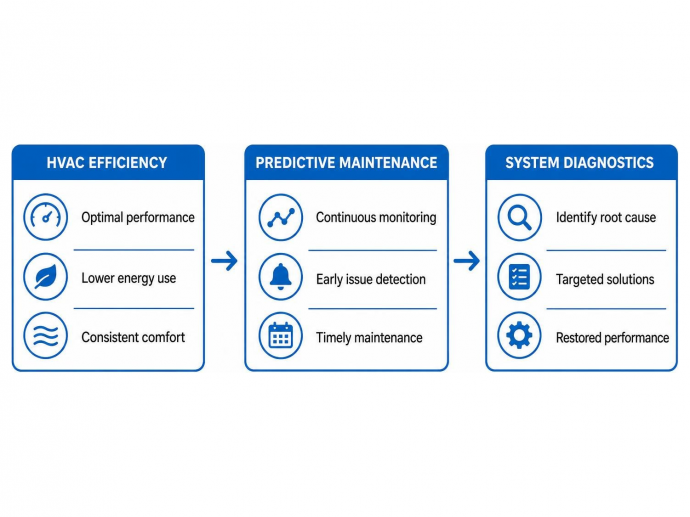
In recent years, the way we interact with and understand our home comfort systems has undergone a significant transformation. Gone are the days when an air conditioner was a simple appliance with an on/off switch. Today, HVAC systems are increasingly sophisticated, integrating smart technology, advanced sensors, and the Internet of Things (IoT) to provide a wealth of real-time data. This evolution allows for unprecedented precision in monitoring system performance, often predicting potential issues long before they escalate into major breakdowns. We can now move beyond reactive repairs to proactive maintenance, ensuring consistent comfort and efficiency.
This shift towards data-driven HVAC is about more than just convenience; it's about optimizing performance, extending equipment lifespan, and ultimately, saving homeowners money. By continuously collecting and analyzing operational data, these intelligent systems can identify subtle deviations from normal behavior, signaling that an AC unit might be going bad. This capability empowers homeowners and technicians alike to make informed decisions, transforming how we approach home climate control.
Key Metrics in Data-Driven HVAC Performance
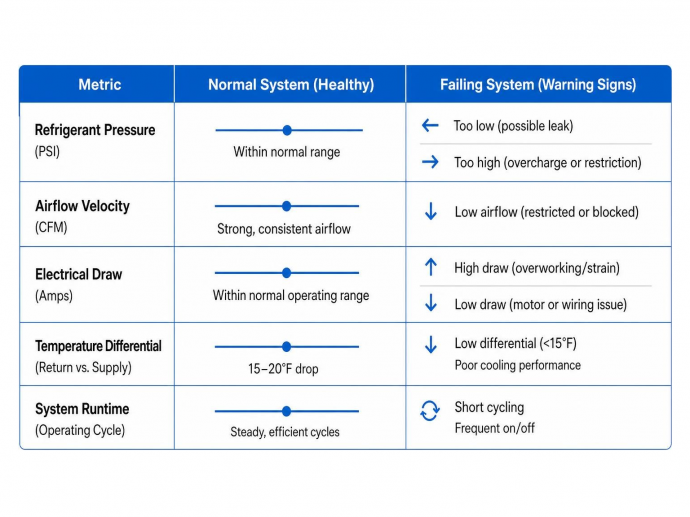
Understanding the health of an air conditioning system relies on monitoring several key performance indicators. These metrics, when tracked over time, provide a clear picture of how efficiently and effectively your AC is operating.
One of the most critical metrics is refrigerant pressure. The refrigerant is the lifeblood of your AC, absorbing heat from your home and releasing it outside. Both excessively high and low pressures can indicate problems. Low pressure, for instance, often points to a refrigerant leak, which can severely impair cooling capacity and overwork the compressor. High pressure might suggest a clogged metering device or an overcharged system.
Airflow velocity is another vital indicator. Proper airflow across the indoor evaporator coil and through your home's ductwork is essential for efficient heat exchange and even cooling. Restricted airflow, often caused by dirty air filters, blocked coils, or issues within the duct system, forces the AC to work harder, consuming more energy and potentially leading to component stress. Modern systems can detect these restrictions, signaling a need for attention.
The electrical draw of various components, particularly the compressor and fan motors, offers insights into their operational health. An AC unit that is going bad might exhibit an abnormal electrical draw. For example, a compressor struggling to start or run efficiently will pull more amperage than usual, indicating internal wear or other electrical issues. Conversely, a component drawing too little power might suggest a faulty motor or wiring problem.
Finally, the temperature differential between the air entering your AC system (return air) and the air exiting it (supply air) is a fundamental measure of its cooling effectiveness. A healthy AC system should produce a specific temperature drop, typically between 15-20 degrees Fahrenheit. If this differential narrows, it's a clear sign that the system isn't removing heat as it should, prompting further investigation. These data points, whether monitored by smart thermostats or professional diagnostic tools, form the backbone of understanding your AC's condition.
How to Know If Your AC Is Going Bad: The Diagnostic Indicators
When your AC is on the fritz, it often communicates its distress through a variety of symptoms. Recognizing these diagnostic indicators early can be the difference between a minor repair and a complete system failure. Many of these issues are subtle at first but become more pronounced as the unit continues to degrade.
One common sign that an AC is going bad is short cycling. This occurs when your unit turns on and off frequently, running for only short bursts. While it might seem like it's trying to cool quickly, short cycling is inefficient and puts excessive wear and tear on the compressor. It can be caused by an oversized unit, low refrigerant levels, a faulty thermostat, or even electrical problems.
Weak airflow from your vents is another clear indicator. If you notice that the air coming out isn't as strong as it used to be, it could point to a clogged air filter, a failing blower motor, or issues within your ductwork such as leaks or blockages. Inadequate airflow severely hampers the system's ability to cool your home effectively.
A visually striking and concerning sign is frozen evaporator coils. If you observe ice buildup on the indoor unit's coils, it usually means that the coil isn't absorbing enough heat from the air passing over it. This can be due to restricted airflow (again, often a dirty filter) or low refrigerant levels. A frozen coil cannot cool your home, and continued operation can damage the compressor.
High humidity indoors, even when the AC is running, suggests a problem with the system's dehumidification capabilities. Air conditioners are designed not only to cool but also to remove moisture from the air. If your home feels sticky or clammy, it indicates that your AC is failing to perform this crucial function, often a symptom of an undersized unit, low refrigerant, or a clogged condensate drain.
To help visualize these issues, consider the following comparison:
Utilizing Data-Driven HVAC Diagnostics for Temperature Testing
One of the most straightforward yet effective ways to gauge your AC's performance is through temperature testing. This method, rooted in the principles of data-driven diagnostics, allows homeowners to perform basic checks that professionals use with more sophisticated tools.
To conduct this test, you'll need a reliable thermometer. We recommend measuring the temperature of the air entering your AC system at the return vents (usually larger grilles where air is drawn into the system) and comparing it to the temperature of the air being expelled from the supply registers (the smaller vents delivering cooled air into rooms).
The key here is the temperature differential. A properly functioning air conditioner should produce a temperature drop of approximately 15 to 20 degrees Fahrenheit between the return air and the supply air. This is often referred to as "the 15-degree rule" (though a range is more accurate). For example, if the air entering your return vent is 75°F, the air coming out of your supply registers should ideally be between 55°F and 60°F. If your measurements show a differential significantly less than 15°F, it's a strong indication that your AC is not cooling efficiently. This could be due to low refrigerant, a dirty evaporator coil, or a failing compressor. While professional sensor calibration provides the most accurate readings, these simple homeowner checks can offer valuable early warnings.
Identifying Mechanical Wear Through Acoustic Data
Your air conditioner communicates its health not just through temperature and airflow, but also through sound. Unusual noises are often among the earliest and most telling signs that an AC is going bad. Learning to distinguish between normal operational sounds and alarming mechanical noises can help you identify problems before they worsen.
A healthy AC system typically produces a consistent, low compressor hum from the outdoor unit. However, if you start hearing a loud, grinding, or rattling noise emanating from the compressor, it could indicate internal mechanical failure, such as worn bearings or a damaged motor. A struggling compressor is a critical issue that requires immediate professional attention.
For units with belt-driven fans (though less common in modern residential systems), a high-pitched fan belt squealing sound can signal a worn, loose, or misaligned belt. This can lead to reduced airflow and eventually, fan motor failure if not addressed.
Grinding or screeching sounds from either the indoor or outdoor unit often point to issues with bearing friction in motors. These sounds typically worsen over time and indicate that a motor is struggling, potentially due to lack of lubrication or impending failure. Ignoring these noises can lead to the motor seizing up entirely.
Finally, an electrical buzzing sound can be particularly concerning. While a slight hum is normal for electrical components, a distinct buzzing or clicking noise might indicate loose wiring, a failing capacitor, or other electrical problems. Any unusual electrical sounds should prompt you to shut off your AC at the breaker and call a professional immediately, as electrical issues pose a fire hazard. By paying close attention to these acoustic cues, we can gain valuable insights into the mechanical well-being of our AC systems.
Proactive Maintenance and System Longevity
Just as regular oil changes are crucial for your car, preventive maintenance is paramount for the longevity and efficiency of your air conditioning system. Many of the signs that an AC is going bad can be prevented or mitigated through consistent, proactive care. A well-maintained system not only performs better but also significantly extends its lifespan, often reaching the upper end of the average 10-15 year range.
One of the simplest yet most impactful maintenance tasks is air filter replacement. A clogged air filter restricts airflow, forcing your AC to work harder, reducing efficiency, and potentially leading to issues like frozen evaporator coils. We recommend checking your filter monthly and replacing it every 1-3 months, depending on usage, pets, and indoor air quality.
Equally important is condenser coil cleaning. The outdoor condenser unit's coils are responsible for releasing the heat absorbed from your home. Over time, these coils can become caked with dirt, dust, leaves, and other debris, especially in dusty or pollen-heavy environments. A dirty coil cannot efficiently dissipate heat, causing the system to run longer and harder, consuming more energy, and increasing wear on the compressor. Gently rinsing the coils with a hose (after turning off power to the unit) can make a significant difference.
Finally, ensuring a clear condensate drain line is crucial. As your AC removes humidity from the air, it produces condensation, which collects in a pan and drains away through a PVC pipe. If this line becomes clogged with algae or debris, water can back up, overflow the pan, and potentially cause water damage or trigger a safety switch that shuts down the entire unit. Regularly flushing the drain line can prevent these issues.
Data-Driven HVAC Scheduling for Optimal Efficiency
Leveraging data insights can revolutionize how we approach HVAC maintenance, moving from a fixed schedule to a more informed, needs-based approach. While annual check-ups remain vital, understanding your system's operational data allows for smarter data-driven HVAC scheduling that optimizes efficiency and preempts failures.
Seasonal tune-ups, particularly in the spring before the cooling season begins, are critical. During these visits, professionals use diagnostic tools to assess refrigerant levels, electrical connections, motor performance, and overall system health. Data collected during these tune-ups can highlight emerging issues that might not yet be apparent to the homeowner.
Energy consumption tracking is a powerful data-driven method for detecting declining efficiency. By monitoring your monthly electricity bills, specifically the kilowatt-hour (kWh) usage for cooling, you can identify unexpected spikes that signal your AC is working harder than it should. Smart thermostats and utility apps can provide even more granular data, allowing you to track daily or weekly consumption and spot trends. An unexpected increase in energy bills can indicate that an AC system is not operating efficiently.
Runtime analysis provides insights into how long your AC runs to maintain the desired temperature. If your system starts running for significantly longer periods to achieve the same level of cooling, it's a clear sign of reduced efficiency or an underlying problem. Smart thermostats often provide this data, allowing you to compare current runtimes against historical averages.
This data contributes to component wear prediction. By analyzing trends in electrical draw, temperature differentials, and runtime, HVAC professionals can often anticipate which components are nearing the end of their lifespan. This allows for proactive replacement of parts before they fail completely, avoiding emergency breakdowns and ensuring uninterrupted comfort. This intelligent approach to maintenance is a cornerstone of long-term system reliability.
Frequently Asked Questions About AC Performance and Lifespan
We often encounter common questions from homeowners concerned about their AC's performance. Here, we address some of the most frequent inquiries to provide clarity and guidance.
Why is my air conditioner running constantly but not cooling the house?
This is a frustrating and common problem that homeowners face. Several issues can cause your AC to run continuously without effectively cooling your home:
- Thermostat settings: First, ensure your thermostat is set to "Cool" mode, and the temperature setting is lower than the current room temperature. Sometimes, the fan might be set to "On" instead of "Auto," causing it to blow air constantly even when the compressor isn't engaged for cooling.
- Clogged air filter: A dirty air filter severely restricts airflow over the evaporator coil. This reduces the system's ability to absorb heat from your home, making it work harder and longer without achieving the desired temperature. A clogged air filter can cause an AC unit to work harder, leading to higher energy consumption and potential system failure.
- Low refrigerant: If your system has a refrigerant leak, it won't have enough of the cooling agent to effectively absorb heat. This causes the compressor to run continuously in an attempt to cool, but the lack of refrigerant prevents proper heat exchange.
- Blocked condenser coils: The outdoor unit's condenser coils release heat to the outside. If these coils are covered in dirt, debris, or overgrown vegetation, they can't dissipate heat efficiently. This makes the system struggle to cool your home, leading to extended run times.
- Ductwork leaks: If your ductwork has leaks or poor insulation, a significant amount of conditioned air can escape into unconditioned spaces like attics or basements before reaching your living areas. This means your AC is working hard, but the cool air isn't making it to where it's needed.
Addressing these issues, starting with the simplest checks, can often resolve the problem.
How long do residential air conditioning systems typically last?
The average lifespan of a residential air conditioner is generally between 10-15 years. However, this is not a hard and fast rule, and several factors can influence how long your specific unit will last.
- Environmental factors: The climate you live in plays a significant role. In regions with extremely hot and humid summers, like many parts of the South, AC units work harder and for longer periods, which can shorten their lifespan compared to units in milder climates. Coastal areas, with their corrosive salt air, can also accelerate wear and tear.
- Maintenance history: This is arguably the most crucial factor. Regular AC maintenance can help prevent common issues and extend the lifespan of the system. Systems that receive annual professional tune-ups, filter replacements, and coil cleanings tend to last much longer than those that are neglected.
- System degradation: Even with perfect maintenance, components wear out over time. Motors, compressors, and electrical parts have finite lifespans. As a unit ages, its efficiency naturally declines, and it may require more frequent and costly repairs. While some units might last up to 20 years with exceptional care, most AC units have a lifespan of about 10-15 years, after which they may be more prone to breakdowns.
Understanding these factors helps us make informed decisions about repair versus replacement as our systems age.
What are the most common warning signs that an AC compressor is failing?
The compressor is often considered the heart of your AC system, responsible for circulating refrigerant and facilitating the cooling process. A failing compressor is a serious issue, and recognizing its warning signs early can save you from a complete system breakdown.
- Hard starting: If your AC unit struggles to turn on, making loud grinding or groaning noises before finally kicking in (or failing to start at all), it could indicate a compressor that is having difficulty initiating its cycle. This often points to a failing start capacitor or internal compressor issues.
- Tripped circuit breakers: A compressor that is drawing too much electrical current due to internal damage or excessive strain can frequently trip its dedicated circuit breaker. If you find yourself resetting the breaker for your AC unit repeatedly, it's a strong sign of an underlying electrical or compressor problem.
- Warm air output: The most obvious sign of a failing compressor is if your AC is blowing warm or ambient temperature air. If the compressor isn't effectively compressing the refrigerant, the system cannot properly absorb and dissipate heat, leading to a lack of cooling.
- Unusual clanking noises: While many AC noises can be alarming, a distinct clanking or banging sound coming from the outdoor unit (where the compressor is located) often indicates significant internal mechanical failure within the compressor itself. This is a critical warning sign that requires immediate professional attention.
- Electrical relay failure: Sometimes, the compressor itself isn't entirely faulty, but the electrical relays or contactors that control its operation are failing. This can lead to the compressor not receiving power, causing the unit to run without cooling or not start at all.
Given the compressor's vital role and high replacement cost, any of these signs warrant prompt inspection by a qualified HVAC technician.
Conclusion
Understanding how to know if your AC is going bad is no longer a mystery reserved for HVAC professionals. With the evolution of data-driven insights and a keen eye for common warning signs, homeowners are better equipped than ever to monitor their system's health. From recognizing the subtle hum of a healthy compressor to detecting the telltale signs of a refrigerant leak or restricted airflow, proactive diagnostics are key to maintaining a comfortable and efficient home.
By paying attention to unusual noises, smells, or visual cues, performing simple temperature differential tests, and monitoring changes in energy consumption, we can often catch problems early. This early detection not only helps prevent inconvenient and costly emergency breakdowns but also contributes significantly to system reliability and energy efficiency. Regular maintenance, informed by these insights, ensures your AC operates at its peak, extending its lifespan and delivering consistent, long-term comfort. When in doubt, consulting with a qualified HVAC professional ensures accurate diagnosis and appropriate solutions, keeping your home cool and your mind at ease, especially as we navigate the summers of 2026 and beyond.
Comments
